Grammy Award For Best Historical Album

Ojai Sam

Staff member

1760460768630.png

The recent "Best Historical Album" Grammy wins by my friends Richard and Meagan at Archeophone Records inspired me to excavate the past nominees for this award, which dates back to 1979. Many of the early nominees were classical reissues that have been far surpassed by later digital collections. But there have been so many worthy nominees over the years that they deserve their own thread.

Various Artists - The Magical Music of Walt Disney (1978)

Ni5qcGVn.jpeg


Vinyl Spin of the Day.

This nominee from 1980 deserves pride of place in any library. Dick Schory, recording artist, producer, author, teacher, executive and engineer extraordinaire released this breathtaking 4 LP box on his own Ovation Records label. Each album comes in an individual full color jacket and there is also a gorgeous full size 52 page booklet packed with rare pictures from the Disney archives and well-written explanatory notes.

"Comprehensive" is an understatement. We get original soundtrack music from every significant Mouse House film from "Steamboat Willie" to "Pete's Dragon". Since Disney was fully involved, Ovation was able to include rarely heard live recordings from the Magic Kingdoms plus the actual dialogue, music and sound effects from park attractions like "It's A Small World", "The Tiki Tiki Tiki Room" and "Country Bear Jamboree". These are all very tough acts to follow, but Schory was able to persuade Abraham Lincoln to close the show with his crowd-pleasing "Gettysburg Address".

:5.0: on the Sam-O-Meter.

Mi02MDM5LmpwZWc.jpeg
 
Last edited:
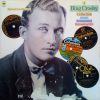
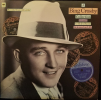
Bing Crosby - A Bing Crosby Collection Vols. I & II (1978)

1760464015787.png

1760464005748.png

Vinyl Spin of the Day.

These two simultaneous releases assembled by British archivist Michael Brooks were both nominated for the first "Best Historical Repackage Album" Grammy in 1979. He lost out to...Michael Brooks, for a Lester Young package also on Columbia. The major labels were just beginning to mine their vaults for vintage material like these two Bing Crosby albums which were joined a year later by a third volume. Each one includes 14 songs beautifully remastered with insightful and occasionally acerbic commentary from Brooks. A year after Bing's death on a golf course in Spain, he was already largely forgotten apart from "White Christmas". His early solo recordings for Columbia and Brunswick after leaving the Paul Whiteman orchestra are Depression-era period pieces but reflect the youthful buoyancy that captivated America on radio and film as well as record.

Michael Brooks had a long-running relationship with Sony that yielded everything from a complete Billie Holiday package to an anthology of Cuban dance music. His knowledge and wit earned him six Grammys, blazing a whole new direction for catalog reissues. His collection of over 10,000 pre-1950 78's now resides at UC Santa Barbara.


1760465591774.png
Michael Brooks (1935-2020)

 
This year's nominees were just announced:

1. Joni Mitchell - Joni Mitchell Archives - Volume 4: The Asylum Years (1976-1980)
1762631307746.png

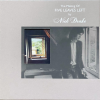
2. Nick Drake - The Making Of Five Leaves Left
1762631372005.png

3. Various Artists - Roots Rocking Zimbabwe - The Modern Sound Of Harare' Townships 1975-1980
1762631430012.png

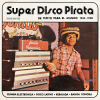
4. Various Artists - Super Disco Pirata - De Tepito Para El Mundo 1965-1980
1762631503325.png

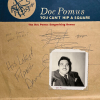
5. Doc Pomus - You Can't Hip A Square: The Doc Pomus Songwriting Demos
1762631557460.png

All in all a very deserving group. I would give the nod to Nick Drake due not only to its historical importance but also the extreme unlikelihood that this material would ever have been excavated from the vault.
 
Various Artists - First Commercially Successful Recordings (rec. 1888 :oops: to 1929, Mark 56 comp. 1979)

NzItNzA1NS5qcGVn.jpeg


Vinyl Spin of the Day.

For someone whose name appears on hundreds of records, George Garabedian is a man of mystery. The best bio I can find is over on the Arcane Radio Trivia blog:

There are few images of George V. Garabedian, and his definitive biography has not been written. George was a performing musician, and led several different groups of studio musicians: George Garabedian And His Royal Armenians, The Archibald Players, The George Garabedian Players, and The George Garabedian Troubadours. Below is a partial discography. Most of his sides were released as The George Garabedian Players; I included their one 45 with Liberty. They have over twenty 45s all effectively self-released on Mark 56 Records, the list is too long to include.

Almost everything he recorded was self-released. When he was running Chevron Records in 1955 he approached W.C. Handy about doing a film on his life. That eventually became a feature film in 1958, St. Louis Blues, starring Nat King Cole and Eartha Kit. But that didn't happen until after Paramount removed Garabedian as producer on the project. It's probably the most famous thing Garabedian ever did, and he didn't even get to really do it. But those sides he did in 1958 and 1959 did move a few units.

But things got more interesting late in life when he founded Mark 56 Records in 1970. In addition to numerous music releases, Garabedian started releasing old radio serials on LP. This was probably the first time that had been done commercially since radio serials were pressed to transcription discs.


1767130699814.png
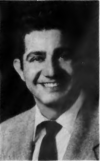
George Garabedian

In addition to old time radio, George pioneered the re-release of 19th century recordings like the ones in First Commercially Successful Recordings. Long before Archeophone Records began exploring the dawn of the phonograph era, Mark 56 issued dozens of albums' worth of ancient discs and cylinders, include a whole series of sides originally marketed by Thomas A. Edison to sell his new invention.

This package was produced by Garabedian for mail order catalog mega-seller Publishers Central Bureau's Murray Hill label. It features a few discs and cylinders from more-or-less remembered artists like march king John Philip Sousa and operatic tenor Giovanni Martinelli. But the bulk of the material comes from names like George J. Gaskin, Dan W. Quinn and Issler's Orchestra who had mostly faded from the recording scene by 1900.

1767132239103.png
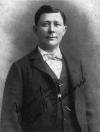
Dan W. Quinn

Sound quality is far better than one might expect from source material of this age and rarity. The package also includes an informative booklet that tracks the history of early record labels like North American and Berliner. It earned a Grammy nomination for Best Historical Album in 1979, losing out to another mail order behemoth, Time-Life, and its Billie Holiday entry in its landmark Giants of Jazz series which we will explore in due time.
 
Back
Top