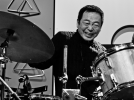
Japanese Jazz

Ojai Sam

Staff member
A couple of weeks ago, Discogs posted a guide to "Essential Japanese Jazz Records, 1953-Present" that stopped me in my tracks. After devouring it in one sitting, naturally I had to run out and find the recommended albums. I have been so smitten by this groundbreaking music that I decided to start a new thread. Due to the vagaries of shipping from Japan, I will share them in no particular order as they arrive.

Hideo Shiraki Quintet + 3 Koto Girls - Sakura Sakura (1965)

LTE5MDAuanBlZw.jpeg

The first entry represents the apotheosis of "east meets west". Famed Japanese jazz drummer Hideo Shiraki melded his hard bop/modal quartet with three masterful players of the koto, a Japanese stringed instrument somewhat like a zither. Some of the songs are predominantly Japanese in style, including the title cut featuring just Shiraki's drums with the three kotos. Others inject the kotos into straight ahead hard bop jams and Coltrane-style modal workouts. All are utterly delightful, and beautifully recorded to boot.

I managed to find this album as a CD in a gorgeous cardboard mini-LP sleeve, complete with obi and booklet.

:5.0: on the Sam-O-Meter. There could be no better way to start this series.
 
Maki Asakawa - The World Of Maki Asakawa (1970)

MC0zMDYzLmpwZWc.jpeg


Already this new project has taught me two big lessons:

1. Much important Japanese jazz appeared on self-released, local, boutique, or vanity labels. These records were hard to find even in Japan when they came out. Tracking them down decades later presents a major challenge.

2. Google Translate handles Japanese characters quite efficiently. Discogs calls this album 浅川マキの世界. , even on the English website. Google to the rescue!

Screenshot 2024-10-27 17.52.04.jpg

It works well for song titles, too. 時には母のない子のように(黒人霊歌)translates to "Sometimes Like a Motherless Child (Negro Spiritual)".

The music itself defies categorization. The Goldmine article focuses on her "smoky, noirish" voice and she does work very successfully in the jazz idiom. But from song to song, the "the Queen of the Underground" moves effortlessly from blues to folk to rock to performative poetry, backed by groups ranging from jazz trio to brassy ensemble to organ combo. Clearly Maki made an artistic decision to root her music in her own culture, since she sings exclusively in Japanese and every song has a Japanese flavor. Moreover, there is not a word of English anywhere on the record, cover, or insert other than her name and that of the record company.

:5.0: on the Sam-O-Meter. Without a doubt this is the most interesting new record I've discovered in many years.

Sadly, it is not on Spotify. :vic:
 
Last edited:
Various Artists - J Jazz: Deep Modern Jazz From Japan Vol. 1 (rec. 1969-84, BBE comp. 2018)

MjUtNDI3NC5qcGVn.jpeg


Vinyl Spin of the Day.

The first of (so far) four volumes of mythically rare Japanese jazz released by BBE ("Barely Breaking Even") Records. The label is based in London but puckishly includes a Japanese obi strip along with detailed track-by-track notes for the dozen songs that fill three beautifully recorded LP's. None of the artists here are familiar, although the final cut does feature Reggie Workman with Terumasa Hino's group. Like the Swedish Jazz History series that I posted (and raved about) before, the most striking feature of these recordings is the fact that they present unfiltered modern jazz that can more than hold its own with anything US artists have to offer.
 
Takeshi Inomata & His Friends - Get Happy (1975)

Ny02MDM1LmpwZWc.jpeg


Vinyl Rip of the Day.

Takeshi Inomata (1938-2024) passed away just last month. :( He was an incredibly prolific drummer, with over 300 recordings to his credit. According to Discogs, this is a live recording but the dynamic sound quality puts most studio sessions to shame. So I'm very glad that I opted to buy the original Audio Lab LP rather than the much pricier CD reissue.
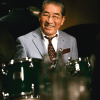
This collection matches Inomata with a floating group of musicians, including long time collaborators pianist Norio Maeda and bassist Yasuo Arakawa. For most of the album, the drums stay in the background creating a solid rhythmic landscape for the other musicians. However, the final song, "Caravan", features a breathtaking drum solo that left me wanting to hear a lot more.

:5.0: on the Sam-O-Meter. Buy this one and you will indeed "Get Happy".

1730936357469.png
 
Fumio Nanri - Farewell (1975)

MS02OTUyLmpwZWc.jpeg


Vinyl Rip of the Day.

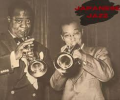
Fumio Nanri (1910-1974) was a Dixieland-style trumpeter called "The Satchmo of Japan" by no less than Louis Armstrong. This album was released as a posthumous tribute to the veteran artist who deserved a lot of the credit for bringing jazz to the forefront in post-war Japan. The ten songs here are all familiar warhorses that Nanri and his six piece group bring to life with love, energy and warmth without a hint of kitsch or irony. Once again, the sound quality of the 50 year old original Japanese LP is beyond fabulous: perfect balance, wide dynamic range and a total absence of noise, even between the tracks.

:5.0: on the Sam-O-Meter.

1731015453769.png

Satchmo and Satchmo. :heart: :heart:

Not on Spotify, not on eBay, not on Discogs, not on Amazon. :(:(:(:(
 
Hozan Yamamoto with The Sharps and Flats - Beautiful Bamboo-Flute (1971)

Mi03MzY3LmpwZWc.jpeg


This album adds the traditional Japanese flute of master Hozan Yamamoto to Nobuo Hara's "Sharps & Flats", a long-running big jazz band. The results are "fusion jazz" on two levels: funk with an East Asian flair. If Blaxploitation films had been made in Japan, this recording would have been the soundtrack.

1731176913207.png
Hozan Yamamoto

1731177020124.png
The Sharps and Flats
 
Last edited:
Ryo Fukui - Scenery (1976)

MS02ODk1LmpwZWc.jpeg


With a title like Scenery and songs like "Early Summer" and "Autumn Leaves", one might expect a peaceful trip in the country. But Ryo Fukui (1948-2016), a reformed accordion player, delivers a startlingly powerful set full of muscular bass lines, bluesy chords and dazzling arpeggios rising out of a deceptively understated landscape. Most of the time, bassist Satoshi Denpo and brother Yoshinori Fukui stay in the background. But, like Ryo, occasionally each of them springs forth with a surprising solo that maintains the subtle air of tension that pervades this album. Scenery is justly acclaimed as a cornerstone of Japanese jazz, one that will reward repeated listening.

:5.0: on the Sam-O-Meter.

1731198624072.png
 
Toshiko Akiyoshi - Toshiko's Piano (1953)

NTUtNTI4OC5wbmc.jpeg


This was actually the first record in the Discogs collection that I played. However, I wanted some time to think before posting it. Toshiko's life story and musical journey are both fascinating. When I have time (Hah! I hear you say:confused:) I will set up a listening project for her work.
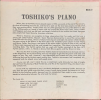
This post will focus on her debut album, a remarkable event in itself. No one can tell it better than producer Norman Granz, who penned these liner notes at the time it happened:

1731354892546.png

This album (also known as Amazing Toshiko Akiyoshi), raises the curtain to reveal a 23-year old pianist overflowing with creative ideas. Born in Manchuria, she found herself in Tokyo after her family lost its home during WWII. Apparently she was introduced to jazz through some Teddy Wilson records. But Akiyoshi was no imitator; its as if she had stumbled across a new language and then used it to create her own unique vocabulary. There are a few subtle hints of Japanese music here, but her style reflects an innate musical intelligence that gifted her with the ability to deconstruct familiar material and remake it into something new. The seasoned JATP rhythm section of Herb Ellis, Ray Brown and J.C. Heard, tasteful as always, remained very much in the background.

:5.0: on the Sam-O-Meter.

Buying Tip: Luckily for the record buyer, Granz didn't stint on cover art. The legendary David Stone Martin used Asian elements to create a striking masterpiece. Verve Records, which bought the Norgran label in the 1950's, released Martin's best work on a series of mini-LP cardboard sleeve CD's for the insatiable Japanese market.

NzktMTE2MC5qcGVn.jpeg


EDITED again to correct Akiyoshi's age, which was 24 in 1953. :axo:

1731357033792.png
 
Last edited:
Various Artists - The Famous Sound of Three Blind Mice Vol. 1 (1988)

Ny0xNTIxLmpwZWc.jpeg


From 1970 through the late 80's, Takeshi Fujii's Three Blind Mice label recorded an astonishing variety of jazz styles in sterling sound quality. This collection represents ten of his favorites, mostly small groups, featuring the likes of Isao Suzuki, Tsuyoshi Yamamoto, Tatsuya Takahashi and Shoji Yokouchi.
 
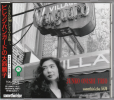
Junko Onishi - Live At The Village Vanguard (1994)

1734574730267.png

I have posted many of Junko's albums here, probably including this one. The intense, intimate vibe of the Village Vanguard seems to bring out the best in the jazz performers lucky enough to appear there. Onishi's set captures her intelligent, affectation-free style backed by the subtle support of Reginald Veal and Herlin Riley. She released a second album from the Vanguard that is equally fine.
 
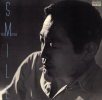
Takeo Moriyama - Smile (1981)

1762459236067.png

This was the first solo album from Takeo Moriyama. Light In The Attic explains further:

"Since the late 1960s, jazz drummer Takeo Moriyama has been a dominant force in the free jazz scene, initially with the Yosuke Yamashita Trio, and more recently, collaborating with the KYOTO JAZZ SEXTET, earning respect from past to present. Recorded in 1980 with his quartet featuring Fumio Itabashi, this album is renowned for being the first to include the emotionally rich Japanese masterpiece "Watarase". Other highlights include the spirited "Exchange" and the beautifully poignant "Goodbye". Each track is a standout, offering a grand-scale performance where tranquility and movement organically intertwine, making it one of the top albums in the history of Japanese jazz."

Takeo Moriyama (Drums)
Yoshio Kuniyasu (Tenor & Soprano Sax)
Fumio Itabashi (Piano)
Hideaki Mochizuki (Bass)
Koichi Matsukaze (Alto & Tenor Sax, Flute)

:5.0: on the Sam-O-Meter.

Sadly, not on Spotify. :vic:

1762459581320.png

Takeo-san doesn't look too sad about it, though. :D
 
Back
Top