Jazz Gems

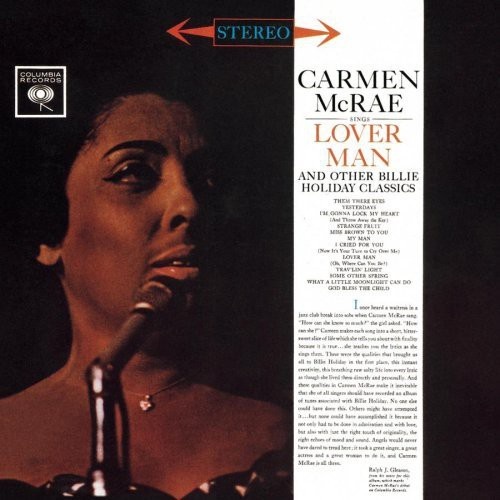
#41) Carmen McRae - Sings Lover Man and Other Billie Holiday Classics (1961)
0001781341.jpg


The original series definitely had jazz vocal albums but certainly the focus was on the "big three" (Ella, Sarah, Billie). Though some other vocalists were there, I don't believe I had a Carmen McRae album - this was definitely an oversight. McRae, today, indeed seems underappreciated. As allmusic.com points out, she may not have the range of say Sarah Vaughn (who does?), her strength lies in "her behind-the-beat phrasing and ironic interpretations of lyrics". One would not think an album of Billie Holiday (McRae's idol) standards would be a great album as it would force comparisons with the iconic Holiday. But, as they say in sports, that's why they play the game. As opposed to when one listens to, say, Michael Buble or Harry Connick and long for the original Sinatra they are covering, at no time does one long for Holiday's versions (even on "Strange Fruit" whih surprised me). McRae puts her own mark on these well known standards, and her interpretations are outstanding. Sure one doesn't get Holiday's put-through-the-wringer-and-hung-up-wet voice invoking the challenges of a life led, but McRae's voice is so wonderful, I don't mind. If you enjoy jazz vocals and haven't checked out McRae, this is a great album to start.
Contains Nat Adderley on trumpet and Eddie "Lockjaw" Davis on tenor sax
 
Last edited:
#42) Kenny Clarke - Bohemia After Dark (1955)

MI0000512182.jpg


Jazz Connections!! Did you know drummer Kenny Clarke was once married to our last album's singer Carmen McRae in the 1940s? Look at the wealth of info this thread gives ya :)

Because of this, I decided to jump to Clarke, an influential bop drummer who once led the Minton's Playhouse house band in Harlem (which opened again in the early 2000s after 30 yrs closed). Clarke played with EVERYONE but has a smattering of albums out there as a bandleader including this one, which actually sometimes isn't attributed to him at all but rather the alto saxophonist who debuts on it, one Julian "Cannonball" Adderley (brother Nat also makes his recording debut here on cornet). Cool album btw with some nice swinging numbers.

This album was recorded soon after Cannonball's discovery btw at the Cafe Bohemia (for which this album gets its name). Oscar Pettiford's band was playing and Cannonball was in the audience with his case. Apparently, someone in the band asked him to borrow his saxophone but Adderley asked to sit in instead and was an immediate sensation (everyone was looking for the next Charlie Parker at the time). This album was recorded weeks later.

I'm not sure what's more fascinating: the topless woman in the chinos obscured ever so carefully by "Bohemia" or the vine covered sword on the side (?Why)
 
#43) Nat Adderley - Work Song (1960)

MI0001785987.jpg


After the Kenny Clarke album, had a hankering to here this one with brother Nat as bandleader. This one includes his classic "Work Song". Nat, often heard on his brother's albums, has such a bright, crisp tone on cornet here.
 
#44) Mutt Carey - Portrait of A New Orleans Master (2002, recorded 1945-47)

MI0000884436.jpg


Wonderful collection of classic New Orleans jazz from the 1940s revival. Papa Mutt Carey was a New Orleans trumpeter who played with the pioneer Louisiana trombonist Kid Ory in bands from the 1910s to 1930s (initially in Louisiana then in California). Being a young musician in New Orleans in the early 20th century, Carey was there at the start to see (and be influenced by) such luminaries as Buddy Bolden and Joe "Kid" Oliver. Like many New Orleans musicians though, it would not be until the 1940s jazz revival when their music would be put to wax. Papa Mutt would sadly pass away soon after these recordings in 1948. Still, this collection survives and is a nice comp of Carey's material with Kid Ory's Creole Jazz Band and Carey's own band mixing Dixieland, ragtime and blues (with blues singer Hociel Thomas who recorded with Gennett and Okeh in the 1920s; these are her last recordings). Nice set that makes me long for the "Economy Tent" at JazzFest where one can still hear this music played today by local bands.

Wow, six albums today - lots of great listening and four out of those six were not featured six years ago in the original Jazz Excursion. A testament to how much great jazz is out there (and how one's musical experience blossoms even over a short stretch).
 
Last edited:
#45) Clark Terry - Serenade to a Bus Seat (1957)

MI0000664126.jpg


Man, what a day - busy, busy. First time posting today - listened to several albums over the weekend.

Great album for a Saturday morning. Terry's trumpet (and later flugelhorn) playing is often termed the "happy horn" and, indeed, this is a delightful albums - bright, energetic. Terry matches up very well with tenor Johnny Griffin. And as oft-covered as Hoagy Carmichael's beautiful "Stardust" is, Terry really has a nice take on it, very pretty. A lesser known gem that the last Penguin edition in 2010 (which chose to be less complete focussing on 1000 albums) steered me towards.
 
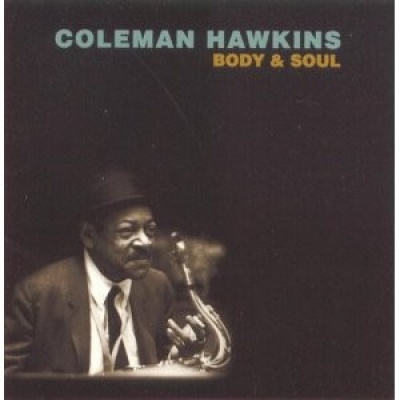
#46) Coleman Hawkins - Body and Soul (1996, recorded 1939-56)
0000277605.jpg


Though there certainly are more recent and complete compilations of Coleman Hawkins late 1930s/early 40s material following his stint in Fletcher Henderson's Orchestra, one tends to be sentimental about the compilation that one has enjoyed for so many years. I picked this one up 20 yrs ago and have loved it since. Still may be one of the best single disc compilations of the master. Along with Lester Young and Ben Webster, Coleman Hawkins brought the tenor saxophone (not a major instrument in early jazz) into prominence in jazz music. Although I love the other two, Hawkins has a certain difficult-to-describe heft to his playing. Directly or indirectly Hawkins would influence every tenor from Dexter Gordon and Johnny Griffin to Rollins and Coltrane. The solos here despite an era where limited by the big band format and three minute single limit are fantastic. Of course, as the title suggests it includes both the classic 1939 version of "Body and Soul", one of the most famous saxophone pieces ever (and an 80 year old piece that still keeps me riveted today to every run and sound made), as well as his 1956 remake (which has some nice differences). Hawk will pop up in the future on some LP-era releases that really let him stretch out, but what he accomplished under the confines of the 10 inch-78 rpm era in the 1930s is incredible.
 
#47) Lee Morgan - Cornbread (1965)

MI0002044956.jpg


Forty-six albums down and no Lee Morgan posts - Randy must be pretty peeved at me. Remedying this now
I've said it before, but how to approach Lee Morgan when all his albums are so consistently good. Oh sure on the basis of their title tracks, most critics will put The Sidewinder and Search for The New Land at the top of Morgan's discography. But where to go next? Everyone has their personal preferences of course, but might I suggest Cornbread? An opening title track that's catchy in the way "The Sidewinder" is for its album. Plus two saxes along with Lee playing - Jackie McLean on alto and Hank Mobley on tenor. Herbie Hancock here too. Just a solid album from start to finish - I really like the slower "Ill Wind" which has a true beauty about it.
 
#48) Paul Desmond - Summertime (1969)

MI0001623006.jpg


Ah, that cool, smooth alto sax of Paul Desmond, most famous for his work with the Dave Brubeck Quartet and that iconic solo on "Take Five". Desmond has some wonderful solo albums too and while Easy Living or Two of A Mind (with Gerry Mulligan) are great go-to albums for Desmond (and will eventually appear hear), don't forget about his '69 album Summertime which has some nice Brasilian/bossa flavors to many of the songs. Some wonderful song choices here (I could hear "Autumn Leaves" on repeat without tiring of it). I wanted to like his take on The Beatles "Ob-La-Di, Ob-La-Da" more but just didn't translate well here (Grant Green as seen earlier did a much better job with "I Want to Hold Your Hand") but great versions of "Some Day My Prince Will Come" and especially "Summertime" (which Desmond deconstructs and makes sound quite original). Love the Brasilian vibe of "Olvidar" and "Samba with Some Barbeque" (a treatment of Satchmo's "Struttin' With Some Barbeque"). Nice listen!
 
#49) Jimmy Smith - Root Down (1972)

MI0001947745.jpg


Man! What a great album! The organ is an interesting jazz instrument because there's so much overlap with the sound of the soul of the 1960s/1970s. Sometimes when listening to Jimmy Smith's 60s stuff, it can sound similar to Booker T & The M.G.'s. Still Smith's improvisational skills on the organ reigns supreme and clearly puts his music in the jazz category. Still, an album like Root Down, with its electric guitar (by blues guitarist Arthur Adams) and bass guitar, almost fits more in the funk category.

And what a funky album it is with lengthy electric funk workouts on its songs. This album really grooves and belongs with the best of the era's funk like James Brown and Funkadelic. But again, listen to the directions Smith goes on the organ - fast, complex runs. Just an exciting album - love it
 
#50) Thelonious Monk - Thelonious Alone in San Francisco (1959)

MI0000737625.jpg


Though around since the mid-1940s and prominent during the bop years, Monk really flourished during the late 50s/early 60s with his albums for Riverside Records with some nice small group (and even big band) releases including his recording with Coltrane. Although solo jazz piano can be challenging even for many jazz fans (and Monk's brand of piano might even chase casual listeners in a piano bar away today ;)), this solo album is a tremendous way to appreciate Monk's music including his angular playing, use of dissonance and his use of space (unlike the full runs of earlier pianists like Art Tatum and Bud Powell). Many of these pieces were ones he explored in small group settings but here they are stripped down in all their glory.
 
Zeeba, you are setting a torrid pace! Hard to keep up with you but I have finally updated our Spotify playlist for Jazz Excursion Redux:


(Yes, but why a duck?)

There are now more than 500 hand selected songs here so I’m looking forward to shuffle playing this all through the holiday weekend. It’s almost as much fun as having Zeeba drop by my house to spin a few platters.

:lala:
 
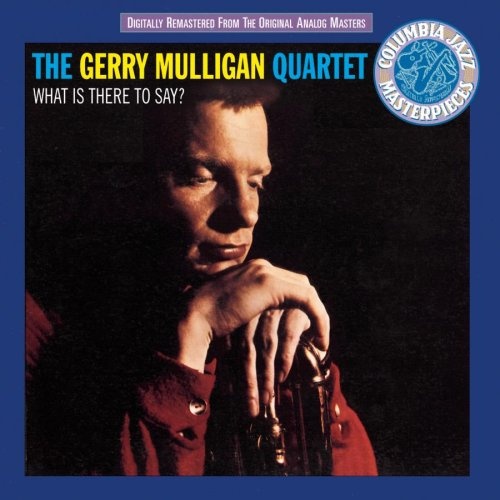
#51) Gerry Mulligan - What Is There To Say? (1959)

0000780284.jpg


Has it really been over 3 months since my post-Jazz Fest spurt of jazz listening? Such a shame. Gotta always remember to keep this thread (and my jazz listening) on page one of the ol' MG. Something always will bring me back though - this time, it's my younger son (14 yo) and his new band teacher I met at Parent's Night. The prior long-standing band director at the school was a long-standing concert band instructor who taught jazz band, but the new teacher's roots are in jazz. Like almost every band director, he guided my son (who plays flute for the school orchestra) towards trying out baritone sax for the jazz ensemble (basically because they didn't have a bari-sax player - this has happened with all three of my kids each of whom got the experience of playing two instruments in band - not a bad thing). I joked with my son about the two most famous baritone sax players - Lisa Simpson and Gerry Mulligan.

Well I don't currently own any of Lisa's works but I've got a lot of Gerry, so decided to break out his chill classic What Is There To Say? Sometimes lost in the greatest year of recorded jazz (1959) amidst giants like Kind of Blue, Time Out, Mingus Ah Um and others, this mellow, "cool jazz" album makes for a great listen. Old standards like "My Funny Valentine" (I wonder how many renditions of that song I own) and "Just In Time" are performed wonderfully, Mulligan's originals hold their own here. Outstanding pianoless quartet including the always-welcome Art Farmer on trumpet.

Perhaps anticipating that a simple jazz album wouldn't impress in 1959, Mulligan's liner notes say:
""But some of the people who do the most talking about jazz (that may even be the basic problem, right there!) don't seem to get any real fun out of listening to it. It seems to me that all the super-intellectualizing on the technics of jazz and the lack of response to the emotion and meaning of jazz is spoiling the fun for listeners and players alike."

No arguments here Gerry, sometimes it's just fun to coolly swing along.:cool:
 
#52) Stan Getz & Joao Gilberto - Getz/Gilberto (1964)

MI0002016275.jpg


The problem with posting on a thread so infrequently/in spurts - I thought I had posted lots of Getz previously and this album in particular

My 1000 Places desk calendar highlighted Ipanema yesterday so I intended to play this yesterday. After Mulligan today, the cool feel of this one dovetailed nicely. Not much to say when one posts an essential classic - my love of Getz and this album have been posted prior. This album which popularized and thus ushered in Brazilian/boss flavors into jazz - a trend that continues even today (when at the Jazz Tent in New Orleans this spring, heard many artists still injecting Brazilian themes in their music. Smooth perfection
 
#53) Vince Guaraldi Trio - Cast Your Fate the Wind: Jazz Impressions of Black Orpheus (1962)

MI0002987804.jpg


Sticking with cool jazz (as well as Brazilian influenced jazz), a real nice album by Vince Guaraldi. Before immense popularity from (and being defined by) his Charlie Brown Christmas album, pianist Vince Guaraldi worked in the late 50s with Cal Tjader's band creating easy-going Latin jazz. After several albums as a leader, Guaraldi recorded this album with a side of Antonio Carlos Jobin and Luis Bonfa numbers from the film Black Orpheus as well as a side B of jazz standards like "Moon River" and "Since I Fell For You". Great listen

Cool jazz is an interesting genre. Some jazz listeners love the solos especially by trumpet and sax, and if there's no big blowing solos, many lose interest. Artists like the ones I listened to today (Mulligan, Getz, Guaraldi) certainly show their technical chops but are restrained and go for a feel, a vibe that appealed to a different kind of listener in the 50s-early 60s that those listening to hard bop or free jazz. Yes, it's no coincident that these three artists are white and white college students ate up folks like Dave Brubeck, Tjader/Guaraldi, Shelly Manne, etc but one can't forget artists like Miles, the MJQ, and Art Farmer and they're interest in cool jazz. Now decades later, as jazz melds so many past styles and qualities together (in addition to adding other elements like hip hop), it's nice to look back and enjoy all aspects of 50s jazz both hot and cool. Both have a place certainly in my collection - and perhaps in the next few days I'll break out some blowers like Johnny Griffin
 
#53) Vince Guaraldi Trio - Cast Your Fate the Wind: Jazz Impressions of Black Orpheus (1962)

MI0002987804.jpg


Sticking with cool jazz (as well as Brazilian influenced jazz), a real nice album by Vince Guaraldi. Before immense popularity from (and being defined by) his Charlie Brown Christmas album, pianist Vince Guaraldi worked in the late 50s with Cal Tjader's band creating easy-going Latin jazz. After several albums as a leader, Guaraldi recorded this album with a side of Antonio Carlos Jobin and Luis Bonfa numbers from the film Black Orpheus as well as a side B of jazz standards like "Moon River" and "Since I Fell For You". Great listen

Cool jazz is an interesting genre. Some jazz listeners love the solos especially by trumpet and sax, and if there's no big blowing solos, many lose interest. Artists like the ones I listened to today (Mulligan, Getz, Guaraldi) certainly show their technical chops but are restrained and go for a feel, a vibe that appealed to a different kind of listener in the 50s-early 60s that those listening to hard bop or free jazz. Yes, it's no coincident that these three artists are white and white college students ate up folks like Dave Brubeck, Tjader/Guaraldi, Shelly Manne, etc but one can't forget artists like Miles, the MJQ, and Art Farmer and they're interest in cool jazz. Now decades later, as jazz melds so many past styles and qualities together (in addition to adding other elements like hip hop), it's nice to look back and enjoy all aspects of 50s jazz both hot and cool. Both have a place certainly in my collection - and perhaps in the next few days I'll break out some blowers like Johnny Griffin
Thanks for the multiple throwbacks, today.

Until you mentioned it, and I went over to the olde record rack, I had not remembered that I own two copies of this release on cool vinyl.

One is on standard black vinyl, and one is on red translucent vinyl. Fantasy used to release albums on red and blue vinyl, if I am not mistaken. I have several Cal Tjader albums on red.

The question I ask myself is, why do I have two copies?
 
Thanks for the multiple throwbacks, today.

Until you mentioned it, and I went over to the olde record rack, I had not remembered that I own two copies of this release on cool vinyl.

One is on standard black vinyl, and one is on red translucent vinyl. Fantasy used to release albums on red and blue vinyl, if I am not mistaken. I have several Cal Tjader albums on red.

The question I ask myself is, why do I have two copies?

Because you forgot you already owned it when you bought the second?
 
Back
Top