Jazz Gems

Zeeba Neighba

Staff member
Five years ago (five? Yikes...really?!), on our prior site, I embarked on a 500 album journey through jazz covering the classics but also delving into less familiar territories and hidden gems. When I started that series, I wasn't a novice to jazz, but I certainly didn't have 500+ jazz albums in my collection either. My choices were a springboard for others like Ojai and JazzyRandy to comment. Now on our new site, Ojai has been asking me to revive the series. Still rather than just repost the albums/commentaries, I'd like to revisit the concept now with the perspective of a jazz fan five years older but also with still a lot to learn and appreciate about jazz. There may be some different picks and certainly a different order, but (classics being classics) I suspect 80% of the albums with be the same as last series.

The choices will not be chronological and some picks might not even be among an artist's most known albums. Still with 500 albums, I assure you that no classic will be missed (we're not gonna get to 500 and forget A Love Supreme. One rule is that compilations will only be included if there are in the pre-LP (mid-50s) era. It would be unthinkable to leave out early jazz artists because their songs were released individually, just as it would be unfair to include as album called John Coltrane's Greatest Hits.

A good list-maker should always mention his biases. Last time, I made sure to have a wide representation of artists over the 100 years of recorded jazz. Still, there is no doubt there was and will be an increased representation of the 1955-65 era. To some extent this is unavoidable; this is the early LP era when jazz recordings were plentiful and jazz remained quite popular up to rock n roll supremacy. It's also arguably the years jazz developed the most with the development of hard bop, cool jazz/West Coast jazz, modal jazz, and free jazz. Giants of old like Louis Armstrong and Dizzy Gillespie had a chance to embrace the LP format while newer artists like John Coltrane, Sonny Rollins, and Clifford Brown would appear on the scene.

Also, while I will showcase a variety of styles, there is no doubt avant garde jazz will get short shrift. One could almost do an entire series on avant garde jazz and its development. Certainly classic albums will appear, but (considering how passionate such fans are) the representation might not be to everyone's liking.

The old series was Zeeba's Jazz Excursion - I title the new thread simply Jazz Excursion. Although I will present my choices, I hope others will comment on the choices or just use the space to comment on their own perspectives on jazz.

Long winded as always I'm afraid (new members will learn that about me). I'm just very excited about revisiting a genre that I've grown to love even more the older I've gotten. On with the selections...
 
Last edited:
#1) Original Dixieland Jazz Band - 75th Anniversary


Jazz didn't begin with the ODJB, despite what cornetist Nick LaRocca claimed, but jazz RECORDING did, so my first pick will begin with this excellent compilation. This year marks the 100th anniversary of "Livery Stable Blues" (released March 7, 1917) usually called the first jazz record/single released. Of course, the beginning of jazz was actually around 20 years earlier as jazz evolved from blues, ragtime, military music, and African-American traditional music and spirituals. Buddy Bolden in New Orleans was blowing his cornet way back at the turn of the century. Still, La Rocca later in life after his star had faded claimed jazz originated with him and termed himself the "Christopher Columbus of Jazz". Pride in jazz is not uncommon - Jelly Roll Morton claimed the same thing - but LaRocca's claims has an element of racism to them as he dismissed the African-American roots of jazz, feeling Black artists borrowed from him.

It's a shame that LaRocca's attitude tarnished the ODJB's image historically, because the music here is hot, and to LaRocca's credit, he's a great player who even Louis Armstrong lauded in interviews. Jazz fans looking to check out the ODJB can find a number of compilations but, as one can imagine, the recording quality leads to a flat, tinny sound with a prominence of the clarinet which translates someone shrilly. Also, the concept of soloing, a major component of jazz, had not developed yet (we'll here more about that later with Satchmo). Still, this leads to a full, exciting sound with all instruments playing simultaneously. It's obvious why jazz took off - this is fast-paced, exciting stuff and "Livery Stable Blues" excites me still today 100 years later. Many of these numbers would become recorded standards, frequently covered and reworked (most known is "Tiger Rag" which is still played by college bands today. Go LSU!)
 
Last edited:
#2) Dexter Gordon - Our Man in Paris (1963)


I'm on vacation Thursday so wanted to get a few more picks in before then, and what better than my favorite album by one of my top 5 tenors (not to mention one of the bossest jazz album covers ever). I'm not sure I've ever heard a bad Dexter Gordon album, but his playing here is so crisp, so fluent...just perfect whether booking through "Scrapple From The Apple" or the old Gillespie standard "Night at Tunisia" (a song so often covered, yet Gordon's version is so welcome) or caressing ballads like "Stairway to the Stars". What puts this over the top is the presence of fellow expat Bud Powell, the great bop pianist, here in one of his final studio recordings. Originally Kenny Drew was to be the pianist, and the album was to be full of originals, but when Powell filled in last-minute, the album was changed to all standards as Bud could not at this point learn new pieces. Powell is fantastic throughout, and most CDs include him soloing on "Like Someone In Love" as a bonus.
 
#3) Vijay Iver Trio - Historicity (2009)


Not to generalize, but every since the days of Bill Evans, piano trios can sometimes display great technical prowess, appealing to one's intellect above one's heart and soul. Not that they can't be exciting, but some jazz listeners are just not drawn to piano trios. Personally, I enjoy piano trios, and artists like Jason Moran and Vijay Iver have made sure that modern trios are anything but dull. Hey Iver's still got that intellectual approach to his music (he did go to Hah-Vahd after all), but damn if he just kills those keys. Historicity is arguably his best and is an intriguing mix of originals and covers. He does a great deconstruction of Bernstein's "Somewhere" from West Side Story, but it's his covers of Stevie Wonder's "Big Brother" leading into Julius Hempell's "Dogon A.D." that especially shine, primarily because of Iver's bassist Stephan Crump who is just killer. "Galang", a cover of M.I.A. song, is pulled off quite nicely as well. Iver's originals including the title track shouldn't be diminished - his piano can sound full, thrilling, even furious...always interesting.
 
Last edited:
Zeeba, I'm thrilled that you have brought this series back. It was one of the highlights of the old site and doubtless will draw a lot of attention here too. It will be interesting to see how the passage of time changes your picks.
 
^
Thanks Sam! Want to jump start the series before I leave for an 8 day trip to D.C. so expect a few more choices over the next couple of days
In fact, here's one:

#4) Stanley Turrentine - Sugar (1970)


Seldom does a group of musicians click on all levels and rise into the stratosphere, but this is one such record, a relic from a time when jazz was going through growing pains but still spawning some interesting projects. Turrentine was one of the lucky few who made his crowning achievement during this time.
- David Rickert All About Jazz (2002)

I love Rickert's description of jazz in the early 1970s as having"growing pains", a time when jazz, becoming less and less commercially viable, took some interesting directions that now sometimes seem dated. Over this series, I'm going to choose several albums though from that period that still sound great, many of which were released on CTI. Tenor saxophonist Stanley Turrentine released several solid to really good albums on Blue Note, but this CTI release with Freddie Hubbard (who also just made the switch to CTI and would have several classics there) may be his best. Turrentine really found his groove playing soul jazz and integrates several electric instruments well (George Benson's guitar, Lonnie Liston Smith's organ). I want to give props to Ron Carter, one of my top jazz bassists, who will appear several times in this series (with Miles' "Second Great Quintet", as a CTI regular, etc.)
Quite the album cover too:eek:

 
#5) Charles Mingus - Mingus Ah Um (1959)


Certainly want the Jazz Excursion to highlight artists and albums that may be lesser know to many, but there's no way to ignore jazz canon albums, giants of the genre; Mingus Ah Um is one of those albums. To me, there is no greater leader of larger ensembles (sextets or more) outside of Ellington than Mingus. While great debate can occur about his "greatest" album, Mingus Ah Um is arguably the best springboard album into Mingus. It contains several numbers than he would rework and that would appear in live sets - "Better Git It In Your Soul", "Goodbye Pork Pie Hat" (a tribute to tenor great Lester Young), "Fables of Faustus" (a piece, later recorded with lyrics, about segregationist Orval E. Faustus). This album, Mingus' Columbia debut, would also highlight his two biggest jazz influences, Duke Ellington and Charlie Parker, not only stylistically but with the dedication pieces "Open Letter to Duke" and "Bird Calls". The music itself is complex but really swings; Mingus had one foot in the avant-garde but never lost his sense of jazz as popular music. Though a bandleader renowned for driving his musicians hard, Mingus' bandmates worked so cohesively; this album contains a trio of sax greats (Booker Ervin, John Handy and Shafi Hadi) as well as two trombonists Willie Dennis and Jimmy Knepper (trombone, as in Ellington's music, is vital; Knepper was a veteran of bandleaders Benny Goodman, Woody Herman and Stan Kenton). Fun fact one may not realize at fitst: there are no trumpets on this album
 
#6) Herbie Hancock - Head Hunters (1973)

220px-Head_Hunters_Album.jpg


Well, after some distractions, I promised myself I'd return to the jazz thread this week, and will return with a biggie - according to several sources, the biggest selling jazz album. Other sources say it's Kind of Blue so I'm not sure whether this is ongoing sales to the present; needless to say this was a popular album with that rare ability to influence not only jazz but extend into other spheres of music like funk and hip hop. Hancock serves up a wonderful platter of jazz fusion that (unlike many albums of the era) remains wonderfully listenable today. Like Miles during this era, Hancock became intrigued by funk artists like James Brown and integrated those influences into his music (the third track is titled "Sly" after "Sly Stone"). I don't spin Herbie as much as others here (Randy loves his 70s material), but always great revisiting it. The bass line of the opening track "Chameleon" is killer. "Watermelon Man", a classic from Hancock's debut, is retooled for synths instead of piano and contains that classic opening sound of Bill Summers blowing into a beer bottle. The album's closer "Vein Melter" is a mellower affair with Herbie exploring some peaceful synthesize soundscapes here. The synths of 70s jazz aren't always my cup of tea (sometimes Chick Corea and especially Joe Zawinul can try my patience), but Herbie always delights. Though all four tracks are relatively lengthy pieces ("Chameleon" tops 15 minutes), the album breezes by and its rhythms stick with you well after the album ends.
 
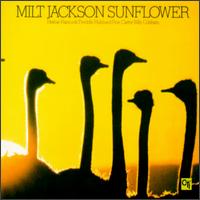
#7) Milt Jackson - Sunflower (1973)

Sunflower_%28Milt_Jackson_album%29.jpg


A sublime album - sticking with Herbie Hancock and returning to the CTI label, we turn to vibist Jackson who released three albums for the label in the early 70s. Don Sebesky's arrangement, using an 11-piece string ensemble along with a harpist, might not be for everyone (CTI's 70's works when done poorly moved into easy listening). Still, one would have to be quite stubborn to not admit the beauty of this album (jazz with strings can indeed be done right as Charlie Parker, Clifford Brown and Stan Getz (on Focus) proved). Those used to Jackson's vibes in the setting of the Modern Jazz Quartet may be a bit surprised here as he ventures into soul jazz with a cover of the Stylistics "People Make the World Go Round". Jackson works here with a killer combo including Hancock, Billy Cobham on drums, Ron Carter (RON CARTER!) on bass and Herbie Hancock on trumpet and flugelhorn (as much as I love Hancock's CTI output, I'm drawn to this album more). The opening side - "For Someone I Love (What's Your Story)" and (especially) "What Are You Doing the Rest of Your Life" are fantastic, the latter a now-forgotten Oscar-nominated song from the film The Happy Ending.

220px-Poster_of_the_movie_The_Happy_Ending.jpg
 
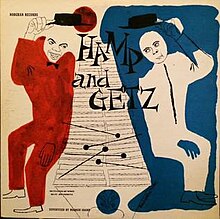
#8) Lionel Hampton & Stan Getz - Hamp and Getz (1955)

220px-Hamp_and_Getz.jpg


I want to take a fresh approach with this series, but realistically realize that I've done this thread 5 years ago so many of the albums will appear again. So decided to take a "Jazz Connections" approach - using an album as a springboard for the next album, finding some connection - perhaps an artist, style, sideman, or even a song - between the two albums. Jazz is a wonderfully interconnected genres with bandmembers or standards appearing again and again. Can one survey jazz history by jumping from one connection to another - well, we'll see.

So we went from Herbie Hancock as a leader to him as a sideman on Sunflower, and now I'd like to stick with the vibraphone as main instrument as we move on to Lionel Hampton, whose career stretched from the 1920s until a stroke in 1990s (he even played for a Smithsonian performance in 2001 just prior to his death). With such a long career, one can't overstate his influence on every vibraphonist from Milt Jackson to Bobby Hutcherson even to Jason Marsalis' diversion into the vibes this decade.

This pick showcases both Getz's cool tenor and Hampton quite well especially when they both cook on uptempo numbers like "Cherokee" and "Jumping at the Woodside".
 
#8) Lionel Hampton & Stan Getz - Hamp and Getz (1955)

220px-Hamp_and_Getz.jpg


I want to take a fresh approach with this series, but realistically realize that I've done this thread 5 years ago so many of the albums will appear again. So decided to take a "Jazz Connections" approach - using an album as a springboard for the next album, finding some connection - perhaps an artist, style, sideman, or even a song - between the two albums. Jazz is a wonderfully interconnected genres with bandmembers or standards appearing again and again. Can one survey jazz history by jumping from one connection to another - well, we'll see.

So we went from Herbie Hancock as a leader to him as a sideman on Sunflower, and now I'd like to stick with the vibraphone as main instrument as we move on to Lionel Hampton, whose career stretched from the 1920s until a stroke in 1990s (he even played for a Smithsonian performance in 2001 just prior to his death). With such a long career, one can't overstate his influence on every vibraphonist from Milt Jackson to Bobby Hutcherson even to Jason Marsalis' diversion into the vibes this decade.

This pick showcases both Getz's cool tenor and Hampton quite well especially when they both cook on uptempo numbers like "Cherokee" and "Jumping at the Woodside".
Never heard this. Will be checking out later!
 
#6) Herbie Hancock - Head Hunters (1973)

220px-Head_Hunters_Album.jpg


Well, after some distractions, I promised myself I'd return to the jazz thread this week, and will return with a biggie - according to several sources, the biggest selling jazz album. Other sources say it's Kind of Blue so I'm not sure whether this is ongoing sales to the present; needless to say this was a popular album with that rare ability to influence not only jazz but extend into other spheres of music like funk and hip hop. Hancock serves up a wonderful platter of jazz fusion that (unlike many albums of the era) remains wonderfully listenable today. Like Miles during this era, Hancock became intrigued by funk artists like James Brown and integrated those influences into his music (the third track is titled "Sly" after "Sly Stone"). I don't spin Herbie as much as others here (Randy loves his 70s material), but always great revisiting it. The bass line of the opening track "Chameleon" is killer. "Watermelon Man", a classic from Hancock's debut, is retooled for synths instead of piano and contains that classic opening sound of Bill Summers blowing into a beer bottle. The album's closer "Vein Melter" is a mellower affair with Herbie exploring some peaceful synthesize soundscapes here. The synths of 70s jazz aren't always my cup of tea (sometimes Chick Corea and especially Joe Zawinul can try my patience), but Herbie always delights. Though all four tracks are relatively lengthy pieces ("Chameleon" tops 15 minutes), the album breezes by and its rhythms stick with you well after the album ends.
I have unacceptably been absent from this thread, but, as Zeebs mentioned, I have a great affection for (most of) Herbies 70s albums. And the more I listen to them, or acquire another one I don't yet own, the more I like them all. It's like a puzzle that one snaps together and lays down as you walk along a wooded path -- I can't fully appreciate any one album of Herbie's from this period without hearing the albums that immediately preceded and followed it. More than nearly any other musician I know, his oeuvre is tightly bound to its discrete pieces, and while any one album can be immensely enjoyed individually, it truly is an incomplete experience without listening to more of Herbie.

/whew, where did all that malarkey come from?

Taking off my Jazz monocle, extinguishing my cigar and removing my smoking jacket, and putting down my snifter, Head Hunters is a great listen on its own merits. After the end of the 60s, Herbie moved from a more traditional Blue Note Jazz sound to a period of exploration with Fat Albert Rotunda and the Mwandishi trilogy, where he began adding funk to his mix but in a loose manner. Some people absolutely love these four albums, as witnessed by AMG awarding two of the trilogy a full 5 stars -- I like them, but haven't quite fully embraced the seemingly random, almost but not quite free, interplay. However, after paying more attention to his albums before and after this period, I like the trilogy a lot more than I did upon my first listenings. Ultimately, I may begin to revere them as much as others do.

With Head Hunters, Herbie locked into the Funky groove of the preceding trilogy, ejected the avant-garde freeness, and allowed his bandmates to get as jazzily groovy as the decade demanded. It's easy to dismiss these albums as bereft of true Jazz, and many people have chosen to refuse to acknowledge this (and later) Herbie as "real" Jazz or even as simply good music. Yet, when I listen to Head Hunters, and Thrust, and Man-Child, and Secrets, I can't help but, within the bobbing insistent groove, hear nothing but Jazz in the solos. If one absolutely hates Funk, one should hate this. If one loves Jazz, one should find something redeemable about this, and maybe even a good bit of ear enjoyment.

#aside ~ This is very much like some of the music Kool & The Gang and Earth Wind & Fire were doing in the late 60s and early 70s. I know many Jazz enthusiasts would scoff at the idea of comparing the musicians behind "Joanna" and "Boogie Wonderland" to "Blue Train" or even "Bitches Brew", but those people are shortsighted. Check out the 9+minute title cut on the "Wild & Peaceful" album, or "Energy" from EWF's second album. Straight-on traditional Hard Bop? Not hardly. Funky yet containing solid and prominent elements of Jazz? Certainly. The most significant difference is instead of a swing beat, those songs and Herbie's from this period, utilize Funk rhythms and basslines -- but unless you're in the camp of Wynton ("If it doesn't swing, then it can't be Jazz,") it's hard to deny the Jazzy play of the other instrumentalists.

This is, to me, perfect.
 
Last edited:
^
Great comments, Jazzy...been waiting for you to unleash your jazziness. Not to get all Victor Lazlo on ya, but "welcome to the fight"

Taking off my Jazz monocle, extinguishing my cigar and removing my smoking jacket, and putting down my snifter

LOL

If it doesn't swing, then it can't be Jazz

I could almost hear his voice in my mind saying this
 
I have unacceptably been absent from this thread, but, as Zeebs mentioned, I have a great affection for (most of) Herbies 70s albums. And the more I listen to them, or acquire another one I don't yet own, the more I like them all. It's like a puzzle that one snaps together and lays down as you walk along a wooded path -- I can't fully appreciate any one album of Herbie's from this period without hearing the albums that immediately preceded and followed it. More than nearly any other musician I know, his oeuvre is tightly bound to its discrete pieces, and while any one album can be immensely enjoyed individually, it truly is an incomplete experience without listening to more of Herbie.

/whew, where did all that malarkey come from?

Taking off my Jazz monocle, extinguishing my cigar and removing my smoking jacket, and putting down my snifter, Head Hunters is a great listen on its own merits. After the end of the 60s, Herbie moved from a more traditional Blue Note Jazz sound to a period of exploration with Fat Albert Rotunda and the Mwandishi trilogy, where he began adding funk to his mix but in a loose manner. Some people absolutely love these four albums, as witnessed by AMG awarding two of the trilogy a full 5 stars -- I like them, but haven't quite fully embraced the seemingly random, almost but not quite free, interplay. However, after paying more attention to his albums before and after this period, I like the trilogy a lot more than I did upon my first listenings. Ultimately, I may begin to revere them as much as others do.

With Head Hunters, Herbie locked into the Funky groove of the preceding trilogy, ejected the avant-garde freeness, and allowed his bandmates to get as jazzily groovy as the decade demanded. It's easy to dismiss these albums as bereft of true Jazz, and many people have chosen to refuse to acknowledge this (and later) Herbie as "real" Jazz or even as simply good music. Yet, when I listen to Head Hunters, and Thrust, and Man-Child, and Secrets, I can't help but, within the bobbing insistent groove, hear nothing but Jazz in the solos. If one absolutely hates Funk, one should hate this. If one loves Jazz, one should find something redeemable about this, and maybe even a good bit of ear enjoyment.

#aside ~ This is very much like some of the music Kool & The Gang and Earth Wind & Fire were doing in the late 60s and early 70s. I know many Jazz enthusiasts would scoff at the idea of comparing the musicians behind "Joanna" and "Boogie Wonderland" to "Blue Train" or even "Bitches Brew", but those people are shortsighted. Check out the 9+minute title cut on the "Wild & Peaceful" album, or "Energy" from EWF's second album. Straight-on traditional Hard Bop? Not hardly. Funky yet containing solid and prominent elements of Jazz? Certainly. The most significant difference is instead of a swing beat, those songs and Herbie's from this period, utilize Funk rhythms and basslines -- but unless you're in the camp of Wynton ("If it doesn't swing, then it can't be Jazz,") it's hard to deny the Jazzy play of the other instrumentalists.

This is, to me, perfect.
I love nearly all phases of Herbie.

As a drummer, this one is FUN.

A few years ago, I was part of a jam session where we basically built up (and tore down) off of "Chameleon" for about 20 minutes.
 
^^^
Great post, Randy. At first I had a lot of trouble handling Herbie's changes in direction after the Blue Note years but I have come to embrace them as artistically worthwhile, not just commercially necessary.

I agree that he is an artist worthy of an album by album examination. How about we start a "Spotlight Artist" series with him? I already promised Nick I would do that for Marianne Faithfull.
 
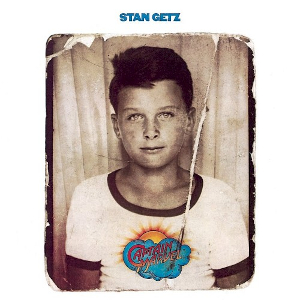
#9) Stan Getz - Captain Marvel (1972)

Stan_Getz_Captain_Marvel.jpg


Using Hamp & Getz as a springboard to this Getz album, jumping over his more famous 50's cool jazz and 60's bossa nova titles. Love Stan Getz who IMO doesn't get the same attention or elevation into the ranks of sax greatness as he deserves. Maybe that's just my perception in my jazz discussions/readings; after all, several lists place him in the 10-20 range of greatest saxophonists, not too shabby. Still, Stan had a tremendously long career from the 1940s to 1990s despite drug issues (a triumph right there) moving from big band with Benny Goodman, Stan Kenton, and Woody Herman into bop, cool jazz, and fusion all with success. Of course, he's known (along with his collaborators) for popularizing Brazilian music and integrating those elements into jazz (an influence which continues today).

Still I wanted to jump to this gem which finds Getz embracing fusion and playing with such greats as drummer Tony Williams, bassist Stanley Clarke, and keyboardist Chick Corea, all giants of jazz fusion. With Corea and Getz, there's going to naturally be some Latin elements - the opener "Fiesta" is a fun piece. Getz tone (his nickname was "The Sound" is warm and relaxed; he really shines on the title track and on a cover of Billy Strayhorn's piece "Lush Life" (the only cover; all other pieces are by Corea). As I've stated above, I don't always gravitate to fusion keyboardists. We'll see Corea again with some great albums here, but he's definitely hit or miss IMO. Still, his playing/flourishes on the closer "Day Waves" really were pretty cool.
 
As above, I've enjoyed connecting the last four jazz albums by musicians or instruments, so gonna keep it up and changed the thread title to the rather unwieldy but descriptive title above. Gonna keep jumping from album to album (though I suspect, in order to include some albums, I'll have to use flimsier connections) as long as I can.
 
Back
Top