Jazz Gems

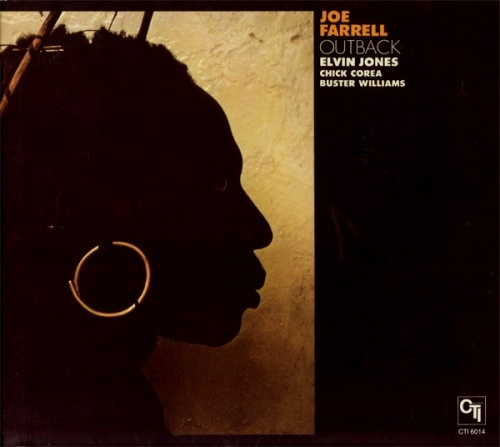
#64) Joe Farrell - Outback (1972)

0003399077.jpg


What made me think of breaking this gem out today? Glad I did

Otherwordly chill album courtesy of Creed Taylor's CTI label. Farrell's winds (flutes, saxes, piccolo) blend wonderfully with the touch of fusion of Corea's electric piano. Has that 70s jazz feels and yet never feels dated. Brazilian percussionist Airto Moreira (who also recorded for CTI) is for some reason not listed on the album front cover but his sound contributes to the album's vibe.
 
#65) Cannonball Adderley - Somethin' Else (1958)

image.jpg


Hopefully my posts here vary from the unheralded gems to the obvious classics. This one is an obvious choice - my memory may not serve me well, but I'm sure on some post in the past decade I referred to this as a perfect intro album. Wonderful sound, not too dense or inaccessible. Three oft-covered classics, three lesser known originals (by Miles, pianist Hank Jones, and Cannonball's brother Nat). Miles is a rare sideman here, but had a huge role in song choices. His solo on (one of my favorites) "Autumn Leaves" is wonderful . Good stuff all around
Although many have left last.fm behind, I do love referring to it - it tells me I've broken out this album 5 times in the past 7 years - sad and inadequate, as I do love it. Too much music in the world. I may start listening to two albums at once ;) For now, glad to break it out again. :thumbsup:
 
#65) Cannonball Adderley - Somethin' Else (1958)

image.jpg


Hopefully my posts here vary from the unheralded gems to the obvious classics. This one is an obvious choice - my memory may not serve me well, but I'm sure on some post in the past decade I referred to this as a perfect intro album. Wonderful sound, not too dense or inaccessible. Three oft-covered classics, three lesser known originals (by Miles, pianist Hank Jones, and Cannonball's brother Nat). Miles is a rare sideman here, but had a huge role in song choices. His solo on (one of my favorites) "Autumn Leaves" is wonderful . Good stuff all around
Although many have left last.fm behind, I do love referring to it - it tells me I've broken out this album 5 times in the past 7 years - sad and inadequate, as I do love it. Too much music in the world. I may start listening to two albums at once ;) For now, glad to break it out again. :thumbsup:
Obvious choice, yes. Perfect intro, probably as good as any, but I'm not sure it works for everyone.

I got my first copy of this while playing the Columbia House game. Every time I joined, I'd get my batch of CDs, work through my committment. Cancel. Repeat. Month after month, year after year, this CD kept being offered. Others would come and go, but this was one of the Mount Rushmore of Columbia House CDs that never went away. The plain cover didn't entice me. Miles' name didn't entice me, because at that time I didn't like much of his work. And honestly, I didn't really know any of the other musicians listed on the cover. So I passed, and passed.

After I'd gotten about 80 CDs (I actually don't remember exactly, could have been 50 or 120) from Columbia House, I finally broke down and put this one on order. It arrived. I listened. And I wished I had waited 80 more CDs before I'd ordered it. It bored me silly.

Now, of course, I love it. But in my Jazz adoption days, it left me unfulfilled.
 
Last edited:
Obvious choice, yes. Perfect intro, probably as good as any, but I'm not sure it works for everyone.

I got my first copy of this while playing the Columbia House game. Every time I joined, I'd get my batch of CDs, work through my committment. Cancel. Repeat. Month after month, year after year, this CD kept being offered. Others would come and go, but this was one of the Mount Rushmore of Columbia House CDs that never went away. The plain cover didn't entice me. Miles' name didn't entice me, because at that time I didn't like much of his work. And honestly, I didn't really know any of the other musicians listed on the cover. So I passed, and passed.

After I'd gotten about 80 CDs from Columbia House, I finally broke down and put this one on order. It arrived. I listened. And I wished I had waited 80 more CDs before I'd ordered it. It bored me silly.

Now, of course, I love it. But in my Jazz adoption days, it left me unfulfilled.

You might be right - most of the album is pretty chill and mellow ("Bangoon" the bonus track really swings) and might not be quite jazzy enough for those who are looking for jazz that really cooks, daddyo:cool:
 
Over the past few months, Jazz Times has been conducting a survey of musicians, experts and fans to identify the best Jazz albums from 1970-2020, which for those of us to whom math is a dying language, is the last 50 years. It's long been a pet peeve of mine that Best Jazz Of All Time lists practically end in the early 70s. It is especially heartwarming to me to see JT do something like this. Here is a link to the first installment.
Best Jazz of the 1970s
Naturally, my list would have been different and BB would not have been the #1 album of the decade, but that's a minor squabble. I listed the albums here, but Jazz Times has a paragraph or two about each album's impact at the link which makes it worthwhile to click through. Also at the link are links to each subsequent decade.

Miles Davis - Bitches Brew (1970)
Freddie Hubbard - Red Clay (1970)
The Mahavishnu Orchestra - The Inner Mounting Flame (1971)
Chick Corea: Return to Forever (ECM, 1972)
Herbie Hancock: Head Hunters (Columbia, 1973)
David Holland Quartet: Conference of the Birds (ECM, 1973)
Keith Jarrett: The Köln Concert (ECM, 1975)
Wayne Shorter: Native Dancer (Columbia, 1975)
Pat Metheny: Bright Size Life (ECM, 1976)
Weather Report: Heavy Weather (Columbia, 1977)


Jazz Times released the results of the fans' poll separately. Here it is.
Best Jazz of the 1970s according to fans

1. Miles Davis: Bitches Brew
2. Herbie Hancock: Head Hunters
3. Chick Corea: Return to Forever
4. Keith Jarrett: The Köln Concert
5. Weather Report: Heavy Weather
6. Pat Metheny: Bright Size Life
7. Freddie Hubbard: Red Clay
8. Jaco Pastorius: Jaco Pastorius
9. Miles Davis: A Tribute to Jack Johnson
10. Weather Report: Weather Report


Just for kicks and wiggles, here is my list of the Best Jazz of the 1970s

Freddie Hubbard - Red Clay (1970)
Herbie Hancock - Headhunters (1973)
Billy Harper - Capra Black (1973)
Lee Morgan - The Last Session (1972)
Arthur Blythe - Lennox Avenue Breakdown (1979)
Joe Henderson - Multiple (1973)
Woody Shaw - Rosewood (1978)
Grover Washington Jr - Mister Magic (1975)
The Crusaders - These Southern Knights (1976)
Spyro Gyra - Morning Dance (1979)

Instead of boring everyone with why these and not others, I'll present it as is. Suffice it to say that blood was spilt as I fought with myself to cull 25 albums down to 10.

EDIT: The following album was on my original list, but replaced because JT's rules stated no artist could be listed twice in any decade. They could play on multiple albums, but no two albums with them listed as leader could be nominated.
Freddie Hubbard - Straight Life (1971)

 
Last edited:
^
Randy, this is brilliant. I love your choices and will enjoy working through them. Thank you! :banana:
I hope you like them.
I just realized Jazz Times had a rule against nominating two albums by the same artist within a single decade. I need to correct my list.
 
Last edited:
Since I listed the JazzTimes critics' picks for the 1970s, I figured I'd finish the lists here.
Note: While the fans' lists are organized from #1-#10, the critics lists are listed in order of the year of release.

1980s
Pat Metheny: 80/81 (ECM, 1980)
Joe Henderson: Mirror Mirror (MPS, 1980)
Jaco Pastorius: Word of Mouth (Warner Bros., 1981)
Herbie Hancock: Future Shock (Columbia, 1983)
Jack DeJohnette's Special Edition: Album Album (ECM, 1984)
Wynton Marsalis: Black Codes (From the Underground) (Columbia, 1985)
Miles Davis: Tutu (Warner Bros., 1986)
Michael Brecker: Michael Brecker (MCA/Impulse!, 1987)
Betty Carter: Look What I Got! (Bet-Car/Verve, 1988)
World Saxophone Quartet: Rhythm and Blues (Elektra, 1989)


1990s
John Zorn: Naked City (Elektra/Nonesuch, 1990)
Stan Getz, Kenny Barron: People Time (Verve, 1992)
Don Byron: Tuskegee Experiments (Nonesuch, 1992)
Shirley Horn: Here's to Life (Verve, 1992)
Henry Threadgill: Too Much Sugar for a Dime (Axiom, 1993)
Cassandra Wilson: Blue Light 'Til Dawn (Blue Note, 1993)
Joshua Redman: MoodSwing (Warner Bros., 1994)
Charlie Haden, Hank Jones: Steal Away (Verve, 1995)
Diana Krall: Love Scenes (GRP/Impulse!, 1997)
Brad Mehldau: Songs: The Art of the Trio Volume Three (Warner Bros., 1998)


2000s
Andrew Hill: Dusk (Palmetto, 2000)
Jason Moran: Black Stars (Blue Note, 2001)
Wayne Shorter: Footprints Live! (Verve, 2002)
Don Byron: Ivey-Divey (Blue Note, 2004)
Sonny Rollins: Without a Song: The 9/11 Concert (Milestone, 2005)
Michael Brecker: Pilgrimage (Heads Up/Concord, 2007)
Roy Hargrove: Earfood (EmArcy/Decca, 2008)
Charles Lloyd Quartet: Rabo de Nube (ECM, 2008)
Joe Lovano Us Five: Folk Art (Blue Note, 2009)
Miguel Zenón: Esta Plena (Marsalis, 2009)


2010s
Terri Lyne Carrington: The Mosaic Project (Concord Jazz, 2011)
Esperanza Spalding: Radio Music Society (Heads Up/Concord, 2002)
Wayne Shorter Quartet: Without a Net (Blue Note, 2013)
Chick Corea Trio: Trilogy (Stretch/Concord Jazz, 2014)
Kamasi Washington: The Epic (Brainfeeder, 2015)
Aziza: Aziza (Dare2, 2016)
Gregory Porter: Take Me to the Alley (Blue Note, 2016)
Vijay Iyer Sextet: Far from Over (ECM, 2017)
Cécile McLorin Salvant: The Window (Mack Avenue, 2018)
Branford Marsalis Quartet: The Secret Between the Shadow and the Soul (Marsalis/OKeh, 2019)
 
I was struck by how many albums there are with vocals or even vocals on at least half the songs in the 2010s and 1990s, with three in each decade. My bias often puts Jazz Vocal albums a notch below instrumental albums, and personally I need to be reminded to give them a little more credit.

I was surprised by how many albums I personally own(ed) from each decade, yet I did not have more than half of the "top" albums in 4 of the 5 decades. Seven (of 216 Jazz albums owned, according to RYM) from the 2010s, four (of 214 owned) from the 2000s, four (of 191 owned) from the 1990s, four (of 98 owned) from the 1980s, and five (of 154 owned) from the 1970s.

I think I'll use this list to pick up a few of the 26 albums I haven't yet heard. And I'll start listening to the ones I do own ... starting with ...
 
Last edited:
Jason Moran - Black Stars (2001)


JazzTimes said:
Jason Moran’s third album is his only recorded collaboration with Sam Rivers, who is 50 years older. Rivers pulls Moran outside and Moran pulls Rivers in. They meet in an incredibly fertile zone in the middle, where Moran is set free for wild skittering runs that climax in ecstatic tremolos and crashing chords, and Rivers concentrates his ferocity into concise onslaughts. It is a May-December marriage made in heaven.
by THOMAS CONRAD

I didn't like this very much when I got it, which was probably not long after it was released. I had heard a lot of hype about Moran and had liked the idea of him filtering more contemporary black music forms through the Jazz prism. And seeing a song titled "Gangsterism On A River" armed me with false preconceptions of what I was signing up for. This was not what I was expecting. There are not backbeats or breakdowns - this is all Jazz ... but a little out most of the time, and a little more out than a little out at other times.

The inclusion of avant-garde titan Sam Rivers guarantees a lot of out-ness on this album. With or without Rivers, it's easy to label Moran as being from the school of Andrew Hill. It's an easy fit to slot this album in the playlist next to an Andrew Hill album. And it's best to approach this as one would an Andrew Hill album.

This opens kind of sparse sounding, even though the entire group is playing when "Foot Under Foot" opens the album. Then, when "Kinda Dukish" opens with a skittering drum beat, things get a little looser and even bouncy at times as Moran expands on a theme again and again, unencumbered by Rivers' riffing grifting the rhythmic tide as the saxman sits this one out. When "Gangsterism On A River" comes along, all quiet and thoughtful, Rivers plays nicely with the others. Even when he goes on an extended riff that ends up dominating the rest of the song, the rhythm section keeps this one grounded nicely. It's an interesting juxtaposition of energies.

That describes most of the album. Forces working together but at odds with each other. That dynamic makes this album exciting to listen to, but only if I can afford to focus my attention on it. This is not an album of background music. If my attention fades in and out, this becomes a disjointed, unsatisfying listen. These are not easy songs to dip out on, then return to a memorable chorus. This is music that requires your rapt attention. It rewards you for paying attention, but it also punishes those whose minds wander.

Zeeba references: No Moran albums are mentioned in this thread earlier, but Zeebs did mention Moran in posts #5 and #46.
 
Last edited:
I thought about where to post this. After one or two moments of consideration, I decided to post it here.

Chick Corea is a musical icon, a beloved Jazz gem.

 
Back
Top