Jazz Gems

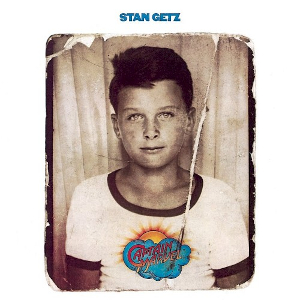
#9) Stan Getz - Captain Marvel (1972)

Stan_Getz_Captain_Marvel.jpg


Using Hamp & Getz as a springboard to this Getz album, jumping over his more famous 50's cool jazz and 60's bossa nova titles. Love Stan Getz who IMO doesn't get the same attention or elevation into the ranks of sax greatness as he deserves. Maybe that's just my perception in my jazz discussions/readings; after all, several lists place him in the 10-20 range of greatest saxophonists, not too shabby. Still, Stan had a tremendously long career from the 1940s to 1990s despite drug issues (a triumph right there) moving from big band with Benny Goodman, Stan Kenton, and Woody Herman into bop, cool jazz, and fusion all with success. Of course, he's known (along with his collaborators) for popularizing Brazilian music and integrating those elements into jazz (an influence which continues today).

Still I wanted to jump to this gem which finds Getz embracing fusion and playing with such greats as drummer Tony Williams, bassist Stanley Clarke, and keyboardist Chick Corea, all giants of jazz fusion. With Corea and Getz, there's going to naturally be some Latin elements - the opener "Fiesta" is a fun piece. Getz tone (his nickname was "The Sound" is warm and relaxed; he really shines on the title track and on a cover of Billy Strayhorn's piece "Lush Life" (the only cover; all other pieces are by Corea). As I've stated above, I don't always gravitate to fusion keyboardists. We'll see Corea again with some great albums here, but he's definitely hit or miss IMO. Still, his playing/flourishes on the closer "Day Waves" really were pretty cool.
Zeeb, I think this one wasn't on Jazz Excursion 1.0. What a great addition! :thumbsup:

On Captain Marvel, Stan Getz succeeded in adapting his sound to the contemporary style without sacrificing his artistic integrity. He was 45 years old while Corea was still in his early 30's. Contrast this with Miles Davis, who was but one year older than Getz. Others may differ, but for me the recordings Miles made with Corea (Filles de Kilimanjaro, In a Silent Way, Bitches Brew, Black Beauty: Live at the Fillmore West and Miles Davis at Fillmore: Live at the Fillmore East) don't hold up nearly as well today because they seem like a sellout to rock. Anyway, Getz would have looked pretty silly in a dashiki.

:5.0: on the Sam-O-Meter.
 
^
Good comments, Sam! Thanks for chiming in.

#10) Stanley Clarke - School Days (1976)

220px-Stanleyclarkeschooldays.jpg


From Getz' album, I took Captain Marvel's bassist Clarke and chose next his most famous album, one that actually hit the Billboard Top 40 primarily on the strength and funkiness of the title track. For a guy who jazz listening really tapers off after the mid-60s, I've included a lot of primo 70s fusion stuff so far. School Days is an impressive showcase for Clarke who plays both electric and acoustic bass on the album (recording both actually on one track). Otherwise no horns here - primarily keyboards (David Sancious does some nice work on several tracks (e.g. "Quiet Afternoon) and even plays guitar on one) and guitars (a variety of guitarists including John McLaughlin) - which probably contributed to its crossover appeal as I could see it being mislabeled (prog? rock?) at many record stores. ;) Not an album I turn to a lot from this era, but Clarke is indeed a powerhouse and at 37 minutes, it breezes by.
 
^
Good comments, Sam! Thanks for chiming in.

#10) Stanley Clarke - School Days (1976)

220px-Stanleyclarkeschooldays.jpg


From Getz' album, I took Captain Marvel's bassist Clarke and chose next his most famous album, one that actually hit the Billboard Top 40 primarily on the strength and funkiness of the title track. For a guy who jazz listening really tapers off after the mid-60s, I've included a lot of primo 70s fusion stuff so far. School Days is an impressive showcase for Clarke who plays both electric and acoustic bass on the album (recording both actually on one track). Otherwise no horns here - primarily keyboards (David Sancious does some nice work on several tracks (e.g. "Quiet Afternoon) and even plays guitar on one) and guitars (a variety of guitarists including John McLaughlin) - which probably contributed to its crossover appeal as I could see it being mislabeled (prog? rock?) at many record stores. ;) Not an album I turn to a lot from this era, but Clarke is indeed a powerhouse and at 37 minutes, it breezes by.
Great post! I learned about Clarke's solo work right here at MG. :thumbsup:
 
#11) Dexter Gordon - Tangerine (1975)


Stanley Clarke was the bassist on much of this lesser-known gem in tenorman Gordon's catalog, taken from his career's second half (and an album that did not come up in the 500+ album Jazz Excursion 5 years ago). Sure Dexter came up just ten picks ago, but he is such a satisfying listen, I don't mind him coming up again so soon. Nice hard bop album highlighting Gordon's rich tenor. Sure not as exciting as his peak Blue Note work (not much is), but Dexter is warm and dexterous; the title track is a high point. Great mellow vibe to which Thad Jones (on trumpet and flugelhorn) contributes.
 
#12) Thad Jones - The Magnificent Thad Jones (1957)

220px-The_Magnificent_Thad_Jones.jpg


From Dexter's Tangerine, I went with trumpeter/flugelhornist Thad Jones. Often know for his big band work with Basie and the great Thad Jones/Mel Lewis orchestra, Jones' 1950s work as a leader on Blue Note and Debut are well worth seeking out. Love the cover on this one with Jones among the pigeons (always giggle at the superlatives that find their way on 50s jazz covers - magnificent! amazing! (Bud Powell) eminent! (J.J. Johnson) . Cool, breezy listen by a great quintet including Max Roach on drums, Billy Mitchell on tenor and Percy Heath on bass. Jones, whose ten brothers included Coltrane drummer Elvin and pianist Hank.
Stick around this thread long enough and you're bound to hear my adoration of Clifford Brown whose virtuosity and warm, mellow yet full sound had a tremendous impact in jazz despite his short life and career (Booker Little, Freddie Hubbard, Lee Morgan just to name a few). Though a contemporary of Brownie, these recordings (only a month after Clifford's death) to me, have a bit of Brown here too - Jones solos are sparser but share the same mood/tone. Whether one hears that connection or now, this is a nice chill listen:cool:
 
#9) Stan Getz - Captain Marvel (1972)

Stan_Getz_Captain_Marvel.jpg


Using Hamp & Getz as a springboard to this Getz album, jumping over his more famous 50's cool jazz and 60's bossa nova titles. Love Stan Getz who IMO doesn't get the same attention or elevation into the ranks of sax greatness as he deserves. Maybe that's just my perception in my jazz discussions/readings; after all, several lists place him in the 10-20 range of greatest saxophonists, not too shabby. Still, Stan had a tremendously long career from the 1940s to 1990s despite drug issues (a triumph right there) moving from big band with Benny Goodman, Stan Kenton, and Woody Herman into bop, cool jazz, and fusion all with success. Of course, he's known (along with his collaborators) for popularizing Brazilian music and integrating those elements into jazz (an influence which continues today).

Still I wanted to jump to this gem which finds Getz embracing fusion and playing with such greats as drummer Tony Williams, bassist Stanley Clarke, and keyboardist Chick Corea, all giants of jazz fusion. With Corea and Getz, there's going to naturally be some Latin elements - the opener "Fiesta" is a fun piece. Getz tone (his nickname was "The Sound" is warm and relaxed; he really shines on the title track and on a cover of Billy Strayhorn's piece "Lush Life" (the only cover; all other pieces are by Corea). As I've stated above, I don't always gravitate to fusion keyboardists. We'll see Corea again with some great albums here, but he's definitely hit or miss IMO. Still, his playing/flourishes on the closer "Day Waves" really were pretty cool.
After this selection, I ordered the album. I don't have enough Getz and this was the perfect excuse/guide to which one to pick up.

I like it a lot -- almost love it. It'll definitely get a few spins over the next couple of weeks. Great choice!
 
Last edited:
#12) Thad Jones - The Magnificent Thad Jones (1957)

220px-The_Magnificent_Thad_Jones.jpg


From Dexter's Tangerine, I went with trumpeter/flugelhornist Thad Jones. Often know for his big band work with Basie and the great Thad Jones/Mel Lewis orchestra, Jones' 1950s work as a leader on Blue Note and Debut are well worth seeking out. Love the cover on this one with Jones among the pigeons (always giggle at the superlatives that find their way on 50s jazz covers - magnificent! amazing! (Bud Powell) eminent! (J.J. Johnson) . Cool, breezy listen by a great quintet including Max Roach on drums, Billy Mitchell on tenor and Percy Heath on bass. Jones, whose ten brothers included Coltrane drummer Elvin and pianist Hank.
Stick around this thread long enough and you're bound to hear my adoration of Clifford Brown whose virtuosity and warm, mellow yet full sound had a tremendous impact in jazz despite his short life and career (Booker Little, Freddie Hubbard, Lee Morgan just to name a few). Though a contemporary of Brownie, these recordings (only a month after Clifford's death) to me, have a bit of Brown here too - Jones solos are sparser but share the same mood/tone. Whether one hears that connection or now, this is a nice chill listen:cool:
One of THE BEST Blue Note records of all time. Top 10, for sure.

I picked up a mint copy of the RVG version at Hastings for $2 a few years ago and was immediately sold.

So underrated. Beautiful and laid back. Every jazz fan should own this.
 
#11) Dexter Gordon - Tangerine (1975)


Stanley Clarke was the bassist on much of this lesser-known gem in tenorman Gordon's catalog, taken from his career's second half (and an album that did not come up in the 500+ album Jazz Excursion 5 years ago). Sure Dexter came up just ten picks ago, but he is such a satisfying listen, I don't mind him coming up again so soon. Nice hard bop album highlighting Gordon's rich tenor. Sure not as exciting as his peak Blue Note work (not much is), but Dexter is warm and dexterous; the title track is a high point. Great mellow vibe to which Thad Jones (on trumpet and flugelhorn) contributes.
flisten. :blush:
I've never paid much attention to Dexter's Prestige years even though they were the subject of an 11 CD :eek:box set. Obviously this was my loss. These are really strong tunes from two sessions in 1972-1973. Dexter hasn't lost a step. Further exploration is needed.
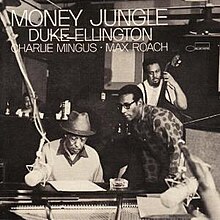
 
#13) Duke Ellington with Charles Mingus and Max Roach - Money Jungle (1963)

220px-Moneyjungle.jpg


Jazz Excursion is back, baby! (and with Sam's Coltrane thread, the MG is getting quite jazzy indeed).
Ellington's reputation as a composer and band leader is untouchable, but, when it comes to the great jazz pianists, his name seldom comes up. Much of this, of course, comes from the big band format where he took a backseat to his band. So it's wonderful to several 60s album focus more on Ellington the pianist. Elligton's collaboration with Coltrane (also released in 1963 and sure to be see later in the series) in a quartet format immediately comes to mind. Money Jungle, though, really focuses on Duke's piano, and those who have not heard this one will find his playing quite sparse and angular (dare I say Monkian). His partners here, both 20+ years younger than Duke, may seem an odd fit at first (and stories have Roach and Mingus not getting along), but it really comes together (it's nice also to have a focus on Mingus' frenetic bass playing - another artist whose band leading/arranging often obscures his instrumental chops. I really enjoy this one - feels quite modern even today.

Edit: the connection with # 12 btw is Max Roach's drumming on both
 
Last edited:
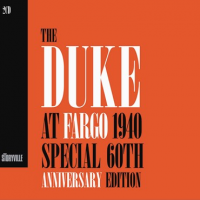
#14) Duke Ellington - The Duke at Fargo 1940 (Special 60th Anniversary Edition)

dukeatfargo.jpg


We now jump back 23 years with Ellington to jazz's most famous bootleg (albeit approved). Duke with arguably his greatest orchestra was playing in Fargo when two Dept. of Agriculture guys got permission to record the concert. They were granted permission but with the condition it would not be used for commercial distribution, and so it remained private until 1978, after Duke's death when its release caused quite the excitement in jazz circles. Why wouldn't it? Despite the limitations of the amateur recordings (some songs are clipped, the vocals on some songs are nowhere near the mike and sound distant), here is a band at its peak filled with jazz giants - Ben Webster (ts), Johnny Hodges (as), Jimmy Blanton (bass), the great Ellington trombone section (Tricky Sam Nanton, Juan Tizol, Lawrence Brown). Historically important as well as Ellington had just lost trumpeter Cootie Williams to Benny Goodman, and this was the new trumpeter's first show. Ray Nance would remain with Duke for the next 23 years and would eventually play the classic "Take the A Train" trumpet solo.

Musicians aside this set is filled with classics of the big band era - "Cottontail", "Caravan", "Mood Indigo", "Sophisticated Lady" - that remain covered jazz standards to this day. Jazz has some tremendous live albums, but few wonderful (and complete) live documents of this early era.
 
#14) Duke Ellington - The Duke at Fargo 1940 (Special 60th Anniversary Edition)

dukeatfargo.jpg


We now jump back 23 years with Ellington to jazz's most famous bootleg (albeit approved). Duke with arguably his greatest orchestra was playing in Fargo when two Dept. of Agriculture guys got permission to record the concert. They were granted permission but with the condition it would not be used for commercial distribution, and so it remained private until 1978, after Duke's death when its release caused quite the excitement in jazz circles. Why wouldn't it? Despite the limitations of the amateur recordings (some songs are clipped, the vocals on some songs are nowhere near the mike and sound distant), here is a band at its peak filled with jazz giants - Ben Webster (ts), Johnny Hodges (as), Jimmy Blanton (bass), the great Ellington trombone section (Tricky Sam Nanton, Juan Tizol, Lawrence Brown). Historically important as well as Ellington had just lost trumpeter Cootie Williams to Benny Goodman, and this was the new trumpeter's first show. Ray Nance would remain with Duke for the next 23 years and would eventually play the classic "Take the A Train" trumpet solo.

Musicians aside this set is filled with classics of the big band era - "Cottontail", "Caravan", "Mood Indigo", "Sophisticated Lady" - that remain covered jazz standards to this day. Jazz has some tremendous live albums, but few wonderful (and complete) live documents of this early era.
Great choice, Zeeb. :thumbsup:

Another "accidental" recording like Benny Goodman's 1938 Carnegie Hall performance. A couple of students recorded it for fun, with permission. Decades later, it was released on LP.

Not on Spotify but streamable on Amazon:

 
#15) Ben Webster Meets Oscar Peterson (1960)


From the classic "Webster-Blanton" band of Ellington, we fast forward to one of tenor saxman Ben Webster's great collaborations of the late 50s/early 60s (thanks to Verve). Webster is ideal of the average listener's view of a tenor sax, a big warm cool tone deftly massaging these classic ballads. Perhaps this outing is a bit too mellow for someone looking for their tenor to really cook (which, I assure you, Webster can do too). My wife (not a jazz fan), in fact, thought it was "kind-of boring" (luckily we have a strong marriage that can withstand what I replied to her ;)), but this is one truly cool sounding albums. Peterson is the supreme accompaniest with his trio; he adds wonderful accents here but lets Webster soar.
Highlight: "Bye Bye Blackbird" - while Miles owns claim to the definitive version, I present a pretty cool version of that number here. Like buttah!
 
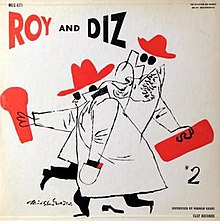
#16) Roy Eldridge & Dizzy Gillespie - Roy and Diz (1954)

220px-Roy_and_Diz_-2.jpg


With Jazzy MIA, I realized that it's time to step up and get jazzy in here. I've been remiss at updating this wonderful project (life gets in the way of the important stuff), so here's the next entry:
Oscar Peterson (from the #15 album) can lead one to so many selections (not only solo but with the many rhythm sections in which he played on Verve albums), so I decided on this one. Roy and Diz will never appear on jazz top ten (or probably even top 100 list), but it would probably pop up on mine. It's one of my favorite jazz albums not only for nostalgic reasons (it was one of my earliest jazz purchases) but because it's a showcase on what jazz is supposed to be. Jazz has always been indebted to its own history with artists standing on the shoulders of others - here we have the great trumpeter Dizzy Gillepsie playing with his major influence Eldridge (who played in big bands of the 30s like Gene Krupa's before becoming a staple in the Jazz at the Philharmonic touring group). Jazz has always had a sense of one-uppance developing in "cutting contests" of Harlem apartments (among other places). Here, one can enjoy these masters trading solos back and forth (high point: "Blue Moon"). But at its heart, jazz should be fun, and, boy, is this album fun! Great mix of ballads and blowouts. Dizzy is known for his dextrous licks, but the elder statesman Eldridge really gets to shine here - the musicians of the 30s were a bit limited on record in a big band, 3 minute-song format but were known for impressive live performances, but here in longer format songs with Dizzy pushing him, Roy is fantastic. Energetic, fun album!
 
#17) Dizzy Gillespie - Dizzy Gillespie at Newport (1957)

220px-Dizzy_Gillespie_at_Newport.jpeg


Jumping now to another Dizzy album from just a few years later. Unlike Roy & Diz (which is an excellent showcase of Gillespie's trumpet chops), this one highlights his big band at the time, a showcase for members like tenor Benny Golson (ex. "Cool Breeze") and "youngest member" Lee Morgan (whose trumpet shines on "A Night at Tunisia"). Great energetic album which also shows Dizzy's sense of humor as he reproaches the band, also on a lazy, drunken take of "Doodlin'". Old Gillespie standards "Manteca" and "A Night at Tunisia" sound great here standing side-by-side with newer numbers like "I Remember Clifford", Benny Golson's tribute to the recently deceased trumpet great Clifford Brown. Pianist Mary Lou Williams even came out of "semi-retirement" to play with the band including parts of her "Zodiac Suite".

On a related note, the 1957 Newport Jazz was killer. Just three years into its course, big name artists descended on Newport with Verve Records there to capture the experience - they released TWELVE albums of material from the '57 festival. If my research is correct, here's the lineup. Yowzah!
 
Back
Top