Lost Classics

Donny Hathaway - Live At The Bitter End 1971 (2014)

R-5614207-1398016674-5062.jpeg.jpg


Back in 1972, Donny released a live album with selections from shows at both The Bitter End and The Troubadour. Decades later, Rhino finally released this package with what appears to be a complete 2 hour show from the NYC venue. The band, consisting of Willie Weeks (bass), Cornell Dupree (guitar) and Fred White (drums) along with Donny on keyboard, quickly established a bubbling groove that never lets up. Like Bill Withers and others of the same period, tepid production and poor quality vinyl pressings robbed Donny's work of the vitality which we can only now begin to appreciate in live performances like this vault treasure.
 
Masaaki Suzuki - Sweelinck: Psalms From Geneva (comp. 1600-21, rec. 2006)

Ny0yMzg4LnBuZw.jpeg


This record is surely a Lost Classic. A century before Johann Sebastian Bach created the "Toccata and Fugue In D Minor" Jan Pieterszoon Sweelinck composed a diverse series of organ works for the Calvinist church in Amsterdam. He also taught a number of North German students who were Bach's direct progenitors. If less ebullient than those of Bach, Sweelinck's pieces combine a delicate yet emotionally reverent tone with sophisticated use of counterpoint.

Masaaki Suzuki is no stranger to Bach. Wiki tells us that he is "an organist, harpsichordist and conductor, and the founder and music director of the Bach Collegium Japan. With this ensemble he is recording the complete choral works of Johann Sebastian Bach for the Swedish label BIS Records, for which he is also recording Bach's concertos, orchestral suites, and solo works for harpsichord and organ. He is also an artist-in-residence at Yale University and the principal guest conductor of its Schola Cantorum, and has conducted orchestras and choruses around the world."

This album was recorded on an modern organ built in the Dutch style of Sweelinck's time that resides in a church at Kobe, Japan.

Given the impact of Bach’s organ works that runs all the way through to contemporary progressive rock, this album is well worth a listen to show where it all came from.

1655580088706.png
 
Voces String Quartet - Arriaga: Complete String Quartets (comp. 1824, rec. 1985)

ODQtMzY0NS5qcGVn.jpeg


Juan Crisostomo de Arriaga (1806-1826) was born in Spain on the 50th anniversary of Mozart's birth and died at age 19. Like Mozart, he left behind a diverse legacy of compositions that belie his youth and lack of training. His three string quartets offer beautiful harmonies that 1001 Classical Recordings characterizes as "boldly original...Romantic harmonies...nudging at the boundaries of classical refinement." Arriaga died in Paris at the threshold of unimaginable success, most likely of tuberculosis induced by exhaustion. The Voces String Quartet of Romania presents these works with all of the emotional depth that they hold. Both these quartets and their composer truly represent Lost Classics.

1703556463153.png

1703556550950.png
 
The Isley Brothers & Jimi Hendrix - In The Beginning... (rec. 1964-65, rel. 1971)

1709661006820.png

After Jimi Hendrix died, the market was inundated with a flood of his unreleased recordings. Most of these had languished in the vault for a reason but this album, released on the Isleys' own label, is different. Between 1964 and 1965, Hendrix played guitar for the brothers and recorded these sessions for Atlantic. Some of the songs here were remixed for this release to boost the guitar but they capture the excitement of this dynamic talent smashup.

At the time, none of their Atlantic recordings sold much so they moved on to greater success for the Motown hit machine. But the Hendrix masters all belonged to the brothers’ own record label which they wisely established with the proceeds from "Shout", a huge international hit. So we can hear them now and imagine an alternative scenario where Jimi stayed with the Isleys to develop a psychedelic powerhouse ala Sly and The Family Stone.
 
The Bunch - Rock On (1972)

1721497995420.png

One off super groups can be a mixed bag, but this one is a triumph from start to finish. Aussie Trevor Lucas, after serving as a member of Fairport Convention and Fotheringay, turned to producing when the latter broke up. In late 1971, he gathered in the studio Richard Thompson, Linda Thompson, Pat Donaldson, Ashley Hutchings, Gerry Conway, Dave Mattacks and Sandy Denny (whom he was dating and would soon marry). Their collective resumes included the aforementioned groups as well as Steeleye Span and The Strawbs.

1721498897993.png
Trev and Sandy

Despite being the cream of the English folk crop, The Bunch eschewed their familiar turf in favor of American country and rock oldies from the 50's. Elvis, Hank Williams, The Everly Brothers, Chuck Berry, Buddy Holly, even Ray Price received fresh and affectionate treatment from a group that was obviously having a great time without letting the proceedings get out of control. Two highlights are Richard Thompson's raspy vocals and slashing guitar on Jambalaya (On The Bayou) and Sandy’s chilling duet with Linda on "When Will I Be Loved". However, every song is superb.

:5.0: on the Sam-O-Meter.

Buying Tip: look for the expanded reissue with four bonus tracks, including Sandy Nelson's rarely covered "Let There Be Drums".
 
Last edited:
John Mayall - Thru The Years (1971)

Ny05OTUxLmpwZWc.jpeg


AMG explains why this obscure album qualifies as a bone fide Lost Classic:

A grab bag of rare tracks from the '60s, some of which stand among Mayall's finest. His debut 1964 single "Crawling Up a Hill" is one of his best originals; this comp also includes a couple of 1964-1965 flipsides. The eight songs featuring Peter Green include some top-notch material that outpaces much of the only album recorded by the Green lineup (A Hard Road), particularly the Green originals "Missing You" and "Out of Reach," a great B-side with devastating, icy guitar lines and downbeat lyrics that ranks as one of the great lost blues-rock cuts of the '60s. The set is filled out with a few songs from the Mick Taylor era, the highlight being the vicious instrumental "Knockers Step Forward."
 
Tammy Rogers - Tammy Rogers (1996)

Ni0xNzI1LmpwZWc.jpeg


Texas-born Tammy Rogers has truly done it all. She sings 'em, she writes 'em and she picks 'em (fiddle, viola, cello, mandolin, guitar, banjo). If that's not enough, she has also worked both the studios and the road with the likes of Emmylou, Reba, Trisha, Patty Loveless, Kieran Kane and Maria McKee. Want more? She co-founded both a successful bluegrass band (The Steeldrivers) and a highly-respected boutique label (Dead Reckoning Records).

Tammy Rogers was her first proper solo album. It offers a baker's dozen varied slices of Americana, aided and abetted by Victoria Williams, Buddy Miller and the ubiquitous Emmylou. She wrote or co-wrote every song. Other than Rosanne Cash, I can't think of any artist who comes close to Tammy's ability to imbue every performance with so much of her essence as an individual. This record remains one of the finest examples of alt country at its peak.

:5.0: on the Sam-O-Meter.

1741050479390.png
 
John Mayall - Moving On (1972)

Mi00ODcwLmpwZWc.jpeg


What do Eric Clapton and Blue Mitchell have in common? Both served in the road bands of the legendary John Mayall. This exhilarating live set came from the stage of the Whisky A Go Go on the night of July 12, 1972. I don't think of Mayall as a jazzer, but that evening found him playing on stage with Mitchell's trumpet fronting a line of no fewer than four saxmen (Fred Jackson, Ernie Watts, Charles Owens and Clifford Solomon). Keef Hartley, no stranger to jazz himself, was in the drum chair. Adding to the jazz cred at the time, Bill Cosby acted as master of ceremonies. You won't find another record made after 1950 or so that digs so deeply into the forgotten link between jazz and blues.
 
Johnny Rivers - At The Whisky A Go Go (1964)

1765999533939.png

Vinyl Spin of the Day.

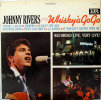
Johnny Rivers played a major if sadly underrated role in the rise of rock during the 60's. As a handsome 22-year old Italian kid from New York City who grew up in Baton Rouge, Louisiana, he assimilated the rich Black music tradition of the South. But years of effort and sporadic record releases had brought little success when he was signed as the first act at Elmer Valentine's new club "The Whisky A Go Go" in January 1964. The Beatles hit the U.S. Charts for the first time that month with "I Want To Hold Your Hand". But the jazz and pop old guard still ruled the Sunset Strip. Trini Lopez was the headliner at PJ's, Valentine's previous club. Ciro's was still shuttered and would wait a year for The Byrds to land.

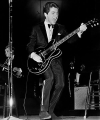
Valentine had liked what he heard when he saw Rivers' show at Bill Gazzarri's Italian Restaurant on La Cienega (not to be confused with Bill's later eponymous Sunset Strip nightclub). Rivers, with drummer Eddie Rubin and bass player Joe Osborn, were already drawing huge crowds to the eatery. When he took the stage at the new Whisky, his popularity continued to grow exponentially with lines forming around the block. Johnny's full-throated Black-sounding voice successfully covered everyone from Bobby Darin to Chuck Berry, all powered by the rich tones of his cherry red Gibson 335. He told Vintage Guitar Magazine:

"The 335 has a hollow body, so it gets a little more of an acoustic rhythm sound. It’s also a great lead guitar, but for the kind of slap rhythm I was playing, the 335 really had a nice resonance and a nice sound. Not knowing any better, instead of working out something and keeping both, I traded my Strat on the red 335, which is the guitar I wound up using on all those hits. It became my sound and it’s the one I used on “Memphis,” “Seventh Son,” “Secret Agent Man,” and all of that stuff. That was that red Gibson 335."

Rivers had the foresight to pay for Wally Heider's remote trucks to record two nights at the Whisky in January 1964 and this album was the result. Happily, "Recording Manager" Lou Adler allowed the songs to flow continuously with Johnny's disarming country boy patter and lots of enthusiastic crowd noise. Each side replicates an actual set in abbreviated form, with four individual songs and an ending medley running up to six minutes. The closing mashup of "La Bamba" and "Twist and Shout" drove the crowd into a frenzy.

The Hollywood crowd was quick to jump on the bandwagon. The label easily lined up celebrity endorsements on the back cover of this record from the likes of Sammy Davis, Jr., Steve Allen, Tony Bennett, Johnny Carson, Tuesday Weld, even Yogi Bear.

The Spotify link takes you to EMI's 1995 twofer combining this album with the equally exciting follow up Here We A Go Go Again, also from 1964. There would be several more Whisky albums but it all started here.

1766003178318.png
 
Last edited:
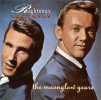
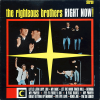
The Righteous Brothers - The Moonglow Years (rec. 1962-64, Verve comp. 1991)

1770162070790.png

Before Phil Spector made them the apotheoses of orchestral overload, Bill Medley and Bobby Hatfield achieved considerable success on tiny Moonglow Records with a hard-edged gospel-R&B sound that fully justified the name "Righteous Brothers". Their biggest hits were "Ko Ko Joe" (penned by Sonny Bono) and "Little Latin Lupe Lu" but several of their other singles got respectable airplay. I recall seeing them on TV during this period, mining their highly energized vein of blue eyed soul. Bill Medley later maintained that their pallor worked against them with the Black audiences who were the natural target of their music.

This collection holds a generous 28 cuts drawn from the Brothers' Moonglow singles and albums. They were justifiably proud of this material because it was usually recorded live in the studio with their road band. In other words, it was the polar opposite of Spector's calculated "Wall Of Sound". I used to hear these songs quite often on Top 30 Radio back in the day but they are nowhere to be found on Sirius today, yet another application of Gresham's Law to music programming.

1770163308411.png
 
P.P. Arnold - The First Lady Of Immediate (1968)

NTMtODQ2MC5qcGVn.jpeg


AMG sez:

"The first of two albums that former Ikette P.P. Arnold recorded for Andrew Loog Oldham's Immediate label, and titled -- of course -- for her role within that organization, The First Lady of Immediate not only represents one of the most phenomenal voices of the age, but also stands as testament to the creative melting pot that was the label's credo. Recorded over the course of a full year, The First Lady of Immediate draws from a succession of sessions, dating back to Arnold's first dates with Oldham himself ("Everything's Gonna Be Alright" and "Life Is but Nothin'," her first single for the label). Next up, chronologically speaking, come recordings overseen by Mick Jagger ("Though It Hurts Me Badly" and "Treat Me Like a Lady") and the Small Faces ("[If You Think You're] Groovy"), before a lavishly orchestrated "First Cut Is the Deepest" spins out of a fruitful partnership with producer Mike Hurst and provides the album with what remains its best-known track."

:5.0: on the Sam-O-Meter.
 
Back
Top