Pitchfork's 200 Best Albums of the 60s

165 – Sonny Rollins – The Bridge (1962)


After releasing over 20 albums from 1953 to 1959, Sonny Rollins found himself being named in the same breath as John Coltrane and Miles Davis. But at the height of his fame, the tenor saxophonist disappeared from the jazz scene. Convalescing from the stresses of addiction and success, he began practicing on the Williamsburg Bridge’s pedestrian walkway, far from the peering eyes of the world (save the chance passerby).


Those three years of meditations led to The Bridge, an album that turns panoramic NYC vistas into ballads and bop of utmost soul. Stylistically, the record doesn’t veer far from the hard bop of Rollins’ celebrated 1956 LP Saxophone Colossus, but it digs a little deeper. The nimble title track, in particular, is a snapshot of his new level of control as his solo winds through a series of tempo changes. While his peers started to explore the structural limits of the genre with free jazz in the early ’60s, Rollins went further into what he knew, into himself, discovering a fount of grace in the process. –Kevin Lozano
This is one record that reflects its back story. After taking a two year sabbatical which included yoga, Sonny returned to the jazz scene with a more meditative and, dare I say it, mindful style. Less blowing, more breathing, took Sonny in a far different direction from where Trane was headed at the same time. Fine stuff.
 
164 – The Beatles – A Hard Day's Night (1964)


Beatlemania was well underway when the Fab Four created A Hard Day’s Night; they were also simultaneously filming their first feature, and the flurry of activity forced the songwriting team of John Lennon and Paul McCartney to focus on cranking out their first album of original tunes. Some tracks echo their earlier songs and influences—girl groups, Motown, and even Tin Pan Alley—but by synthesizing these sounds, the Beatles wound up with a style that felt like the start of something new. It’s not just the songs, it’s the grace notes: the double-tracked vocals on “Any Time at All,” the country-rock gait of “I’ll Cry Instead,” the 12-string George Harrison wields throughout. The album also opened the floodgates for all the beat groups and blues combos lying in wait in the UK, ready to cross the Atlantic once America was ready to hear them. Every band in the British Invasion owes a debt not just to the Beatles but to A Hard Day’s Night specifically: It is the record that created a whole new world. –Stephen Thomas Erlewine
It's always a challenge to hear familiar music with new ears. What struck me this time was just how much attention to detail The Beatles lavished on their third album. For example, the opening chord of the title song took 9 takes to get right (if you're wondering, George said years later that it's F with a G on top played on a Rickenbacker 360/12). Every song has subtle little nuances like that, from the lyrical structure to the time signature to the chording to the solos. The group was still years away from blowing the lid completely off the musical conventions of the day, but with AHDN they were already subverting them from within.
 
162 – Dr. John – Gris-Gris (1968)


Mac Rebennack was far from the bayou in 1968. As a session musician in Los Angeles, he sat in with Frank Zappa, Phil Spector, and the Wrecking Crew at the height of the city’s psychedelic heyday, before the Manson family murders cast a pall over the Laurel Canyon dream. But despite being recorded in Spector’s favorite studio, Gold Star, not a sliver of local sun cuts through the mist of Gris-Gris, Rebennack’s debut album as his voodoo-inspired persona Dr. John the Nite Tripper. It’s a direct portal to his hometown of New Orleans, a sinewy swamp-funk jam that simmers together Afro-Caribbean percussion, earthy congas, whirling electric guitars, and pernicious flutes. Dr. John proves instantly at ease on opener “Gris-Gris Gumbo Ya Ya,” purring as he proclaims himself “the last of the best” medicine men, a French Quarter Rasputin as shifty as he is seductive. From there, he offers a collection of eccentric pleasures—aural charms and amulets amassed to foster luck and ward off evil spirits. –Stacey Anderson

If'n this don't make the spirits start to rise in your home, then I just don't know what will.
 
161 – White Noise – An Electric Storm (1969)


On November 23, 1963, one day after the assassination of JFK, British TV viewers were treated to their first episode of “Doctor Who,” an iconic TV series that would introduce not only the wonders of time travel and lo-fi monsters but also the sonic joys of early electronic music, thanks to the work of the fabled sound effects unit the BBC Radiophonic Workshop. Five years later, Radiophonic composers Delia Derbyshire and Brian Hodgson joined classical bass player David Vorhaus in White Noise, an experimental electronic act avant la lettre.


Their debut album, An Electric Storm, is astonishingly original. Side A is ostensibly in the lineage of ’60s psychedelic pop, home to the same darkly experimental melodic instincts that drove early Pink Floyd or the United States of America. Here, though, the music is adorned with tape-spliced electronic collages and sound effects, from the scrabbled circus sounds on “Here Come the Fleas” to the unsettling—and very “Doctor Who”—electronic pulses on “Firebird,” which create the impression of shifting sonic sands beneath the listener’s feet. Side B, however, is something entirely new, a terrifying theatrical soundscape of ghastly sonic intensity. One year later, Kraftwerk would release their debut album, but the future of electronic music had already arrived. –Ben Cardew

If listening digitally, do yourself a favor and break your listening into sides (1-5 is Side A and 6 & 7 is Side B). They are quite different in mood and should be listened to with a little time in-between to flip sides. :worm:
 
Thinking of starting this back up.

Some lyrics below have been changed to protect the incompetent; namely, me.

From The Stones:

If you start it up
If you start it up, it'll never stop
If you start it up
If you start it up, it'll never stop


From The Police:

Take the space between us, and fill it up some way.
Fill it up. Fill it up.


From Me:

Run with it, my Dude.
 
160 - Phil Ochs - I Ain't Marching Anymore (1965)


Aesthetes who sneer at so-called “protest music” like to pretend that all songs with political agendas are strident statements of the obvious—sermons devoid of beauty, nuance, and especially humor. But Phil Ochs, a self-described “singing journalist” and a Dylan for the student-radical set, recorded some of the funniest, smartest, and prettiest tracks of the ’60s on his second album, I Ain’t Marching Anymore. The hilarious “Draft Dodger Rag” finds a would-be soldier telling the draft board he’s got epilepsy, a ruptured spleen, and, by the way, “I always carry a purse.” He also issues a scathing leftist critique of labor unions’ racism, over violently strummed acoustic guitar, on “Links on the Chain.”

Ochs’ most memorable songs make their points through poignant storytelling. The rousing title track is an allegory of a mythical soldier who’s spent over 150 years fighting for America and can no longer stomach imperialist violence. “Here’s to the State of Mississippi” closes the album with a vividly painted panorama of enforced ignorance, systemic bigotry, and police violence. These songs succeed as both art and political critique; it’s just unfortunate that, 50 years later, not one of them sounds like the relic of a less enlightened time. –Judy Berman

"Draft Dodger Rag" will always be hilarious...sadly so many of these songs are relevant 57 years later.
 
159 - Ray Barretto - Acid (1968)


Although not nearly as “out there” as its title and artwork suggest, Ray Barretto’s 1968 experiment in Nuyorican soul is nevertheless an essential trip. It’s a missing link between the insanely catchy yet quickly dated Latin boogaloo sound of the early ’60s—a New York phenomenon that Barretto helped take international with his hit “El Watusi”—and the more expansive, Afrocentric Latin sound of the 1970s. Its strongest soul/boogaloo tracks have a Memphis-via-Harlem swing that captures the fierce, aspirational joy of mid-’60s soul.

Still, these moments are ultimately outshone by the pure, virtuosic salsa workout of “El Nuevo Barretto,” which opens the album. Its combination of Cuban roots and R&B vamping clearly foreshadows the more mainstream Latin rock of Carlos Santana. But if Acid is notable for its prophetic fusion, its real treasures—the bass-heavy, eight-minute jam “Espiritu Libre” and the minimalist title track, with its relentless Afro-Cuban drums—are not so much ahead of their time as they are removed from time, difficult to assign to a particular decade or hemisphere. –Edwin “STATS” Houghton

Not a psychedelic album as the cover and title might suggest...just some damn good Latin jazz/salsa music.
 
163 – Big Brother & The Holding Company – Cheap Thrills (1968)


Janis Joplin proved she was an electrifying performer at the Monterey Pop festival, but she didn’t cement her legend until the next year, on the fourth track of Big Brother & the Holding Company’s major-label debut. “Piece of My Heart” is spare for a Big Brother track, with Sam Andrew and James Gurley’s rock guitars forced into the background by Joplin’s annihilating vocals. She squeezes out the chorus as though she is about to tear open her chest cavity.


Like the rest of Cheap Thrills, “Piece of My Heart” derives some of its power from John Simon’s canny production. By adding crowd noises to Big Brother’s studio recordings, he creates the impression that Joplin was fronting San Francisco’s rowdiest bar band—climbing up on a table, beer mug in hand, to howl about heartbreak to an audience of emotional drunks. On “Turtle Blues,” a ballad that mingles old-school blues piano with nimble guitar riffs, you can hear a glass shatter. The first 10 seconds of “Ball and Chain,” which transforms Big Mama Thornton’s classic into a languid acid-rock jam, sound like a false start. These moments could have felt like gimmicks if Joplin’s sincerity and fervor hadn’t endowed the album with such intimacy. –Judy Berman
Thanks for restarting this series, @lpfreak1170 ! :thumbsup::thumbsup: Guess I better catch up.

I didn't realize that John Simon produced this record. He was quite a musical chameleon back in the day, with earlier credits ranging from Broadway cast albums to Frankie Yankovic to Charles Lloyd to The Cyrkle. Like John Hammond, he found a way to improve the musical values of rootsy artists without polishing out the authenticity. Judy Berman's Pitchfork review nails it: we can enjoy the bar band vibe without having the sour notes drive us to drink. :Matt:
 
Thanks for restarting this series, @lpfreak1170 ! :thumbsup::thumbsup: Guess I better catch up.

I didn't realize that John Simon produced this record. He was quite a musical chameleon back in the day, with earlier credits ranging from Broadway cast albums to Frankie Yankovic to Charles Lloyd to The Cyrkle. Like John Hammond, he found a way to improve the musical values of rootsy artists without polishing out the authenticity. Judy Berman's Pitchfork review nails it: we can enjoy the bar band vibe without having the sour notes drive us to drink. :Matt:

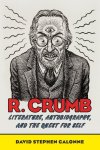
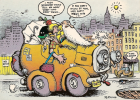
With original artwork from R. Crumb.

r crumb.jpg
 
162 – Dr. John – Gris-Gris (1968)


Mac Rebennack was far from the bayou in 1968. As a session musician in Los Angeles, he sat in with Frank Zappa, Phil Spector, and the Wrecking Crew at the height of the city’s psychedelic heyday, before the Manson family murders cast a pall over the Laurel Canyon dream. But despite being recorded in Spector’s favorite studio, Gold Star, not a sliver of local sun cuts through the mist of Gris-Gris, Rebennack’s debut album as his voodoo-inspired persona Dr. John the Nite Tripper. It’s a direct portal to his hometown of New Orleans, a sinewy swamp-funk jam that simmers together Afro-Caribbean percussion, earthy congas, whirling electric guitars, and pernicious flutes. Dr. John proves instantly at ease on opener “Gris-Gris Gumbo Ya Ya,” purring as he proclaims himself “the last of the best” medicine men, a French Quarter Rasputin as shifty as he is seductive. From there, he offers a collection of eccentric pleasures—aural charms and amulets amassed to foster luck and ward off evil spirits. –Stacey Anderson

If'n this don't make the spirits start to rise in your home, then I just don't know what will.
It was a different world when a session guy could walk into a big studio, cut a totally off-the-wall album like this and release it on a major label. There's still plenty of individuality today but cult albums created on someone's iPad will never hit the mainstream like Dr. John once did. It's our loss.
 
161 – White Noise – An Electric Storm (1969)


On November 23, 1963, one day after the assassination of JFK, British TV viewers were treated to their first episode of “Doctor Who,” an iconic TV series that would introduce not only the wonders of time travel and lo-fi monsters but also the sonic joys of early electronic music, thanks to the work of the fabled sound effects unit the BBC Radiophonic Workshop. Five years later, Radiophonic composers Delia Derbyshire and Brian Hodgson joined classical bass player David Vorhaus in White Noise, an experimental electronic act avant la lettre.


Their debut album, An Electric Storm, is astonishingly original. Side A is ostensibly in the lineage of ’60s psychedelic pop, home to the same darkly experimental melodic instincts that drove early Pink Floyd or the United States of America. Here, though, the music is adorned with tape-spliced electronic collages and sound effects, from the scrabbled circus sounds on “Here Come the Fleas” to the unsettling—and very “Doctor Who”—electronic pulses on “Firebird,” which create the impression of shifting sonic sands beneath the listener’s feet. Side B, however, is something entirely new, a terrifying theatrical soundscape of ghastly sonic intensity. One year later, Kraftwerk would release their debut album, but the future of electronic music had already arrived. –Ben Cardew

If listening digitally, do yourself a favor and break your listening into sides (1-5 is Side A and 6 & 7 is Side B). They are quite different in mood and should be listened to with a little time in-between to flip sides. :worm:
flisten :oops:

The BBC Radiophonic Music album from 1968 came up earlier in this Pitchfork series and I fell in love with it immediately. White Noise seems like its younger sister or brother who had learned to dig rock and roll. Not a bad thing at all, as this album applies some wicked grooves and moods to the more intellectual beats of Radiophonic Music.
 
Back
Top