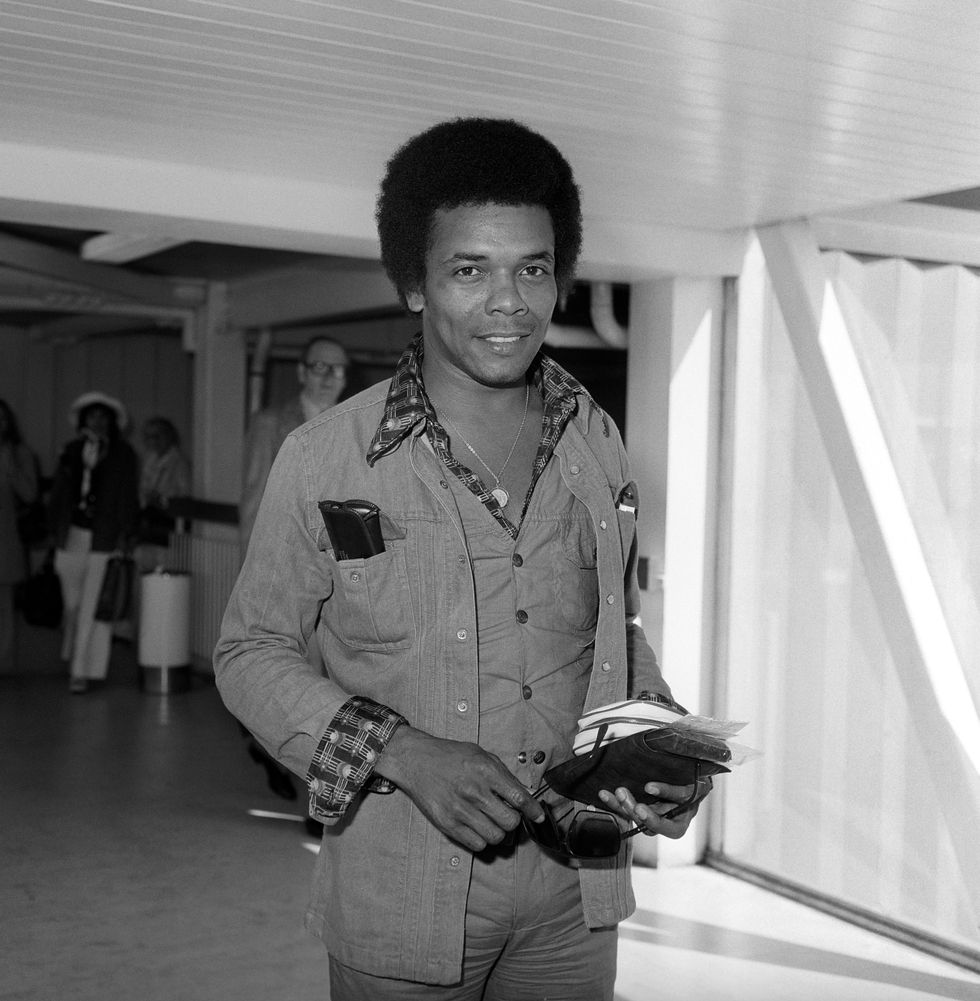
Charley Pride dies at 86 on December 12, 2020, following compilations from COVID-19 in Dallas, TX, his rep confirms.

themusicuniverse.com
Charley was one of my favorite artists from the time he arrived. His early albums were far superior to the usual “1 single plus 11 lame covers” of the day. Given everything that’s happened in the last year, his death made me think a lot about the larger meaning of his career.
Charley's first album
“Country“ Charley Pride arrived at the end of 1965, the perfect time for a person of color to break into country music. Before the Civil Rights Act of 1964 broke the south wide open, it would have been unthinkable for a Black man to be tolerated by the white country music establishment irrespective of his talent. By the end of the decade, he would have found himself on the wrong side of the growing cultural divide just like The Byrds did when they were booed at the Grand Ole Opry.
One could say that Charley Pride was the Jackie Robinson of country music as a breakthrough performer. Like Robinson, his skills and temperament both had to be way above average in order for him to survive. For nearly 10 years, Pride hewed to the traditional country line, scoring hit after hit with outstanding new material backed by the Nashville A-Team session men. His instantly recognizable sound was anchored by the expressive steel guitar of Lloyd Green.
However, Jackie was able to open a door through which an increasing flood of African-American baseball players followed. Unfortunately, with the exception of Stoney Edwards, there were no other significant Black country recording artists. Much as I hate to admit it, I have to conclude that Pride was simply a token. White audiences may have felt good about supporting his music, but none of the other record labels had the courage to emulate RCA Victor. Even Edwards recorded for Capitol, a label whose country music department was based in California. It must be said, though, that apart from white prejudice, there probably wasn’t a long line of Black performers banging at the door. Even Pride’s sister for years questioned why he was singing “their “music.
He may not have single-handedly demolished racial barriers as Jackie Robinson did, but I am left with my abiding respect for Charley Pride, both artistically and personally. In an industry known for womanizing, he stayed married to the same woman for over 60 years. His son, Dion, has followed him as a country music singer, so perhaps Charley was a trailblazer after all. I will miss him greatly.
If you are not familiar with Charley Pride's music, I have two suggestions from his huge catalog:
In Person (1969)
Charley ventured west to the wilds of Ft. Worth, Texas to cut this live album at Panther Hall, home of the Cowtown Jamboree. Naturally, Lloyd Green came along for the ride. It remains one of my favorite concert recordings of all time, both for the songs and the back story. Not only do we get a survey of his hits but he delivers the definitive version of Hank Williams' "Kaw Liga". Charley's between song comments reveal his heartfelt appreciation for country music as a ticket out of the cotton fields of Sledge, Mississippi.
"Mississippi Cotton Pickin' Delta Town" (1974)
Downtown Sledge (pop. 545)
Charley didn't write songs himself, relying on material from the cream of the Nashville songwriters. This single from 1974 was a rare observation on his upbringing in rural Mississippi. Rather than covering a gritty Delta blues song, he recorded this tune written by a person of pallor, Harold Dorman, who penned "Mountain of Love" (also covered by Pride in 1981). The bouncy beat belies the populist tone of the lyrics:
Down in the delta where I was born
All we raised was cotton, potatoes and corn.
I've picked cotton 'til my fingers hurt
Draggin' a sack through the delta dirt.
I've worked hard the whole week long
Pickin' my fingers to the blood and bone.
Ain't a lot of money in a cotton bale
At least when you try to sell.
In a Mississippi cotton pickin' delta town
One dusty street to walk up and down
Nothing much to see but a starvin' hound
In a Mississippi cotton pickin' delta town.






 www.nbcnews.com

 www.rollingstone.com