axolotl
Nunquam non paratus
Fucked Up - Another Day (2024)
Yeah... So did I.

Follow along with the video below to see how to install our site as a web app on your home screen.
Note: This feature may not be available in some browsers.
Fucked Up - Another Day (2024)


George Duke - A Brazilian Love Affair (1980)Thanks a lot, Randy. I will start with A Brazilian Love Affair and report back for further guidance.
As you may have noticed from my recent Vinyl Spins of the Day, I’m still working my way through the stack of amazing 70s and 80s lp’s that my DJ friend gave me. So the mix of vocals and instrumentals fits right in to the summer groove around here.


 ). The three of them found a lot of common ground with George here, and the vocals simply add to the joyous feel of the whole album.
 on the Sam-O-Meter. What's next, O Jazzy One?

I am glad I didn't strike out on that recommendation. Then again, it's a pretty great album so I had that in my favor.George Duke - A Brazilian Love Affair (1980)
I could have just streamed this one but in the spirit of Randy and his reco, I went out and bought the physical CD. This is the version I chose, partly for the remastering (which is brilliant) but also because it bears the "Columbia Jazz Contemporary Masters" seal. As I mentioned, the record club based thereon went a long way toward opening my ears back when they were tightly closed to modern jazz.
I had high expectations for ABLA but from the first note, it exceeded them. There has been a lot of jazz cross-pollination between Brazil and the US over the years but somehow George Duke managed to insinuate himself into the Brazilian sound, becoming an integral part of it rather than simply appropriating it. I came to love Flora Purim, Milton Nascimento and Airto Moreira back when I was working through the CTI catalog (hey, I never finished that listening project, did I?

Thanks a lot, Randy. For me, your curated tour is preferable to approaching Duke chronologically. His work is a large forest with many trees. I’m happy to jump on your helicopter and get a sense of its extent from above the treetops. Any album with a lot of Christian McBride is already a winner with me.I am glad I didn't strike out on that recommendation. Then again, it's a pretty great album so I had that in my favor.
I've been going back and forth and forth and back on the next recommendation. I think I'm going to go with the one I listened to just before this post.
This came a baker's dozen years after ABLA. It features some high-quality Jazz musicians, from Christian McBride who plays acoustic bass on almost every (every?) song; saxophonists Everette Harp and Kirk Whalum, who contribute some bright and sassy solos; to a host of other horns, guitars, drummers, percussionists and singers.
It opens with the masterful "Black Messiah", a tribute to Cannonball Adderley whom George revered. There are a lot of songs here that are so fluid in incorporating all of George's musical influences, from "Let's Roll" which has a funky rhythm that allows George to give us a long solo on the keyboards before opening the floor up to McBride to spank his bass for another long solo while George comps him. "Let's Roll" just feels like some superbly talented musicians who truly love music getting into a song and giving it their heartfelt best. That George was able to get McBride to sit in on the entirety of this album is a testement to Duke's pull in the industry. McBride was in high demand during this time and didn't have a lot of time to spare, but, seriously, who's going to turn down a call from Duke?
"Another Way To Look At It" has a strong JBs feel to it. This instrumental has a propulsiveness to it that allows for a lot of musical exploration. McBride provides much of that push, but the way the horns urge things on (starting around the 2.10 mark) has that JBs feel. But then in the last minute of the song, the horns contribute a different sound in a sort of big band sort of way. This is George in a nutshell. Including a series of influences in one song, and a multitude of influences in an album.
What I think is great about FtM for newcomers to Duke is how he incorporates the vocals. The album has vocals, but most of the time the vocals shade the songs, and are not given the spotlight. Duke was a masterful producer of Soul singers. Whitney Houston's advisers wanted him to take her under his wings and produce her first couple of albums, but he declined and focused on other singers. As such, adding songs like "Close To You" is as natural to Duke as more Jazz-driven songs.
That said, while both albums are great, this album is more representative of Duke's oeuvre than ABLA. If you find this to your liking, there are places we can go to explore more. If this falls short of 3/5 Sam Stars, the George Duke journey will end with one final hail mary.
One final thing. I see a lot of similarities between Duke and Carlos Santana. Not necessarily in their sounds, but in how they approach song craft. Both have a couple of major genre influences to their sound. These influences lay the foundation for how they approach music. But each also has many many many other influences to their music that they can't omit from their work. So they create songs/albums that have a foundation in their major genre influences, then they exhibit their virtuosity (in song craft as well as musicianship) within each song/album. Vocals, instrumentals, chants, statements, no limits or genres. Three minutes or fifteen minutes, whatever it takes to get THAT particular song where it needs to go.
A song like FtM closer "Ten Mile Jog" is representative of this approach. It's an eleven-minute journey that could be described by the unappreciative as meandering or repetitive or boring. What it really is, is a platform that allows an incredible amount of virtuoso musicianship and allows the musicians to explore their love of music and these influences. McBride in particular loses his freaking mind on this song. I'm surprised his fingers didn't cramp up during the recording.
Here is what one listener said on a Bass website: "Anyone heard Christian Mcbride's playing on George Duke's "Ten Mile Jog"? The man is insane!"
I like this concise review: https://www.allaboutjazz.com/face-the-music-george-duke-big-piano-music-review-by-aaj-staff
EDIT: Yeah, I get carried away sometimes ...

 on the Sam-O-Meter.
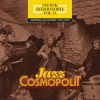
Long hair, beards, a cigarette and a brick interior wall with visible plumbing? That's what I'm looking for in my Jazz! That's the sort of grittiness I want my Jazz musicians to embody. And Red Mitchell you say? HmmmmmVarious Artists - Svensk Jazzhistoria Vol. 11: Jazz Cosmopolit (rec. 1970-79, Caprice 2017)
View attachment 12289
This is one series I'm very sorry to see come to an end. As I understand it, Caprice was a Swedish label devoted to concert recordings that eventually got swallowed up by the government which soon shut it down.
Over the course of 11 multi-disc boxes, we are taken on an epic voyage through Swedish jazz from 1899 through 1979. Caprice utilized source material of its own, much of which was previously unreleased. For good measure, they licensed key Swedish Parlophone tracks from Warner Music and even more rarities from a host of small local labels. Every box has a thick booklet loaded with rare photos, essays, and track-by-track annotations. Each disc comes in an individual colorful shiny cardboard gatefold sleeve with more photos and discographical information.
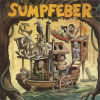
None of this would matter if the music itself were mediocre but happily, it is far from that. Lars Gullin, Alice Babs, Red Mitchell and Monica Zetterlund are the names on this final collection an American jazz fan is most likely to recognize but the unfamiliar artists are equally worthwhile. Over the years, Swedish jazz evolved from "hey, those guys do a decent version of 'Alexander's Rag Time Band'" to "wait, what, they are Swedish?!" This last volume covers the stylistic waterfront from trad to hard bop to avant garde, with the topper an astonishing cover of "Mardi Gras In New Orleans" by The Sumpens Swingsters on Swamp Records (yes, it's a Swedish label) who sound like they look.
View attachment 12291
These boxes are becoming increasingly hard to find. Some of the music appears on Spotify but licensing issues leave a lot of missing songs. I bought the first volume on a whim, figuring I'd bail after that. But I would up tracking them all down and they've become a keystone of my jazz collection.