What are you listening to? January 2022

Status
Not open for further replies.
Various Artists - Back To The River: More Southern Soul Stories 1961-1978 (Kent comp. 2015)

R-7781612-1448656173-3830.jpeg.jpg


Outstanding 3 disc followup to Kent's stellar Back to the River box. A lavish 64 page book puts it all in perspective. The Ace Records website tells us:

Disc One brings another view on the recordings of Muscle Shoals and Memphis. This time we focus more on artists who weren’t native to those areas: Solomon Burke recording at American, Mary Wells at Fame or Betty LaVette at Sounds Of Memphis. These studios were being used to revitalise waning careers or kickstart those that had yet to get going. The disc also features recordings by artists primarily associated with Muscle Shoals and Memphis – check the previously unreleased take of Otis’ ‘Free Me’ – and overall gives further evidence of the musical vibrancy of those two great recording centres.

Disc Two covers the wider region of the south. Taking in Miami, Texas, New Orleans and several other stops, it reveals how the regional music of the time was connected but at the same time distinct and allows us to find out what Jerry Wexler did when he fell out with the studios in Memphis and Muscle Shoals. The disc also shines a spotlight on the small scene in Mobile, Alabama and the super-rare Steve Dixon 45 that emerged from there.

Disc Three focuses on the influence southern soul had in the northern cities – a story not just of displaced southerners creating the sound of their homes states, but of the music industry’s tendency to follow big-selling trends wherever they come from. It’s possible to trace a timeline through this story that shows you when Otis and then Al Green were topping the charts. It also shows Aretha at her finest refusing to travel south and instead having the area’s best musicians flown in for her New York session.
 
Prince - Purple Rain (1984)


This masterpiece will be followed by the 12" versions of the b-sides and the booted long version of 17 days.

Edit: How damn amazing was he? These b-sides are every bit as good as the album tracks and he just tosses them on the back of a single!
 
Last edited:
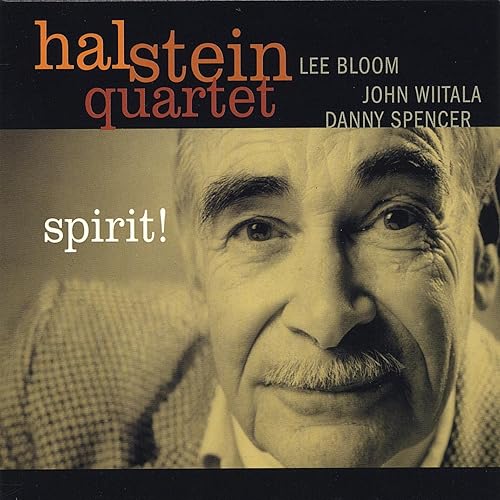
Hal Stein - Spirit! (2006)

81DTbgDcJPL._SS500_.jpg


A great friend of mine who runs one of the best jazz blogs around tipped me to Hal. Wiki shows him to be a musical figure of Forrest Gump-like ubiquity:

Stein began performing on the tenor saxophone in the early 1940s in New York City. As a teen he frequently sat in with Don Byas, whom he considered a mentor, and Erroll Garner, at The Three Deuces on 52nd Street. In 1945 he was featured in concert with pianist Teddy Wilson at Town Hall (although he had recently completed high school, he was billed as a high school student to make more of a sensation) on the same bill with Byas, Stuff Smith, and Charlie Parker. During the same year, Stein recorded with Doc Pomus, Tab Smith and Leonard Feather. He went on to work with Gene Krupa, Buddy Morrow, Les Elgart, Artie Shaw, Charles Mingus, Rudy Williams, Roy Haynes, Georgie Auld, Claude Thornhill, J. C. Heard and others. He also played the alto saxophone, recording on it with Al Cohn on Broadway (1954), in his own session with Warren Fitzgerald, Bob Dorough, Paul Motian and Alphonso Cotton (1955), on The Teddy Charles Tentet album (1956), and as one of the Four Altos with Juilliard buddy Phil Woods, Sahib Shihab and Gene Quill (1957). The record made with Fitzgerald was reissued decades later after becoming something of a cult classic in Japan.

He studied at Juilliard during 1950-51. During his stint in the Army jazz band in Japan during the Korean War (1951–1953), he was a regular member of Toshiko Akiyoshi's quartet. When he decided to go back to college in the late-1950s he realized that the GI bill would not cover the cost of completing his degree at Juilliard, so he switched to Manhattan School of Music, where he achieved his master's degree in 1960. Stein embarked on a career as an educator, while continuing to perform regularly. During the 1960s he taught in public schools in New York and California. Starting in the 1970s, he taught at Stanford University, Mills College, University of California at San Francisco and San Francisco State University, as well as privately. During the late-1970s and early-1980s he taught in Jamey Aebersold workshops around the world.

During the mid-1960s he moved back and forth between the East and West Coasts. In 1968 he moved out West for good, living first in Las Vegas, then in Seattle, and finally settling in the Bay Area in California in 1971, where he remained for the rest of his life. Some of the musicians he played with in this period include Benny Carter, Chick Corea, Sammy Davis Jr., Kenny Dorham, James Brown, Kenny Drew, Elvin Jones, Louis Hayes, Bill Evans, Joe Henderson, Joe Farrell, Nancy Wilson, Jessica Williams, and Rob Schneiderman. He led his own quartet during the 1970s and 1980s, Plank 'n Stein, featuring Al Plank on piano; later incarnations of his quartet were eponymous. In the late-1980s and early-1990s he made several solo tours of Europe, playing in France, Germany, and Italy; his daughter, singer Jennie Stein, joined him for one tour in Italy, and as a guest artist with him on a recording made there, Doctor in Jazz (1991).


Spirit! was the second of Hal's two albums as leader of his own group, coming a mere 51 years after the first. It was well worth the wait. At age 78 he could still hold his own against any of the big names on tenor. His life story suggest that Stein preferred teaching and collaboration to the smoky life of a performing jazz musician. He would pass away two years later leaving a legacy that repays the effort it takes to dig it out.

:5.0: on the Sam-O-Meter.
 
Status
Not open for further replies.
Back
Top