A Century of Music

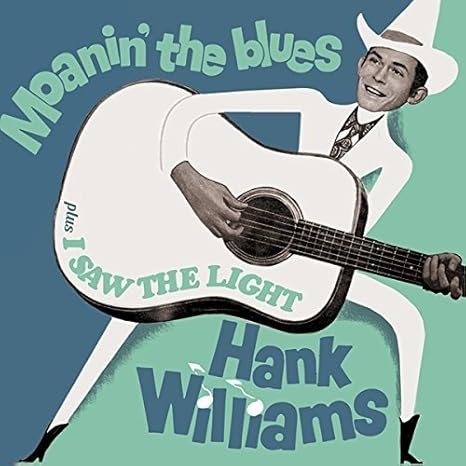
Hank Williams Sings (1951)

Related image


Although Williams gets plays on my yearly singles playlists in the early 50s, he's such a towering figure in country music, wanted to give him a bit more attention - he gained popularity with his 78s but here is his first album (only had two studio albums were released). It's good visiting this because really only two well known "hits" are here - "Lost Highway" and the gospel standard "I Saw The Light" (with which he closed his shows). It's not difficult to digest all of Williams limited discography, but most of these numbers aren't on your standard comps. Nice listen :thumbsup:
 
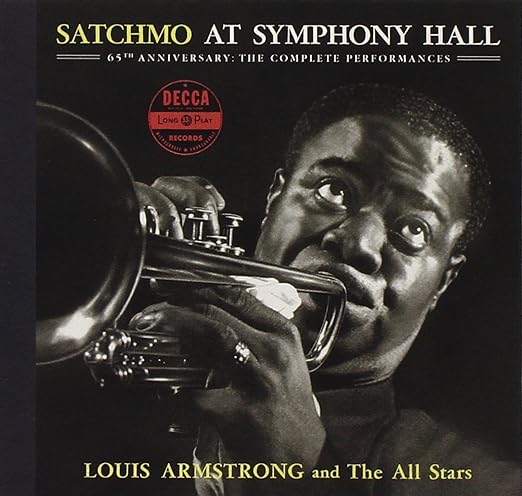
Louis Armstrong & The All-Stars - Satchmo at Symphony Hall

Satchmo at Symphony Hall 65th Anniversary: The Complete Performances


From one important jazz trumpeter to another - even in the 1950s, Armstrong was still going strong with a number of strong albums including some great live sets. Yes, this was actually a 1947 concert and yes I'm listening to the "Complete Performances" not released until decades later, but the original concert album was released on Decca initially in 1951 - wonderful "classic" jazz/Dixieland performances. Fun album for those who wanna hear good ol' jazz done right.
Wow, I didn’t know that a complete version had been released. Thanks for the tip. :cool:

Satchmo did a great job of evolving his live show to keep up with both current styles and the economics of touring. From the Hot Five to the big band to the Dixieland combo, he always sounded fresh. Gonna have to track this one down.
 
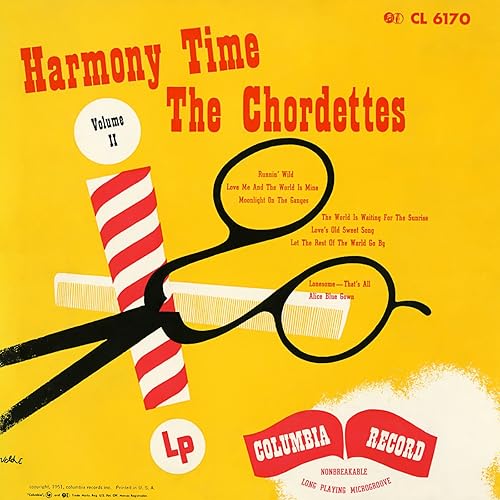
The Chordettes - Harmony Time Vol. 2 (1951)

Harmony Time Volume II


1951 a relatively slow year and 10" records with short songs pretty quick to listen to, so delving deep into this year's output.
The Chordettes had the big 1954 hit "Mr. Sandman", but actually had a number of top 40 hits and achieved some popularity over the decades. In 1950-51, they were releasing their first records showcasing what the band started out as - a female barbership quartet (from Sheboygan, WI). A cappella music of good ol' tunes. It was a'ight, nothing great.
 
Lefty Frizzell - Songs of Jimmie Rodgers

Songs of Jimmie Rodgers


1951 wasn't only a big year for Hank Williams but also for Lefty Frizzell whose name might not trip off the tongue of non-country music fans but was a huge influence of folks like Merle Haggard, Willie Nelson and George Jones. Frizzell remains the only singer to have FOUR #1 singles reach the Billboard Country charts in a single year - this year 1951. Here is his debut album covering songs of the early country music giant (and yodeler) Jimmie Rodgers.

Love Wikipedia's picture of Frizzell:

Lefty Frizzell Columbia publicity - cropped.jpg
 
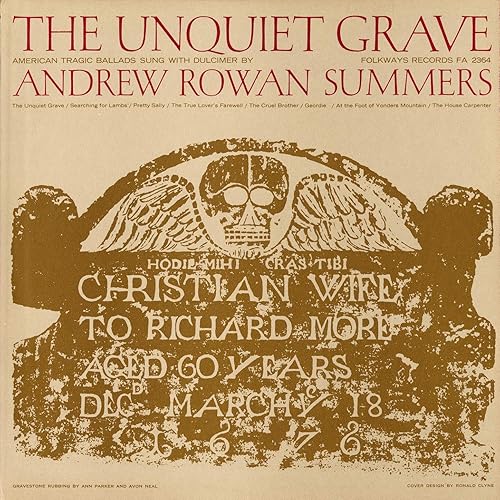
Andrew Rowan Summers - Unquiet Grave: American Tragic Ballads with Dulcimer

Unquiet Grave and Other American Tragic Ballads


Looking at some of the other albums remaining for 1951, I think I've done a pretty good job covering this year. May do some non-Century listening tomorrow, but scanning the 1951 releases, came upon this short folk albums released by Smithsonian Folkways. Hey, I'm certainly not a folk expert but own/know a decent amount so was intrigued by this folk collection released smack dab in between the 1940s popularity of The Weavers and releases of Lead Belly and before the late 1950s folk resurgence of The Kingston Trio's "Tom Dooley"

Not much about describing this album (though it's available on streaming everywhere) but allmusic has a nice bio about Summers

Andrew Rowan Summers was a native Virginian, a graduate of the University of Virginia, where he took a law degree but decided to pursue a career in music in his spare time during the 1940s and 1950s. Infatuated with the songs of Appalachia and their origins, he became a serious folk song collector and ended up spending a good deal of time tracking down veteran older singers, as well as songs that he tried to preserve in their oldest forms, and authentic instruments. It was while attending the White Top Folk Festival that he first heard the traditional mountain dulcimer-- which is to say, the plucked dulcimer, as distinct from the hammered dulcimer -- played by a man in his eighties who was too frail to actually participate in the proceedings. Summers got to know the man, and when he died two years later, he willed Summers his instrument. The attorney-turned-musicologist proceeded to perfect an authentic antiquated playing style as he had heard from the man who bequeathed him the instrument; his style ended up echoing the classical approach to the instrument that was in use prior to the 1950s and 1960s folk revivals, which offered a more accessible and popular approach. Among numerous other performances, Summers was part of a 1946 showcase organized by Alan Lomax at Columbia University in New York, where he performed with Texas Gladden, Hobart Smith, and Jean Ritchie at the university's McMillan Theater. In 1940, Summers released his first album, Old World Ballads in America, on Columbia. It would take 11 years before his association with Folkways Records came to fruition, which included not only traditional folk music but an album of Christmas music as well. His debut album for Folkways, Unquiet Grave (1951), was followed by Seeds of Love. Later releases included Lady Gay and Christmas Carols, and an album simply entitled Andrew Rowan Summers in 1957. Along with Mellinger Henry, Maurice Matteson, and the renowned John Jacob Niles, he was responsible for introducing and popularizing the instrument among modern listeners in the 1950s and early '60s, especially with that series of recordings as well as his performances.

Fascinating story of an man/musicologist I knew nothing about (and a prime example of why I wanted to do this series).
And you know with my Christmas music listening approaching, I just HAD to see if Summers Christmas Carols was available for streaming....it is :banana:
 
Continuing my journey with songs of 1952 today
As usual, playing the top 30 charting singles of the year then adding a mixture of blues, country, R&B and other cool songs

1952's Top Ten:
1) "Blue Tango" by Leroy Anderson
2) "Wheel of Fortune" by Kay Starr
3) "Cry" by Johnny Ray & The Four Lads
4) "You Belong to Me" by Jo Stafford
5) "Auf Wiederseh'n Sweetheart" by Vera Lynn (does anybody her remember her ;))
6) "Half As Much" by Rosemary Clooney
7) "Wish You Were Here" by Eddie Fisher
8) "I Went to Your Wedding" by Patti Page
9) "Here In My Heart" by Al Martino
10) "Delicado" by Percy Faith

The calm before the storm, the 1952 charts were filled with smooth, balladeers - Rosemary Clooney had several hits, as did Eddie Fisher (the latest hearthrob seen here 3 yrs before his marriage to Debbie Reynolds). Patti Page, Al Martino, Doris Day, Frankie Lane all found continued chart success. . The top single of the year I had actually never heard before - an instrumental written by Leroy Anderson (frequent composer and arranger of the Boston Pops, most famous for "Sleigh Ride") - "Blue Tango" was actually the first instrumental recording to sell one million copies.

But amidst the easy listening, some big R&B numbers - Lloyd Price's "Lawdy Miss Clawdy", The Clovers "One Mint Julep", Jimmy Forrest's "Night Train" would be later covered by artists like Elvis, Ray Charles and James Brown (among others). Hank Williams would continue to be huge on the country charts one year before his death. The incredible R&B vocalist Johnny Ace would release "My Song". Fats Domino had some early hits as would The "5" Royales, one of the most influential doo wop/R&B groups. Great blues with "I Believe" by Elmore James and "You Know I Love You" by B.B. King
Plus "It Wasn't God Who Made Honky Tonk Angels" by Kitty Wells, "Walking My Baby Back Home" by Nat King Cole and two versions of High Noon's "Do Not Forsake Me Oh My Darling" (Tex Ritter and Frankie Laine's charter)
Overall a lot of songs that I don't hear as much - it's in an era post-big band but pre-rock that still had a lot of rich stuff in it.
 
Charlie Parker - South of the Border: The Verve Latin-Jazz Sides

South of the Border: The Verve Latin-Jazz Sides


Combines Parker's Latin jazz sides recorded for Verve between 1951-52. South of the Border was released with 8 tracks in 1952; additional tracks added later. One of the joys of visiting the late 40s to early 50s has been revisiting my Charlie Parker collection
 
Charlie Parker & Dizzy Gillespie - Bird & Diz

Bird and Diz

Again, jazz releases are going to be disjointed here because during the early/mid 50s, sometimes there are 10 inches that are recompiled just a few years later as 12". Recorded in 1950, released as a 10" in 1952, and as a 12" later in the decade. Always good to hear Bird and Dizzy together - Thelonious Monk is the pianist here. Although contemporary with the boppers, he had such a unique style. As allmusic points out, he doesn't get much opportunity to shine through here amidst these two blowers.
 
Lester Young With the Oscar Peterson Trio

Lester Young With the Oscar Peterson Trio


If I were to pack, oh say, 25 jazz albums to take into the fallout shelter, this would be one of them - not because it's revolutionary but simply because it's just such a good, mellow listen. Lester Young's smooth sax is the epitome of what a cool tenor saxophonist sounds like. Mostly ballads but such a cool listen. Obviously Young's rhythm section here is pretty awesome too.
 
Duke Ellington - Ellington Uptown (1952)

Ellington Uptown


The early-1950s after the departure of altoist Johnny Hodges is sometimes looked upon unfairly as a fallow period for The Duke (until his 1956 Newport "revival"), but as with Masterpieces by Ellington the year prior, Duke reworks some of his old greats (here "The Mooche" and "Take The 'A' Train" into longer pieces taking advantage of the long playing format. Columbia also used its best engineers here so the sound is great (Columbia Records placed this album initially on its prestigious Masterworks label reserved primarily for classical music and Broadway shows). This album is also the debut for the 13+min "A Tone Parallel to Harlem", one of Ellington's true masterpieces.
 
Billie Holiday Sings (1952)

Billie Holiday Sings


Billie Holiday's first album for producer Norman Granz - then for Clef Records (which would be absorbed by Verve when Granz would found that label in 1956). Though Holiday never stopped recording, her popularity really declined in the late '40s and Clef/Verve's recordings really provided a career resurgence. Though her voice would deteriorate steadily throughout the 1950s, her voice still sounds good here - we'll say mildly weathered.
In 1956, this was rereleased as a 12" with extra tracks under the name Solitude

Hey @Ojai Sam have you ever done a Clef listening series? :)
 
Anthology of American Folk Music

Anthology of American Folk Music, Vol. 1-3


Spent yesterday going through this compilation of 60 tracks originally released as a set of three double albums in 1952 (categorized as "Ballads", "Social Music" and "Songs"). Compiled by musicologist Harry Smith from his old obscure 78's, this is a collection of hillbilly, gospel, blues, and Cajun tracks. Though the songs were recorded in the late 1920s/early 1930s, this was the most important release of 1952. It brought these local artists/songs to a wider audience, and was important in the upcoming folk revival of the late 50s/early 60s.
 
Singing In the Rain (Original Motion Picture Soundtrack) (1952)

Singin' in the Rain [Original Soundtrack]


Not much to say - IMO the greatest movie musical not to mention in my top 5 movie comedies of all time. Good stuff!
 
Milt Jackson - Wizard of the Vibes (1952)

Wizard of the Vibes


Busy day yesterday and not much listening but still proceeding through 1952 nicely enough to wrap the year up today

I really enjoy the vibes as a jazz instrument especially Milt Jackson's work with the Modern Jazz Quartet (which formed in 1952 en route to a long jazz career) as well as in other groups (his CTI album Sunflower is a particular favorite). This is a pretty nice set with Jackson with Thelonious Monk's quintet (recorded in 1948) combined with some 1952 tracks with his MJQ partners. Great showcase of Jackson's abilities.
 
Georges Brassens - La Mauvise Reputation

La Mauvaise Reputation, Vol. 1


The Dylan of France (or, more appropriately as Brassens came first, Dylan was the Brassens of the U.S.). Brassens took his many poems or other literary passages and would sing them with his guitar. I knew of him from songs like "Le gorille" that have popped up in various "Best of" song lists I've gone through over the year. I have not really listened to an album of Brassens before but like my experiences with other French artists like Serge Gainsbourg and Jacques Brel, I really enjoy this. Also like when I listen to those artists, it would be nice to know French to appreciate these artists even more.
 
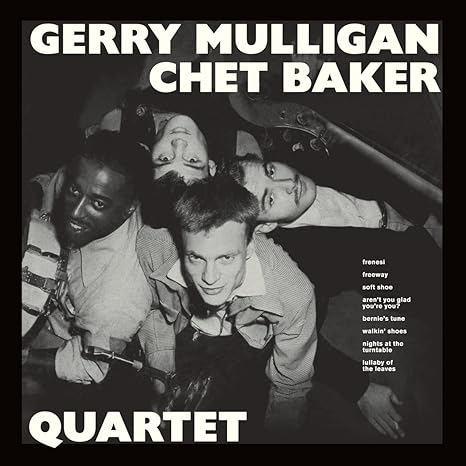
Gerry Mulligan Quartet, Vol. 1 (1952)

Quartet


A participant in Miles Davis 1948 Birth of the Cool sessions, baritone saxophonist Gerry Mulligan recorded his first album as a leader in 1951. He would move to Los Angeles a year later and hooked up at The Haig with a young trumpet player named Chet Baker and caught on like a house on fire. Mulligan's Quartet (here listed with Baker though the original album is just Mulligan's Quartet), a pianoless quartet, remains one of the greatest cool jazz/West coast jazz groups of the era.

West Coast jazz has such a different flavor compared with the hard bop that we'll see develop over the next few years in the series with its relaxed tempos and subdued tones, that some don't enjoy both styles. Depending on my mood, cool jazz like Mulligan or the MJQ can just hit the spot.
 
Oscar Peterson Plays Duke Ellington (1952)

Oscar Peterson Plays Duke Ellington


Closing out 1952 with another chill album - I need it after this week - Peterson with his trio (Ray Brown on bass, Barney Kessel on guitar - no drums) several Duke biggies. Some may prefer more experimental pianists (Bill Evans, Monk), other flashier pianists (Art Tatum) but Peterson is such a supreme craftsman, he is at the center of so many great albums by himself and others (basically the Clef/Verve "house pianist")
Pianist Peterson would revisit Duke's work later for a 1959 release
 
Back
Top