American Classics

Ojai Sam

Staff member
1431416325_8559713.jpg
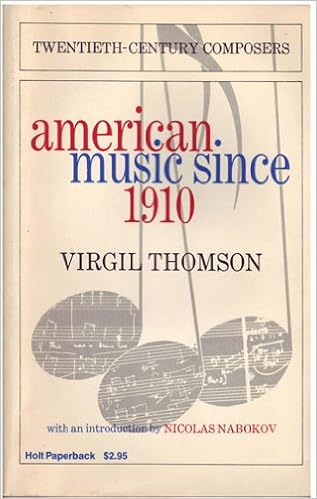
As a part of my Library of America subscription, I happened to acquire Virgil Thomson's idiosyncratic "American Music Since 1910". Since Thomson was himself a part of the scene as both a composer and a critic, this account of 20th Century classical music is part history and part remembrance.

51PjrOresTL._SX315_BO1,204,203,200_.jpg


It set me on a journey to explore some of the now largely forgotten composers who took America from musical backwater to the forefront of modern classical music. Most of the recordings for this project will probably come from Naxos' groundbreaking "American Classics" series but will not be limited to it. In fact, if there is any interest I may share some of my own library of long OOP material.

Here is my Spotify playlist:


Attachments

  • 1431416325_8559713.jpg
    1431416325_8559713.jpg
    9.8 KB · Views: 0
George Whitefield Chadwick - Symphony No. 2 (1886)

71QsRAEpnJL._SX425_.jpg


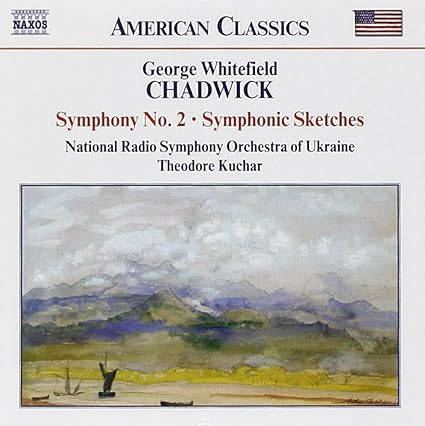
Our first composer will be George Chadwick (1854-1931). Wiki's account of his remarkable life is here. As you can see, it spanned the eventful years from before the Civil War all the way to the Great Depression. Just as the United States grew from agrarian isolation to industrial domination during this time period, Chadwick helped usher in a corresponding development of our musical culture. After studying in Germany and France, he returned to America as a composer, teacher, organist and conductor. His output was similarly diverse, ranging from string quartets to operas to symphonies.

Stylistically, Chadwick's second symphony reflects his studies in Germany, with Robert Schumann perhaps the closest forebear. However, the mastery of the dramatic third movement ("largo e maestoso") can fairly be compared to Beethoven himself. This sparking performance by the National Radio Symphony of Ukraine does full justice to the score.

330px-George_w_chadwick.jpg
 
This is an excellent idea for a music thread, Sam! I have a handful of American Classics on Naxos, myself.

Plus, the obbligato Copland, Ives, Thomson, Barber, Hovhaness.....
 
This is an excellent idea for a music thread, Sam! I have a handful of American Classics on Naxos, myself.

Plus, the obbligato Copland, Ives, Thomson, Barber, Hovhaness.....
Thanks, Axo. Feel free to chime in with your favorites of any era. :nickyboy:
 
Horatio Parker - Hora Novissima (1893)

MI0000954496.jpg


Horatio Parker (1863-1919) followed the same career trajectory as George Chadwick: born in New England, educated in Europe and then a variety of academic and performing roles in the U.S. His masterwork was Hora Novissima, a contemplative oratorio based on the writings of Bernard of Cluny, a 12th century monk. Although it is not a Christmas composition as such, its reflective, devotional tone suits the holiday spirit perfectly. Dramonline sez:

The text deals to some extent with inadequacy of earthly life but mostly dwells ecstatically on heavenly existence. Parker follows each poetic nuance in the eleven movements of the work. He uses the full resources of the Romantic era oratorio: solos, quartet, large chorus, and full symphony orchestra. Large, fugal choruses alternate with exquisite, finely chiseled solos. Both heroic and lyrical themes appear and reappear throughout; nevertheless, the work has a wholeness suggested by the unified vision of the text.

As rarely heard today as it was popular a century ago, this choral masterpiece is lovingly resurrected by the Abendmusic Chorus and the Nebraska Wesleyan University Choir. The second work on this album, Parker's Concerto in E Flat Minor For Organ and Orchestra, reflects the composer's extensive experience as an organist. It compares favorably with Saint-Saens' Symphony No. 3 ("Organ") from the same time period.

330px-Horatio_William_Parker_1916.jpg
 
Edward MacDowell - Piano Concerto No. 2 (1885)

71eJp2xTmBL._SX355_.jpg


For Edward MacDowell (1860-1908), once again we find the familiar pattern of birth in the Northeast at the time of the Civil War, education in Europe and a return to the United States for academic pursuits as well as composing. Wiki tells his life story here in colorful detail. Of special note, he became the first professor of music at Columbia University, remaining there until he tangled with its president, the insufferably overbearing Nicholas Murray Butler.

Apart from some delightful piano music, MacDowell and his wife, pianist Marian MacDowell, left as a legacy the MacDowell Colony, a major artists' retreat in Peterborough, New Hampshire. still in existence Aaron Copland composed his "Appalachian Spring" while in residence there.

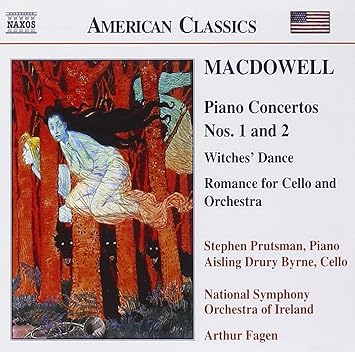
MacDowell's "Piano Concerto No. 2" is a masterful work that fits squarely in the Romantic tradition. RIYL Tchaikovsky's No. 1, but MacDowell was definitely his own man. Stephen Pritsman and the National Symphony Orchestra of Ireland handle the challenging variety of mood and tempo with aplomb. Also recommended is Van Cliburn's version here:


122887-004-C5E54835.jpg
 
Robert Russell Bennett - A Commemoration Symphony: Stephen Collins Foster (1959)

R-10802814-1504557703-9190.jpeg.jpg


I ran across this one in my survey of the Pittsburgh Symphony Orchestra, which began here. Four years after Fritz Reiner left in 1948, the podium was taken by William (ne Hans Wilhelm) Steinberg. After rising rapidly to become Otto Klemperer's assistant, Wiki tells us that Wilhelm "was relieved of his post in 1933 by the Third Reich because he was Jewish. According to the grandson of composer Ernst Toch, Steinberg was 'rehearsing Toch's opera Der Fächer (The Fan)] in Cologne when Nazi brownshirts came storming into the hall and literally lifted the baton out of his hand.'" Three years later, he emigrated to the US. His tenure at the Pittsburgh was marked by a shift to a more "accessible" repertoire.

Robert Russell Bennett (1894-1981) enjoyed a long and varied career as a composer and arranger on Broadway, in film and even television, working with the likes of Jerome Kern, Richard Rogers and George Gershwin. Wiki offers a succinct summary of his many achievements here.

Robert-Russell-Bennett.jpeg


The Commemoration Symphony To Stephen Collins Foster of 1959 reflects its time. There was a desire then on the part of classical music aficionados to lionize American vernacular composers contemporaneous with and related to the folk music boom in the popular arena. Bennett took a batch of Foster's best known songs and wove them into a four movement "symphony" of barely 20 minutes.

Foster's creative melodies hold up well. Such classics as "Beautiful Dreamer", "Camptown Races" and "My Old Kentucky Home" lend themselves well to orchestral treatment, and can be appreciated more easily today when shorn of their racially offensive lyrics. While not essential, this piece rises far above the 101 Strings level, which is more than I can say about the accompanying tribute to Jerome Kern.

I wonder why they hit the original cover art with an ugly stick for the digital reissue. Perhaps it seems too jingoistic. :shrug:
 
Eastman-Rochester Orchestra (Howard Hanson, cond.) - Howard Hanson Conducts American Masterworks (rec. 1957-63)

My02MzE0LmpwZWc.jpeg


After nearly three years :elisabs:, it's time to revive this thread.

Each of the six composers here deserve a post of their own, but I want to focus on the conductor and the orchestra.

George Eastman made his fortune in popularizing dry plate photography, founding the Eastman Kodak Company with a name that he and his mother invented using an Anagrams game. Wiki tells us that he used his wealth in a wide variety of philanthropic activities:

schools of dentistry and medicine at the University of Rochester and in London Eastman Dental Hospital; contributing to the Rochester Institute of Technology (RIT) and the construction of several buildings at the second campus of Massachusetts Institute of Technology (MIT) on the Charles River. In addition, he made major donations to Tuskegee University and Hampton University, historically black universities in the South. With interests in improving health, he provided funds for clinics in London and other European cities to serve low-income residents.

1650140942039.png

One of the jewels in his crown was the Eastman School of Music, which he founded in 1919. Howard Hanson served as director of the music school for over 40 years, propelling it to the forefront of the contemporary classical music scene. In 1931 Hanson launched an annual "Festival of American Music", after a few years featuring the "Eastman-Rochester Orchestra" consisting of first chair players from the Rochester Philharmonic Orchestra, faculty members from the Eastman School of Music and selected students from the Eastman School.

1650141706349.png

Hanson and the E-RO made a series of outstanding records for Mercury in its sparkling "Living Stereo" system. They often spotlighted top compositions from the annual festival such as the six included on this album. While varied in style, each of these works reflects a fresh, contemporary approach that is uniquely American.
 
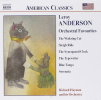
Richard Hayman & His Orchestra - Leroy Anderson: Orchestral Favorites (2002)

1772047689197.png
With hundreds of titles in its "American Classics" Naxos cast a very wide net for composers. They even included Art Tatum, jazz improviser par excellence.

1772048306077.png
I'm happy to see Leroy Anderson here, proudly waving the banner of Light Classics. This style has largely faded from the scene but his program pieces like "Sleigh Ride", "The Syncopated Clock" and "The Typewriter" are instantly familiar as bumper music to anyone who watched TV in the 50's and 60's.

1772048880202.png
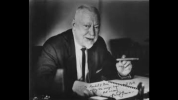
Leroy Anderson (1908-1975)


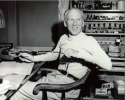
Richard Hayman was himself an American Classic. He made hundreds of recordings as arranger and conductor, including many like this one for Naxos. Played a mean harmonica, too.

1772048739137.png
Richard Hayman (1920-2014)
 
Of course, I know "Sleigh Ride" and "The Syncopated Clock" off the top of my head. I can hear either of them riffling up in my cranium without barely any prompting.

Although I have heard it - I think Jerry Lewis performed it - I am less familiar with "The Typewriter."

So, I looked it up.

 
Back
Top