Folk Music - U.S. Folk Music Revival

Zeeba Neighba

Staff member
Sam has done a great job lately with reviving some themed threads, and I began thinking that we should have more genre-focused threads. So was working on two, the first of which I'm pretty well acquainted, the second I'm continuing to discover (more on that later).

So, here's the first focused on Folk Music

Folk music, though it survives in various forms today invokes a ton of stereotypes ranging from idealistic singers with acoustic guitars at civil rights rallies to this guy:


Today, to the newcomer, folk music may seem too idealistic, too quaint....definitely too much of an easy target. Two of the greatest recent films about folk music, A Mighty Wind and Inside Llewyn Davis, show (humorously) the futility or hypocrisy, but don't show why the music had such power and traction in the first place (how great, though it the Cohn Brothers portrayal of an asshole folk musician though).

Though, folk music isn't for everyone though, there's not denying it's power, it's focus on lyrical storytelling, and it's accessibility. In the 1960s, anyone who had a guitar on a campus or in a park could, in theory, learn and play a basic folk song whether for high ideals or (as an older friend tells me) for women. No matter the motives, folk music rallied listeners together and made them belief (often idealistically and falsely) they could make a difference. There's still a place for such music.

But what about breaking it out and appreciating it musically outside of such settings? What if you don't have a cause and just want to enjoy it? Well, there's a lot to enjoy about it too - some of these folkies were some of the greatest guitar pickers of their era? The songs themselves often represent a wonderful mix of blues, spirituals, country & western, etc. The lyrics can be political or not, sometimes just telling a good yarn.

Folk is quite broad so needs a focus, and I'll focus on the U.S. Folk Revival, focusing further on the late 1950s/1960s when folk music was not only most prevalent in the U.S. but quite viable in the early album/LP era
From Wiki:
At one point, The Kingston Trio had four records at the same time among the Top 10 selling albums for five consecutive weeks in November and December 1959 according to Billboard Magazine's "Top LPs" chart, a record unmatched for more than 50 years[9][10][11][12][13][14] and noted at the time by a cover story in Life Magazine. The huge commercial success of the Kingston Trio, whose recordings between 1958 and 1961 earned more than $25 million for Capitol records[15] or about $195 million in 2014 dollars[16]

Sure the music of that era had its influences from the 1940s (and earlier) with artists like Lead Belly, Woody Guthrie, etc. and we certainly may touch on this
British folk music, though there's a lot of overlap, is a different kettle of fish in many ways drawing from Britain's own history and folk tales, and (in general) we'll leave that to another thread (though I do love it so).

As always, I would love others (certainly who know and appreciate this topic more than myself) to chime in and even discuss their own faves from the era.
 
Jackson C. Frank - Jackson C. Frank (1965)

MI0000125649.jpg


Gotta start with one of my favorite albums of the genre (and actually my 1965 pick in the Great Music series back at the old MG). Those who watch the well-acted but soapy tear-jerker (guilty pleasure) This Is Us well know the song "Blues Run the Game", a beautiful opener. Frank only released this single album (released on Columbia-EMI and produced by Paul Simon - we're gonna see how interconnected the folk world was) but what an album! Sadly, after this one, he was diagnosed with schizophrenia and depression leading to writer's block and the inability to sustain his career. A son died of cystic fibrosis and his depression worsened. His life would be peppered with tragedy from being poor, homeless and even eventually losing an eye from local kids in NYC firing a pellet gun that randomly hit him. He died at age 59 in 1999 of pneumonia

Frank's legacy is this wonderful album which shows an outstanding songwriter and a pretty good acoustic picker. Clearly, Frank has a great sense of the blues as well as the folk genre. Quote from Allmusic: "the meld of American and English folk sounds is like nothing that any listener has heard from either side of the Atlantic anywhere else". Simply put folk music, beautiful and melancholy (and thus not as approachable as, say, the rousing Clancy Brothers or Peter, Paul and Mary hit). Jackson's mood issues and personality (Simon had to record him with screeens blocking him and those in the recording booth because of shyness) really come through on this disc
 
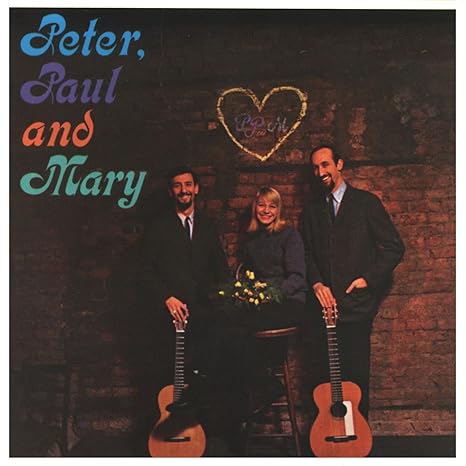
Peter, Paul and Mary - Peter, Paul and Mary (1962)

719u5h6ah9L._SX466_.jpg


Next up, perhaps the most famous and successful group of the folk era (aside from Dylan who defies pigeonholing). Because of their popularity, their approachable sound, their longevity, and their integrating of pop-friendly and children's music, PP&M often get viewed as "folk-light" but they were there at the forefront of 60s folk, popularizing it (for better or for worse per some folkies) but also influencing it. Certainly a good deal of Dylan's early exposure is thanks to PP&M. Their covers of Pete Seeger songs also brought him back to the forefront; their version of Seeger's "Where Have All the Flowers Gone" inspired the Kingston Trio to record their hit version. Of course, any scoffing at this wonderful trio comes in retrospect after their popularity, after songs like "Puff the Magic Dragon" and "I Dig Rock and Roll Music", after a few spotty albums. Viewing the trio's debut along, one is amazed at the breadth of material (originals, Seeger covers, classic folks songs, kids songs) and, of course, at their beautiful harmonies. What a beautiful album to just spin and listen. Sure some hits are here - "Lemon Tree", "If I Had a Hammer", but the whole album is a joy (I could do without the childlike "It's Raining" but I quibble. Here also is perhaps my favorite PP&M song, the beautiful "500 Miles" (originally written by 50s/60s folksinger Hedy West). We'll see more of the trio later, but their debut stands today as their best.
 
Hedy West - Old Times and Hard Times

R-4746433-1382915364-4617.jpeg.jpg


And moving on to Hedy West. Harry Potter fans will love that Ms. West was born Hedwig West in Georgia learning traditional Southern music as well as how to play the banjo and guitar. When she moved to NYC in the late 1950s to go to Columbia, she became a part of the Greenwich Village folk scene. Pete Seeger was a fan - he asked her to perform with him at Carnegie Hall and other times. Folk singer and cataloger of folk A.L. Lloyd (who recorded this album and two others) called her "far and away the best of American girl singers in the revival." Still compared with Joan Baez and other biggies, not sure that translates on the recordings we have available. Still, good solid collection of Southern/Appalachian ballads put to banjo. "500 Miles", West's most famous number, isn't on this one (man, that's a good song)
 
There's going to be a lot of nostalgia in this topic for me. In the '60's, my parents were big fans of folk music. The Peter Paul and Mary album was in constant rotation, and I have a lot of song fragments embedded in my brain tissue from the Kingston Trio, Judy Collins, The Limelighters & Pete Seeger. Joan Baez too, but not as much as the others.

Listening to PP&M right now. Minimal instrumentation, which stays out of the way of the beautiful vocals. What an album!
 
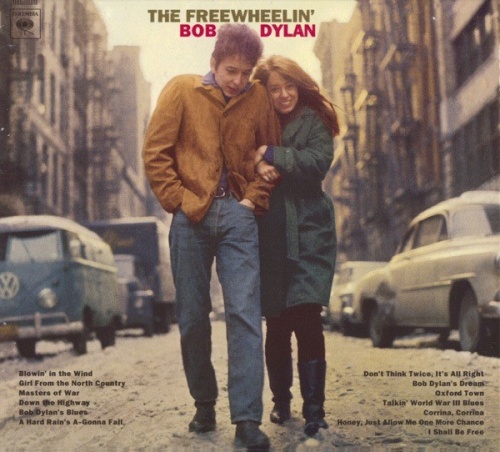
The Freewheelin' Bob Dylan (1963)

0000418847.jpg


Didn't take long to get to Dylan, did it? There are many, many folk albums that are greater than Dylan's 1962 cover-filled debut. There are arguably NO folk albums greater than this sophomore effort. Oh what a difference a year makes as Dylan's confidence in songwriting and recording grows by leaps and bounds. A veritable greatest hits of folk as "Blowin' In the Wind", "Masters of War" and "A Hard Rain's A-Gonna Fall" is here, oft covered by folk musicians. There's also "Don't Think Twice It's All Right" and my vote for Bob's most beautiful song "Girl From North County" (I like Bob's remake with Johnny Cash even better). As opposed to two originals on his debut, all but two are originals here. Allmusic notes "It's hard to overestimate the importance of The Freewheelin' Bob Dylan". Its sold 10K copies in a month. Dylan and folk music in general was highlighted in a Playboy article the next month, and a month after that (in July when Dylan sang with Joan Baez at Newport), Peter, Paul & Mary hit #2 with "Blowin' In the Wind". Dylan had arrived and folk music reached a new level of popularity. Within two years, Dylan would "go electric", be booed my many at Newport (though there was applause too), and be called "Judas" at the Royal Albert Hall Concert for going against the purity of the movement.
 
Tossi Aaron - Tossi Sings Folk Songs And Ballads (1961)

31cb3b360ee15069d63c449e9ffc7332.jpg


Vinyl Rip Of The Day.

I was going to post this in Lost Classics but Zeeba's terrfic folk thread is a much more suitable home.

Not much information appears online about Tossi Aaron. Second Hand Songs sez:

Tossi Aaron is a Philadelphia area singer, guitarist, educator and writer. She has been active in the Philadelphia area folk music scene. In particlar, she was one of the founding members of the Philadelphia Folksong Society and organizer of the Philadelphia Folk Festival. She also performed at the first festival held in 1962.

I can add that she died earlier this year.

Tossi recorded but two folk albums and one more for children. But she had one of the most beautiful, expressive voices of the folk era and an unerring eye for material. She gives "I Know You Rider" and "House of the Rising Sun" their definitive readings here, and the a cappella version of "I Am A Girl of Constant Sorrow" will give you chills.

For some reason Tossi's work has not been digitized and this album will set you back $250 on Amazon. Or, you can just click and enjoy it right here as a part of the Music Gourmets Media Library:

View album 6
 
The Kingston Trio - College Concert

MI0004264761.jpg


I'm not sure it would be a generalization to say that those who might get into folk through Dylan, Baez or Joni Mitchell might never discover the Kingston Trio who look decidedly unhip on their album covers, seem dated (given the evolution of folk's sound in the 1960s), and (like Peter Paul & Mary) have a popularity that might dissuade some contrarian folkies. Overlooking the Kingston Trio though would be a big mistake despite the group's appearance/style being an easy parody of the folk era (ex: the film A Mighty Wind). They were tremendously influential and popular group; perhaps Allmusic.com puts their impact best:

In the history of popular music, there are a relative handful of performers who have redefined the content of the music at critical points in history -- people whose music left the landscape, and definition of popular music, altered completely. The Kingston Trio were one such group, transforming folk music into a hot commodity and creating a demand -- where none had existed before -- for young men (sometimes with women) strumming acoustic guitars and banjos and singing folk songs and folk-like novelty songs in harmony. On a purely commercial level, from 1957 until 1963, the Kingston Trio were the most vital and popular folk group in the world, and folk music was sufficiently popular as to make that a significant statement. Equally important, the original trio -- Dave Guard, Nick Reynolds, and Bob Shane -- in tandem with other, similar early acts such as the Limeliters, spearheaded a boom in the popularity of folk music that suddenly made the latter important to millions of listeners who previously had ignored it. The group's success and influence transcended its actual sales. Without the enviable record of popularity and sales that they built up for folk music, it is unlikely that Columbia Records would ever have had any impetus to allow John Hammond to sign an unknown singer/guitarist named Bob Dylan, or to put Weavers co-founder Pete Seeger under contract, or for Warner Bros. to record the Greenwich Village-based trio Peter, Paul and Mary.

I enjoy the sound of the Kingston Trio, but do admit, because of the strength of their compilations, I don't break out their original albums much (a shame because it was the individual albums that had such popularity and influence - their first 5 albums all went gold and hit #1). Their concert at UCLA, College Concert, is not a bad place to start. The trio, now in its second phase after Dave Guard left in the setting of creative and big-time legal difference, sounds great here. It's a spirited album, perhaps too lively with some of the guys humor a bit corny (and a bit politically incorrect at times as early 60s live albums could be). Great music selection including their hit "M.T.A.", a live version of Pete Seeger's "Where Have All the Flowers Gone" (beautiful yet potent protest song that had just been released as a popular single prior to the album), and hey look my favorite "500 Miles", that great Hedy West song.
 
I love the M.T.A. song! Last year, whatever is the current formation of the Kingston Trio came through my town in concert. I didn't go, but it prompted me to do a little research. I remembered M.T.A and regaled in the nostalgia as I played it on Spotify for myself.
 
I love the M.T.A. song! Last year, whatever is the current formation of the Kingston Trio came through my town in concert. I didn't go, but it prompted me to do a little research. I remembered M.T.A and regaled in the nostalgia as I played it on Spotify for myself.
The Kingston Trio was my first concert ever. It was with my parents.

M.T.A.

 
Tom Rush - Tom Rush (1965)

MI0002780063.jpg


Although it was his third album (1968) for Elektra (where he covered up-and-coming writers like Joni Mitchell, Jackson Browne, and James Taylor) that is most known today, Rush's Elektra debut is a pretty self-assured blues-based folk album. Rush was a strong songwriter, but here covers mainly old traditional folk standards but breathes some mid-60s life into them. Rush has a nice voice and a laid back delivery. Solid album
 
Raun MacKinnon - American Folk Songs (1963)

a41be44aeaa0c5a0953b1b879b233042.jpg


I could just as well have posted this one in Lost Classics but I wanted to revive Zeeb's great folk thread. Here is one of the two albums recorded by Raun. I can't imagine why she didn't achieve greater success; her powerful, expressive voice brings new life to these old chestnuts. Her second record came 5 years later for Kapp Records. It'll be along in the not too distant future.

AMG sez:

Raun MacKinnon had the distinction of being one of a tiny handful of folk artists ever recorded by Parkway Records. The youngest of four children born into a musical family, she was raised in Berwyn near Philadelphia, and began singing at an early age, even when she worked as a babysitter (which helped lead one of her charges, Cliff Eberhardt, into a career as a folk singer as well). She learned her first folk songs from her mother, material like "I Know Where I'm Going," and later added Woody Guthrie and Leadbelly to her repertory She played the local folk clubs in Philadelphia and was signed to the Cameo-Parkway label, where she recorded one album, American Folk Songs, with Dick Weissman backing her on guitar and Bill Lee (Spike's father) playing bass. The bulk of the album was made up of new arrangements of traditional songs, augmented by one MacKinnon original, "What Says The Heart." She was best known in the northeast from various performing venues in New York City, and remained popular throughout the '70s and early '80s, appearing at various clubs and showcases. Her song "Circle of Fifths" was covered by Michael Johnson, and in 1985, she appeared on Fast Folk 202 doing an original song called "Amazing Love." She has been a mentor, friend, and confidante of Christine Lavin since the '70s.

:4.5: on the Sam-O-Meter.
 
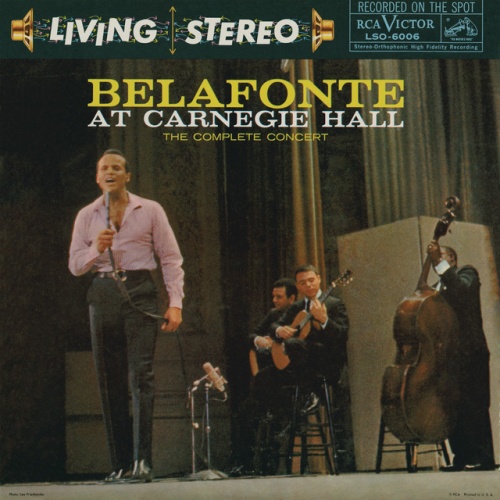
Harry Belafonte - Belafonte At Carnegie Hall (1959)

0001112059.jpg


Time to revive this thread so I can shout about this landmark album. Musicologist Cary Ginell hit the banana on the head with this review for AMG:

The granddaddy of all live albums, this double-LP set captured the excitement of a Harry Belafonte concert at the height of his popularity. Sampled from two consecutive performances of identical material, Belafonte at Carnegie Hall was an anomaly at a time when only comedy albums were recorded outside of the studio environment. It wasn't the first live album ever made, but it was certainly the first to be a major financial and artistic success. It stayed on the best-selling album charts for over three years and remained in print until RCA discontinued pressing LPs. From the opening trumpet fanfare and brief orchestral overture to the epic 12-minute version of "Matilda" (which set a standard for audience participation), the album never lets up. It is exciting, poignant, thrilling, intimate, and at times, spontaneously hilarious. Belafonte's mastery in front of an audience was never better displayed than here, a mastery that resulted in him becoming one of the most popular concert draws in history.

Carnegie Hall always drew the best from those honored to perform and record there, from Benny Goodman to Buck Owens, but this record may be the best of 'em all.

:5.0: on the Sam-O-Meter. Day-O!
 
Pozo Seco Singers - The Best Of The Pozo Seco Singers With Don Williams (rec. 1966-69, comp. 1977)

df0939e09859d604e3a6793bce11d008.jpg


Vinyl Rip Of The Day.

Don Williams and Lofton Kline began as a duet singing folk music in Texas. They struck paydirt after Susan Taylor joined them to form The Pozo Seco Singers. Their best known hit was "Time", a ballad featuring Susan's wistful voice. After three albums on Columbia and one on Certron, the group imploded for the usual "creative differences", explained by Wiki in some detail.

This English collection was released after Don Williams became a country superstar in the 70's. Note the relative font sizes above. :meh:

However, far from being exploitative, "The Best Of" includes key tracks from all three Columbia albums along with a slew of keen songs released only on singles.

:4.5: on the Sam-O-Meter.
 
Back
Top