Jazz Gems

That's highly plausible.

Another theory in my senior mind is that I picked up the second copy at a heavy discount, such as at a thrift shop or at a yard or garage sale.

I was not implying you had a senior moment; memory problems are not only the province of older people.
 
I was not inferring that you implied anything of the sort. Rather, I expressed that my fertile senior mind produces many things that are not correct, true, or accurate.

It's a good thing I don't have a Twitter account. I might be inclined to be a cyberbully. :thumbsdown:
 
#42) Kenny Clarke - Bohemia After Dark (1955)

MI0000512182.jpg


Jazz Connections!! Did you know drummer Kenny Clarke was once married to our last album's singer Carmen McRae in the 1940s? Look at the wealth of info this thread gives ya :)

Because of this, I decided to jump to Clarke, an influential bop drummer who once led the Minton's Playhouse house band in Harlem (which opened again in the early 2000s after 30 yrs closed). Clarke played with EVERYONE but has a smattering of albums out there as a bandleader including this one, which actually sometimes isn't attributed to him at all but rather the alto saxophonist who debuts on it, one Julian "Cannonball" Adderley (brother Nat also makes his recording debut here on cornet). Cool album btw with some nice swinging numbers.

This album was recorded soon after Cannonball's discovery btw at the Cafe Bohemia (for which this album gets its name). Oscar Pettiford's band was playing and Cannonball was in the audience with his case. Apparently, someone in the band asked him to borrow his saxophone but Adderley asked to sit in instead and was an immediate sensation (everyone was looking for the next Charlie Parker at the time). This album was recorded weeks later.

I'm not sure what's more fascinating: the topless woman in the chinos obscured ever so carefully by "Bohemia" or the vine covered sword on the side (?Why)

That looks a lot like a Bird scooter behind the model.
 
#53) Vince Guaraldi Trio - Cast Your Fate the Wind: Jazz Impressions of Black Orpheus (1962)

MI0002987804.jpg


Sticking with cool jazz (as well as Brazilian influenced jazz), a real nice album by Vince Guaraldi. Before immense popularity from (and being defined by) his Charlie Brown Christmas album, pianist Vince Guaraldi worked in the late 50s with Cal Tjader's band creating easy-going Latin jazz. After several albums as a leader, Guaraldi recorded this album with a side of Antonio Carlos Jobin and Luis Bonfa numbers from the film Black Orpheus as well as a side B of jazz standards like "Moon River" and "Since I Fell For You". Great listen

Cool jazz is an interesting genre. Some jazz listeners love the solos especially by trumpet and sax, and if there's no big blowing solos, many lose interest. Artists like the ones I listened to today (Mulligan, Getz, Guaraldi) certainly show their technical chops but are restrained and go for a feel, a vibe that appealed to a different kind of listener in the 50s-early 60s that those listening to hard bop or free jazz. Yes, it's no coincident that these three artists are white and white college students ate up folks like Dave Brubeck, Tjader/Guaraldi, Shelly Manne, etc but one can't forget artists like Miles, the MJQ, and Art Farmer and they're interest in cool jazz. Now decades later, as jazz melds so many past styles and qualities together (in addition to adding other elements like hip hop), it's nice to look back and enjoy all aspects of 50s jazz both hot and cool. Both have a place certainly in my collection - and perhaps in the next few days I'll break out some blowers like Johnny Griffin
Zeeb, I've been remiss in not visiting this thread more often. You keep tempting me with all the great picks, old and new. I think this one is new to Jazz Excursion 2.0.

I'm too young to have experienced the impact of cool jazz on white college kids. However, the sheer number of records recorded at academic venues back in the day would seem validate your hypothesis. Guaraldi doesn't get as much ink as Brubeck, perhaps because he seemed more mainstream. That's too bad, because he made a lot of good music. This album is an outstanding example, with "Cast Your Fate To The Wind" as a big hit plus some other strong songs from "Black Orpheus", a film that holds up really well today.

:5.0: on the Sam-O-Meter. My fate was cast to the wind long ago.
 
#17) Dizzy Gillespie - Dizzy Gillespie at Newport (1957)

220px-Dizzy_Gillespie_at_Newport.jpeg


Jumping now to another Dizzy album from just a few years later. Unlike Roy & Diz (which is an excellent showcase of Gillespie's trumpet chops), this one highlights his big band at the time, a showcase for members like tenor Benny Golson (ex. "Cool Breeze") and "youngest member" Lee Morgan (whose trumpet shines on "A Night at Tunisia"). Great energetic album which also shows Dizzy's sense of humor as he reproaches the band, also on a lazy, drunken take of "Doodlin'". Old Gillespie standards "Manteca" and "A Night at Tunisia" sound great here standing side-by-side with newer numbers like "I Remember Clifford", Benny Golson's tribute to the recently deceased trumpet great Clifford Brown. Pianist Mary Lou Williams even came out of "semi-retirement" to play with the band including parts of her "Zodiac Suite".
This album stands alongside Duke Ellington's set from the previous year's Newport Jazz Festival as a landmark of live jazz. Both shows reflect the infusion of R&B elements into jazz that began in the late 40's. But the longish jams with screaming saxes and wailing trumpets (Diz could sure wail!) would largely disappear from jazz by the 60's. By closing the set with 10 minutes' worth of "A Night In Tunisia", Gillespie even managed to blend cool bebop into the steaming brew.

:5.0: on the Sam-O-Meter.
 
Oh pfui! Here I typed out a really nice review then before I posted, the site signed me out. I though I had blocked off and copied the whole post just in case that should happen but clearly only got part of it :(

Have to edit, add on in a bit
Still waiting....
:mrgreen:
 
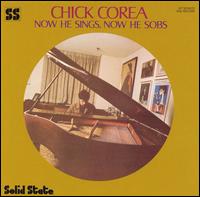
#22) Chick Corea - Now He Sings, Now He Sobs (1968)

Now_He_Sings%2C_Now_He_Sobs.jpg


An esteemed piano trio album that shows Corea at his best - fast, energetic, fluid playing by the pianist (in a trio format) that's experimental yet quite experimental for the avant garde jazz at the time (now Chorea's fluid, quick paced noodlings sound on par with current pianists like Jason Moran but in 1968 they must have been quite bold). CD/streaming releases add 8 tracks/28 more minutes of music but definitely worth it especially for the only non-originals, a breezy take on Monk's "Pannonica" and some nice twists on the old standard "My One and Only Love". Though I have neither made nor read such a list, my guess is that this would make most top 10 all-time piano trio album lists (but if you enjoy piano trios, you certainly know that and own it already).

Flisten :axo:

This album demonstrates just how flexible the piano trio can be. NHS, NHS sounds like nothing that came before. But then when you are joined on by Roy Haynes and Miroslav Vitous, the sky is the limit. I thought this was another Blue Note masterpiece but it was actually released on Solid State, a United Artists imprint and rereleased on a Blue Note CD years later.

:5.0: on the Sam-O-Meter. Ahead of its time but still very approachable.
 
#23) Ella Fitzgerald - Ella at Zardi's (1956, released 2017)

MI0004320576.jpg


For fans of jazz vocals (like myself), Ella is the bomb with several releases that belong on an excursion through jazz. Though her Songbooks are straightforward renderings (though still incredible) of standards, most are quite essential stuff. Her albums with Louis Armstrong show two jazz greats with a great vocal chemistry. And don't forget her wonderful first "swingin'" Christmas album. But to get the really "jazzy" Ella, the vocalist who can really cook and can scat (and ad lib forgotten lyrics) with the best of 'em, one needs to check out her live albums. Typically her live Rome album (where she bops through indelible versions of "Lady Is A Tramp" and "How High the Moon" is held up as the pinnacle of live Ella. Here though is a recently-released contender, and
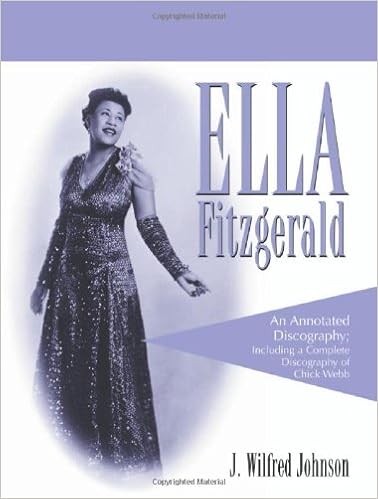
This recent release is a discographer's dream. Some time ago I started an Ella listening project using J. Wilfred Johnson's magnum opus:

41qIJimcmhL._SX376_BO1,204,203,200_.jpg


I was fine until I got to 1956. This show from Zardi's showed up as unissued except for one stray song ("The Tender Trap") that had somehow escaped onto a Swedish Decca EP. I'm pretty resourceful but my vast network came up empty on that one.

Luckily, UMG and Zeeb came to my rescue. This seems to be the earliest live Ella except for some JATP package shows and it is a keeper. Zardi's Jazzland on Hollywood Boulevard was a major live venue until 1957. Through two complete sets, Ella shows her ability to captivate the audience both with her singing and her winning personality. Recording quality is topnotch.

:5.0: on the Sam-O-Meter. A joy from start to finish.
 
#54) Duke Pearson - Wahoo! (1964)

MI0004068052.jpg


How delightful revisiting Wahoo! again, a great hard bop offering. Though the leader is pianist Duke Pearson (who wrote all but one of the pieces here) this is a true ensemble piece. Joe Henderson's tenor solo on "Amanda" is out of sight. Donald Byrd is always bright, fun, exciting on trumpet. Love the flute (James Spaulding) on "Bedouin". The title track really cooks. In the middle, Pearson, a talented jazz pianist (described by allmusic.com as "accomplished, lyrical, and logical -- if rather cautious") who is selfless enough to let his crew shine, is a able to stretch out on the solo piece "Farewell Machelle"
 
#54) Duke Pearson - Wahoo! (1964)

MI0004068052.jpg


How delightful revisiting Wahoo! again, a great hard bop offering. Though the leader is pianist Duke Pearson (who wrote all but one of the pieces here) this is a true ensemble piece. Joe Henderson's tenor solo on "Amanda" is out of sight. Donald Byrd is always bright, fun, exciting on trumpet. Love the flute (James Spaulding) on "Bedouin". The title track really cooks. In the middle, Pearson, a talented jazz pianist (described by allmusic.com as "accomplished, lyrical, and logical -- if rather cautious") who is selfless enough to let his crew shine, is a able to stretch out on the solo piece "Farewell Machelle"
:heart:, :heart:, :heart: this album. Good to see it here. Good to hear it, too. In fact, I will listen forthwith.
 
#27) Chico Hamilton - Gongs East! (1959, recorded 1958)

MI0001773531.jpg


At 500 albums, the original Jazz Excursion covered a lot of ground, but surely didn't cover it all. New to me since the original thread in 2012, Chico Hamilton's Gong East! (interesting title and cover) has a real mellow, cool vibe very different from the hard bop of the time. Drummer Hamilton spent time in such varied outfits as Lester Young (hey, we just played him), Count Basie and Gerry Mulligan, but he went into some different directions from those artists - post-bop, avant garde, even fusion. Here's an early band of Hamilton intriguing for the use of the cello (Nathan Gershman). Also this album contains some of the earliest recordings of Eric Dolphy here playing alto sax, flute and bass clarinet ever so ephemerally (Dolphy's first solo album in his short career would be released 1960). The vibe on many of these tracks here is Eastern and the flute and cello fit in beautifully. Dreamlike, mellow, chill, beautiful stuff here.
Happy to see Zeeb is adding more jazz to our lives. :cheer:

If I recall correctly, this album has an interesting backstory. Warner Brothers finally launched its own record label in 1958 with a jumble of soundtracks, easy listening and Tab Hunter. Not to mention Music For People With $3.98 by Ira Ironstrings. They were really looking to jump on the exotica bandwagon but Chico slipped this experimental jazz masterpiece by them under cover of flute.
 
#28) Sonny Rollins - Newk's Time (released 1959, recorded 1957)

MI0002028028.jpg


My last jazz post today, I promise :)

Rollins is one of my favorite tenors along with Dexter Gordon, Stan Getz, and Coleman Hawkins - definitely a go to listen for me. As supreme as Trane is, I pull out Sonny's discs a lot more, and, as revolutionary as his development of the sax trio was, sometimes ya just gotta play a great old hard bop session that's a real blower. Newk's Time, if I recall correctly, wasn't on the original Excursion. Not sure if Rollins' more daring albums filled up his slots (not that there was a given maximum but I did try for balance), but l really enjoy this one. Really ya can't go wrong with Sonny Rollins. Some may argue that he wasn't as transcendent as Coltrane was or that he his a peak in style and never kept evolving (and I could argue against both these takes), but he always put out enjoyable, consistent material. Here in a quartet, Rollins has one original ("Blues for Philly Joe"), one Miles cover (the opening "Tune Up") and as series of standards. Some interesting choices like "Surrey with the Fringe on Top" from Oklahoma (which Miles would also do with 'Trane on Steamin') and "Wonderful, Wonderful" (yes, the Johnny Mathis tune).
You just can't go wrong with Blue Note. Wiki tells us that Rollins' third album was named after Don Newcombe, the Brooklyn Dodger pitcher. Note the resemblance?

200108_026.jpg


Each Blue Note session gives lots of room to all of the players. Wynton Kelly, Doug Watkins and Philly Joe Jones are not the label's A-Team but they all excel here. Great choice, Zeeb! :banana:
 
#31) The Modern Jazz Quartet - Lonely Woman (1962)

MI0001838829.jpg


Sticking with vibes today, let's move on to Milt Jackson and The Modern Jazz Quartet. Several MJQ albums made the last series including 4 in a row from their mid-50s heydey. This one was not one of the, say, five MJQ albums I highlighted then, but since then a few people here have commented that this was their favorite MJQ album. And indeed, it is their only studio album that allmusic gives 5 stars (not sure I agree with that considering how great Fontessa and Django are but whatever). But given these things, thought I'd spotlight it today.

Pianist John Lewis may have seen square with his love of Back and his tuxedos at concerts, but he actually sponsored/supported the career of one of jazz's boldest innovators, Ornette Coleman. Here Lewis and the MJQ highligh Coleman with a version of "Lonely Woman". I'm not sure why this album would rate 5 stars and others 4 or 4-1/2 on a site like allmusic. It's a nice, solid set - but that's what you get with the MJQ, strong consistent material. The vibe of the group (in addition to the vibes ;)) is an intelligent, cool jazz feel - no horn/sax solos. Sometimes, I'm very much in the mood for that (like today). Other times, ya wanna hear a soloist soar.

I'm focusing for now on the albums that are new to the Jazz Excursion. This MJQ set from the early 1960's had escaped my attention until now but it is a real sleeper :zzz:. No, not in that sense, silly. I mean it is a really solid album with unique original songs plus the first ever Coleman cover that Zeeb mentioned. Like a person who speaks quietly, the Modern Jazz Quartet's chamber jazz sound compels close listening,
 
#38) Art Blakey and the Jazz Messengers - Keystone 3 (1982)

MI0003653635.jpg


In a career spanning 50 years, drummer Art Blakey produced a tremendous output of music with a number of combinations of his group The Jazz Messengers. If I'm being honest though, I don't really check out much Blakey stuff outside of his 1954-1965 heyday. The strength of the albums in that timeframe is so tremendous as are the artists involved (Lee Morgan, Hank Mobley, Clifford Brown, Thelonious Monk, Wayne Shorter). There's stuff to be gleaned from his material 1965, but hey there's only so much time in the day and why wouldn't one return to such great albums like Moanin', Free For All, Indestructible, and Caravan rather than spin, say, 1978s In This Korner (with Russian trumpeter Valeri Ponomarev (?!)). Also, Blakey did not really bring too much new to the table from 1965 to 1980 while the rest of the jazz world was experimenting with free jazz and fusion.

Still, branching out can be a good thing so I wanted to highlight a late-Blakey album that was not in the original Excursion - Keystone 3 , a live album recorded in 1982 at the Keystone Korner in San Francisco. You may notice two names of the cover both with the last name Marsalis. In 1979, Blakey assembled a larger band than he typically worked with, an 11-piece band to tour Europe with brothers Wynton (trumpet) and Branford (alto sax) among the members. This helped launch the Marsalis Brothers career and brought an interest back on Blakey's band. Wynton stayed with Blakey and Branford would later join again after finishing music school to form this combo that would play at Keystone.

History aside, it's a pretty cool set. Branford and Wynton would each develop their own styles as bandleaders, but hearing them early on, you really appreciate why it was such a big deal when they emerged. Wynton especially has such a crisp tone and really shows his dexterity on pieces like "In Walked Bud". Don't want to forget Bill Pierce, the tenor sax here, who has some nice playing here alongside the bros. Nice live hard bop set worth checking out if you enjoy Blakey's older stuff.
Flisten. :banana:

This is a remarkable document, both of autumnal Blakey and of the Keystone Korner itself. The famed North Beach jazz club produced an amazing number of live jazz albums in its 11 year run. Feast your eyes on this list from Wiki, including 2 more from Blakey himself:
As soon as I finish my Lighthouse listening project, I'll start on these.

Zeeb's take on Keystone 3 is spot on, as usual. :thumbsup:
 
#39) Grant Green - I Want to Hold Your Hand (1966)

MI0000149216.jpg


Scanning the list of albums so far, I realize how many great artists and albums we haven't gotten to yet. Let's remedy that. Some fantastic albums out there by the wonderful jazz guitarist Grant Green (example: Idle Moments or the great Matador) but will start with a less acclaimed gem, I Want to Hold Your Hand. Yes, the title cut is the Beatles song to which Green gives a bossa touch. Some interesting song choices here including Antonio Carlos Jobin's Corcovado, Tonight Show host Steve Allen's song (and theme) "This Could Be The Start of Something", and "Speak Low" (a song from the 40s musical One Touch of Venus written by Kurt Weill and Ogden Nash (!)). A few standards thrown it there for measure too. This gumbo all works surprisingly. Green is a guitarist supreme, but also here (and always welcome) is tenor Hank Mobley. No bass on this set with Larry Young's organ taking its place and adding a soul jazz flavor.
Grant Green has always been somewhat of a guilty pleasure for me. For sure he can wield his axe, but his 60's material wandered perilously close to easy listening. Covering The Beatles bossa nova style in 1965 was definitely a move in that direction. But what saves this record for me is Larry Young's organ. Later the same year, Larry would perfect a more avant garde style with his classic album Unity, but here Larry keeps the proceedings funky. As Zeeb observes, Hank Mobley fits right into that soulful groove.
 
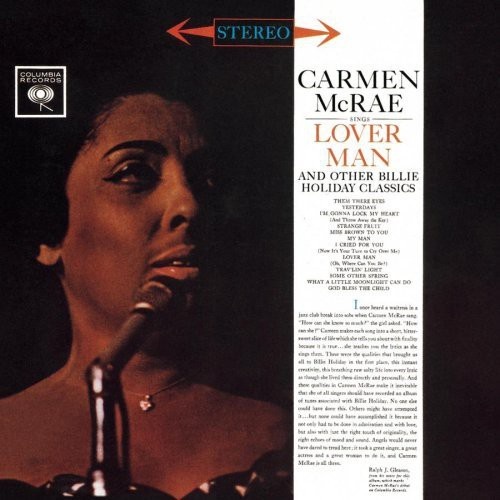
#41) Carmen McRae - Sings Lover Man and Other Billie Holiday Classics (1961)

0001781341.jpg


The original series definitely had jazz vocal albums but certainly the focus was on the "big three" (Ella, Sarah, Billie). Though some other vocalists were there, I don't believe I had a Carmen McRae album - this was definitely an oversight. McRae, today, indeed seems underappreciated. As allmusic.com points out, she may not have the range of say Sarah Vaughn (who does?), her strength lies in "her behind-the-beat phrasing and ironic interpretations of lyrics". One would not think an album of Billie Holiday (McRae's idol) standards would be a great album as it would force comparisons with the iconic Holiday. But, as they say in sports, that's why they play the game. As opposed to when one listens to, say, Michael Buble or Harry Connick and long for the original Sinatra they are covering, at no time does one long for Holiday's versions (even on "Strange Fruit" whih surprised me). McRae puts her own mark on these well known standards, and her interpretations are outstanding. Sure one doesn't get Holiday's put-through-the-wringer-and-hung-up-wet voice invoking the challenges of a life led, but McRae's voice is so wonderful, I don't mind. If you enjoy jazz vocals and haven't checked out McRae, this is a great album to start.
Contains Nat Adderley on trumpet and Eddie "Lockjaw" Davis on tenor sax
One of my very first listening projects was Billie Holiday. Riding along with her from her first session in 1933 (with Benny Goodman!) to her last in 1959 was a harrowing journey. Although she updated her style admirably over the years, eventually her corrosive lifestyle overcame her massive talent.

Carmen McRae recorded this album a scant three years after Billie's death. In tackling the songs that Lady Day made famous, McRae risked being called derivative. But, as Zeeb points out, she puts her own mark on every number. For me, SLMOBHC represents what Billie could have sounded like in 1962 if she hadn't self-destructed at age 44. Like Billie, Carmen managed to remain true both to the songs (some of which are lightweight Tin Pan Alley fluff) and to jazz.
 
Back
Top