
Zeeba Neighba
Staff member
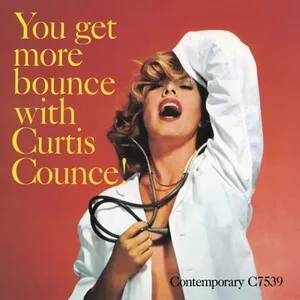
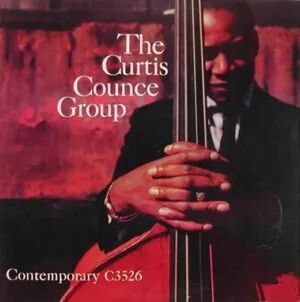
Curtis Counce - You Get More Bounce with Curtis Counce! (1957) and The Curtis Counce Group (1957)

Follow along with the video below to see how to install our site as a web app on your home screen.
Note: This feature may not be available in some browsers.

Herbie Nichols - The Complete Blue Note Recordings
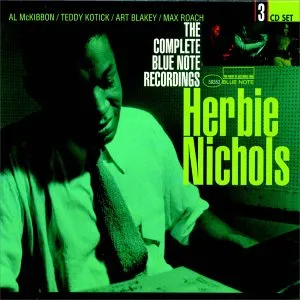
Thought as I'd get to the album/LP era, Penguin would cut back on the compilations but here's another three disc set. A bit of a cheat again - "hey we recommend Miles Davis 30 disc entire Columbia output". Getting a bit tired of this self-imposed series because of this (and the MG says "You're not the only one". Gonna stick with it as I'm hoping (as I peek ahead) there's more traditional albums making listening more easily digestible

All right, Sam!At least they recommended the 1997 Blue Note issue rather than the original 1987 Mosaic box which is rather pricy.
I find the same issue with the 1001 Classical Recordings book, though I must say I did enjoy all 11 discs of Sergei Rachmaninoff performing his own works and others.


I knew virtually nothing about Chaloff and thought "that's an awful way to go." He was only 33 when he died.Serge Chaloff - Blue Serge (1956)
First listen - Chaloff, in a review referenced on Wiki, was once described as 'the most expressive and openly emotive baritone saxophonist jazz has ever witnessed'. Sadly despite surgery, would die of spinal tumors/cancer the next year.
By 1947, Chaloff, following the example of his hero, Charlie Parker, was a heroin addict. According to Gene Lees, Chaloff was the Woody Herman band's 'chief druggist as well as its number one junkie. Serge would hang a blanket in front of the back seats of the bus and behind it would dispense the stuff to colleagues.' Whitney Balliett wrote that Chaloff had 'a satanic reputation as a drug addict whose proselytizing ways with drugs reportedly damaged more people than just himself.' Many musicians blamed him for the drug-related death of the 21-year-old trumpeter Sonny Berman on January 16, 1947.
The trumpeter Rolf Ericson, who joined Herman's band in 1950, described the impact of drugs on the band's performances: 'In the band Woody had started on the coast...late in 1947, which I heard many times, several of the guys were on narcotics and four were alcoholics. When the band started a night's work they sounded wonderful, but after the intermission, during which they used the needle or lushed, the good music was over. It was horrible to see them sitting on the stage like living dead, peering into little paper envelopes when they weren't playing.'
One night in Washington D.C., Woody Herman had a public row on the bandstand with Chaloff. Herman told Gene Lees: 'He was getting farther and farther out there, and the farther out he got the more he was sounding like a fagalah. He kept saying, ‘Hey, Woody, baby, I'm straight, man, I'm clean.' And I shouted, ‘Just play your goddamn part and shut up!'....I was so depressed after that gig. There was this after-hours joint in Washington called the Turf and Grid....I had to fight my way through to get a drink, man. All I wanted was to have a drink and forget it. And finally I get a couple of drinks, and it's hot in there, and I'm sweating, and somebody's got their hands on me, and I hear, ‘Hey, Woody, baby, whadya wanna talk to me like that for? I'm straight, baby, I'm straight.' And it's Mr. Chaloff. And then I remember an old Joe Venuti bit. We were jammed in there, packed in, and...I peed down Serge's leg. You know, man, when you do that to someone, it takes a while before it sinks in what's happened to him. And when Serge realized, he let out a howl like a banshee.'
Chaloff's bandmate, Terry Gibbs, told Ira Gitler stories of his chaotic behaviour: 'He'd fall asleep with a cigarette all the time and always burn a hole in a mattress. Always! In about twelve hotels. When we'd go to check out, the hotel owner – Serge always had his hair slicked down even though he hadn't taken a bath for three years...the manager would say, 'Mr Chaloff, you burned a hole in your mattress and...' 'How dare you. I'm the winner of the down beat and Metronome polls. How dare you?'...the manager would always say, 'I'm sorry Mr Chaloff,'...Except one time when the band got off on an air-pistol kick....Serge put a telephone book against the door and was zonked out of his bird...he got three shots at the telephone book and made the biggest hole in the door you ever saw. So when he went to the check out, the guy said, 'Mr Chaloff, it'll cost you.'...He 'how-dared' him a few times. Couldn't get away with it. He said 'Well listen, if I'm gonna pay for the door I want the door.' It was twenty four dollars. So he paid for the door. I happen to be standing close by. 'Hey Terry,' he said. 'Grab this,' and all of a sudden I found myself checking out....We're walking out of the hotel with a door.'
Al Cohn described Chaloff's driving: 'I don't know how we kept from being killed. Serge would always be drunk. He was quite a drinker. Everything he did, he did too much. So one time we're driving, after work. It's four o'clock in the morning, and he makes a left turn, and we're wondering why the road is so bumpy. Turned out he made a left turn into the railroad tracks, and we're going over the ties.'
Zoot Sims also talked about Chaloff with Gitler: 'When Serge was cleaned up, you know, straight, he could be a delight, really to be around, a lot of fun. He knew how to handle himself. He had that gift. He could get pretty raunchy when he was strung out, but he could also be charming.'
In late 1949, when many big bands were folding for economic reasons, Herman broke up the Second Herd. Fronting a new small band in Chicago in 1950, Herman told Down Beat: 'You can't imagine how good it feels to look at my present group and find them all awake. To play a set and not have someone conk out in the middle of a chorus.
I knew virtually nothing about Chaloff and thought "that's an awful way to go." He was only 33 when he died.
His addiction to heroin was storied. From Wiki:
Another anecdote:
Jay Migliori, who played with Chaloff at Storyville, recalled, 'Serge was a wild character. We were working at Storyville and, if he was feeling good, he used to let his trousers gradually fall down during the cadenza of his feature, 'Body and Soul.' At the end of the cadenza, his trousers would hit the ground.'
Chaloff eventually had a personal crisis and went to rehab. He turned himself around a few years before he died.
We are the champions, my friend.I too took a deep dive about Chaloff on Wiki where (compared to many lesser known jazz artists) he has a very extensive article - clearly he has a champion out there.

