
Install the app
How to install the app on iOS
Follow along with the video below to see how to install our site as a web app on your home screen.
Note: This feature may not be available in some browsers.
You are using an out of date browser. It may not display this or other websites correctly.
You should upgrade or use an alternative browser.
You should upgrade or use an alternative browser.
Lost Classics
- Thread starter Ojai Sam
- Start date

Ojai Sam
Staff member
The Clerkes of Oxenford - SHEPPARD: Mass "Cantate" (1979)

John Sheppard definitely satisfies both tests to qualify for this elite thread. I learned about him only recently from a long article in the Association For Recorded Sound Collections Journal. ARSC sez (lightly edited, footnotes omitted):
As the date of John Sheppard's birth can only be placed between 1510 and 1518, 2018 may indeed be his quincentenary, a perfect time to take stock of the rapidly expanding catalog of recordings of his music, which are often based on the latest advances in the scholarship on 16th-century music and performance practice. As suggested by the absence of modern editions until recently, Sheppard's music seems to have lain dormant for some 300 years, with a very gradual revival beginning only in the 20th century. That Sheppard is finally taking a prominent place amongst the pantheon of British composers of the Renaissance is evidenced not only by a rapidly expanding catalog of recordings, but through performers such as the German group who chose to call themselves the John Sheppard Ensemble, and conductor Paul McCreesh, who championed Sheppard's "Missa Cantate" as "an unquestionable masterpiece".
Perhaps the first modern publication of one of Sheppard's scores, J. E. West's edition of "Haste Thee 0 God," appeared in 1905. One of the reasons why Sheppard's music had been neglected in the 20th century is that a missing part book caused its omission from the Tudor Church Music edition during the 1920s. Although the "Cantate'' Mass had been "revived in 1917", the first modern edition of the score was not published until 1976.
Publication of modern editions, however, does not guarantee widespread use. It took David Wulstan's stunning 1977 world-premiere recording of the "Missa Cantate" (first issued in France in 1979, and then in the United States in 1981) to bring Sheppard's music to a substantial audience, thus kick-starting a radically overdue recognition.
This performance, happily available above on Spotify, is indeed stunning. I'm no expert on Renaissance music but the "Missa Cantate" has lost none of its breathtaking power for being "lost" over three centuries. Maybe @captwhiffle already knows about it.
John Sheppard definitely satisfies both tests to qualify for this elite thread. I learned about him only recently from a long article in the Association For Recorded Sound Collections Journal. ARSC sez (lightly edited, footnotes omitted):
As the date of John Sheppard's birth can only be placed between 1510 and 1518, 2018 may indeed be his quincentenary, a perfect time to take stock of the rapidly expanding catalog of recordings of his music, which are often based on the latest advances in the scholarship on 16th-century music and performance practice. As suggested by the absence of modern editions until recently, Sheppard's music seems to have lain dormant for some 300 years, with a very gradual revival beginning only in the 20th century. That Sheppard is finally taking a prominent place amongst the pantheon of British composers of the Renaissance is evidenced not only by a rapidly expanding catalog of recordings, but through performers such as the German group who chose to call themselves the John Sheppard Ensemble, and conductor Paul McCreesh, who championed Sheppard's "Missa Cantate" as "an unquestionable masterpiece".
Perhaps the first modern publication of one of Sheppard's scores, J. E. West's edition of "Haste Thee 0 God," appeared in 1905. One of the reasons why Sheppard's music had been neglected in the 20th century is that a missing part book caused its omission from the Tudor Church Music edition during the 1920s. Although the "Cantate'' Mass had been "revived in 1917", the first modern edition of the score was not published until 1976.
Publication of modern editions, however, does not guarantee widespread use. It took David Wulstan's stunning 1977 world-premiere recording of the "Missa Cantate" (first issued in France in 1979, and then in the United States in 1981) to bring Sheppard's music to a substantial audience, thus kick-starting a radically overdue recognition.
This performance, happily available above on Spotify, is indeed stunning. I'm no expert on Renaissance music but the "Missa Cantate" has lost none of its breathtaking power for being "lost" over three centuries. Maybe @captwhiffle already knows about it.
Last edited:
Ojai Sam
Staff member
Various Artists - The Wedding Ceremony Of Sister Rosetta Tharpe (1951)
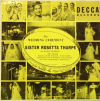
Prince Charles did it. So did Hank Williams. I'm talking about getting hitched in public. Back on July 3, 1951, Sister Rosetta Tharpe was at the peak of her success as a fiery gospel singer. So it only made sense for her to tie the knot with Russell Morrison, her manager, at Washington D.C.'s Griffith Stadium. The hopeless Senators had a home game against the Boston Red Sox that day, so it was a busy place.
Decca Records had their microphones on hand and the result was this early 10" LP. We get to hear the complete ceremony from prologue and benediction through the vows, followed by a concert anchored by Sister Rosetta herself. Afterward there was a huge fireworks show.
The complete story is here:
https://www.washingtonian.com/2007/03/01/the-bride-played-guitar-1/
Good luck finding the Decca album. I finally found a copy in Poland which set me back many zlotys. MG members can enjoy the whole album here:
View album 22
Prince Charles did it. So did Hank Williams. I'm talking about getting hitched in public. Back on July 3, 1951, Sister Rosetta Tharpe was at the peak of her success as a fiery gospel singer. So it only made sense for her to tie the knot with Russell Morrison, her manager, at Washington D.C.'s Griffith Stadium. The hopeless Senators had a home game against the Boston Red Sox that day, so it was a busy place.
Decca Records had their microphones on hand and the result was this early 10" LP. We get to hear the complete ceremony from prologue and benediction through the vows, followed by a concert anchored by Sister Rosetta herself. Afterward there was a huge fireworks show.
The complete story is here:
https://www.washingtonian.com/2007/03/01/the-bride-played-guitar-1/
Good luck finding the Decca album. I finally found a copy in Poland which set me back many zlotys. MG members can enjoy the whole album here:
View album 22
Last edited:
Ojai Sam
Staff member
Ella Fitzgerald - Ella At The Shrine (rec. 1956, released 2018)
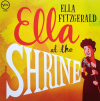
This short live set holds major historic significance that belies its length. At the beginning of 1956, Norman Granz started Verve Records by uniting his two earlier labels (Clef and NorGran). Simultaneously, after years of effort he finally was able to pry his Ella, his managerial client, away from Decca through some complex behind-the-scenes negotiations that involved Benny Goodman and Stan Getz.
On January 21, 1956 Ella played a set at the fabulous Shrine Auditorium, conveniently located near the Central Avenue jazz scene, not to mention the only car dealership named after an animated feline.

Ella is just bubbling over with enthusiasm and energy, backed by an unidentified small group. Norman Granz' stage announcement name checks Zardi's, the club where Ella was performing nightly.
The album represents not only Ella's first recordings on Verve but the label's first live recordings. Don't look for the CD though. It's available only as a download or by streaming. Oh, yeah. It was also released on yellow vinyl as a limited edition for Record Store Day last year.
So this is an official Vinyl Rip Of The Day.
This short live set holds major historic significance that belies its length. At the beginning of 1956, Norman Granz started Verve Records by uniting his two earlier labels (Clef and NorGran). Simultaneously, after years of effort he finally was able to pry his Ella, his managerial client, away from Decca through some complex behind-the-scenes negotiations that involved Benny Goodman and Stan Getz.
On January 21, 1956 Ella played a set at the fabulous Shrine Auditorium, conveniently located near the Central Avenue jazz scene, not to mention the only car dealership named after an animated feline.
Ella is just bubbling over with enthusiasm and energy, backed by an unidentified small group. Norman Granz' stage announcement name checks Zardi's, the club where Ella was performing nightly.
The album represents not only Ella's first recordings on Verve but the label's first live recordings. Don't look for the CD though. It's available only as a download or by streaming. Oh, yeah. It was also released on yellow vinyl as a limited edition for Record Store Day last year.
So this is an official Vinyl Rip Of The Day.
Last edited:
Ojai Sam
Staff member
Jacqueline Du Pre, London Symphony Orchestra (Sir John Barbirolli) - ELGAR: Cello Concerto (1965)

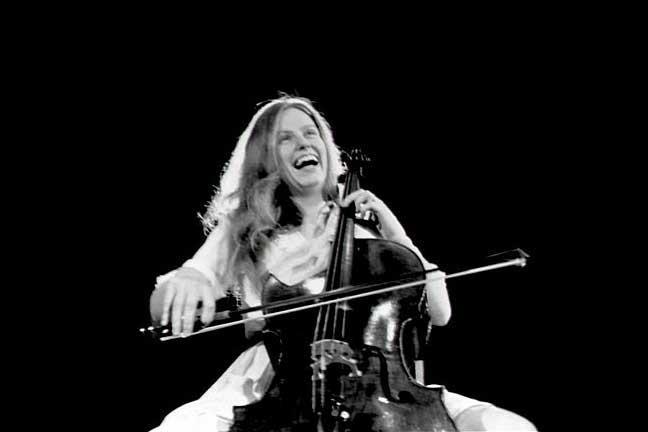
Here is a sad example of life imitating art. Jacqueline Du Pre was the ultimate child prodigy. At the age of four, she reputedly heard a cello and asked her mother for "one of those". By the time she was 14, she had started appearing on the BBC, with and without her sister Hilary, a brilliant flautist in her own right.
Her rise thereafter was even swifter, taking her to world prominence. However, at age 28 multiple sclerosis forced Jacqueline to stop playing. She died 14 years later at age 42.
The melancholy tone of Elgar's challenging cello showcase suits both Jacqueline's style and her life story itself. This was her first recording of the piece in 1965 at age 20. The emotional nuance belies her youth. We can also enjoy Dame Janet Baker's stirring version of Elgar's nautical song cycle, plus a CD bonus of the rousing Cockaigne Overture to open the proceedings.
 on the Sam-O-Meter.
Here is a sad example of life imitating art. Jacqueline Du Pre was the ultimate child prodigy. At the age of four, she reputedly heard a cello and asked her mother for "one of those". By the time she was 14, she had started appearing on the BBC, with and without her sister Hilary, a brilliant flautist in her own right.
Her rise thereafter was even swifter, taking her to world prominence. However, at age 28 multiple sclerosis forced Jacqueline to stop playing. She died 14 years later at age 42.
The melancholy tone of Elgar's challenging cello showcase suits both Jacqueline's style and her life story itself. This was her first recording of the piece in 1965 at age 20. The emotional nuance belies her youth. We can also enjoy Dame Janet Baker's stirring version of Elgar's nautical song cycle, plus a CD bonus of the rousing Cockaigne Overture to open the proceedings.
on the Sam-O-Meter.
Ojai Sam
Staff member
Ginger Baker - Going Back Home (1994)
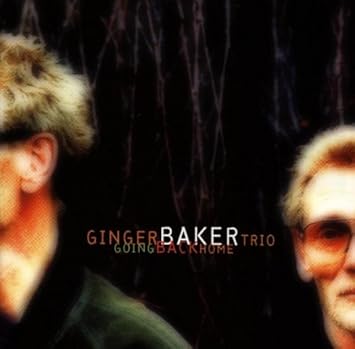
Before joining the second wave of British blues, Ginger Baker was a serious jazzer, so the title to this album suits it perfectly. At the time it came out, I was unfamiliar with either Bill Frisell and Charlie Haden. Not expecting much more than a Charlie Watts-style vanity project, I was astonished at the passion, power and skill that Baker brought to the jazz idiom, aided by two players legendary in their own right.
on the Sam-O-Meter.
Before joining the second wave of British blues, Ginger Baker was a serious jazzer, so the title to this album suits it perfectly. At the time it came out, I was unfamiliar with either Bill Frisell and Charlie Haden. Not expecting much more than a Charlie Watts-style vanity project, I was astonished at the passion, power and skill that Baker brought to the jazz idiom, aided by two players legendary in their own right.
on the Sam-O-Meter.
Ojai Sam
Staff member
Prince - The Undertaker (1993)

Diffuser.fm tells us the story:
In the early hours of June 14, 1993, Prince summoned the rhythm section from his New Power Generation band - drummer Michael Bland and bassist Sonny Thompson - and fulfilled the fantasies of his guitar-loving fans by recording an impromptu power-trio record. “Picture this,” Bland told Guitar World the following year: “A DAT machine, a 32-channel board, two techs and three players. It was about three o’clock in the morning. We got our sounds together and just let the DAT roll. We took about an hour to make that record, from start to finish, playing straight through with no overdubs. The sequence of songs on the record is exactly the way we played it. The guitar segues from one song to the next, like when we do live stuff."
Among the songs they recorded at the session were "The Ride," a bluesy new take on his 1979 track "Bambi," a cover of the Rolling Stones' "Honky Tonk Woman" and two tracks ("Dolphin" and "Zannalee") that would wind up released in different, more refined forms on future albums. But the album's clear centerpiece was the title track, a 10-minute anti-drug, anti-violence plea anchored by a menacing, hypnotic bass line. The song's sparse, repeated lyrics ("Put away the guns for future's sake / Don't you be another number for the undertaker") allowed Prince plenty of room to testify and explore with his guitar.
“He tends to really start opening up and playing a lot of different things when me and Michael do a trio thing with him,” explained Thompson. “There’s no keyboards there – no nothing. So, he can venture out and play what he wants to play.” As part of his ongoing campaign to break free of what he considered an unfair record label deal - a crusade that would cause him to change his name to an unpronounceable symbol and paint the word "slave" on his face - Prince planned to distribute The Undertaker as a cover-mounted CD given out free with issues of Guitar World. According to Prince Vault, Warner Brothers blocked this move, going so far as to cover all existing copies of the disk with a plastic coating that rendered them unplayable.
In 1995, reportedly in an effort to recoup the money they had advanced Prince for his 1992 Love Symbol album, the label released a full-length VHS and laserdisc version of The Undertaker. It largely focused on performance footage of the trio, with brief interludes featuring model Vanessa Marcil as a fan who is contemplating suicide, but thinks better of it after hearing the band perform. A larger version of the NPG, complete with a horn section and vocal support from the Steeles, backed Mavis Staples on a version of "The Undertaker" in the summer of 1992. That version ended up on Staples' 1993 album The Voice.
on the Sam-O-Meter. One of the great lost guitar albums of all time.
View album 25
Diffuser.fm tells us the story:
In the early hours of June 14, 1993, Prince summoned the rhythm section from his New Power Generation band - drummer Michael Bland and bassist Sonny Thompson - and fulfilled the fantasies of his guitar-loving fans by recording an impromptu power-trio record. “Picture this,” Bland told Guitar World the following year: “A DAT machine, a 32-channel board, two techs and three players. It was about three o’clock in the morning. We got our sounds together and just let the DAT roll. We took about an hour to make that record, from start to finish, playing straight through with no overdubs. The sequence of songs on the record is exactly the way we played it. The guitar segues from one song to the next, like when we do live stuff."
Among the songs they recorded at the session were "The Ride," a bluesy new take on his 1979 track "Bambi," a cover of the Rolling Stones' "Honky Tonk Woman" and two tracks ("Dolphin" and "Zannalee") that would wind up released in different, more refined forms on future albums. But the album's clear centerpiece was the title track, a 10-minute anti-drug, anti-violence plea anchored by a menacing, hypnotic bass line. The song's sparse, repeated lyrics ("Put away the guns for future's sake / Don't you be another number for the undertaker") allowed Prince plenty of room to testify and explore with his guitar.
“He tends to really start opening up and playing a lot of different things when me and Michael do a trio thing with him,” explained Thompson. “There’s no keyboards there – no nothing. So, he can venture out and play what he wants to play.” As part of his ongoing campaign to break free of what he considered an unfair record label deal - a crusade that would cause him to change his name to an unpronounceable symbol and paint the word "slave" on his face - Prince planned to distribute The Undertaker as a cover-mounted CD given out free with issues of Guitar World. According to Prince Vault, Warner Brothers blocked this move, going so far as to cover all existing copies of the disk with a plastic coating that rendered them unplayable.
In 1995, reportedly in an effort to recoup the money they had advanced Prince for his 1992 Love Symbol album, the label released a full-length VHS and laserdisc version of The Undertaker. It largely focused on performance footage of the trio, with brief interludes featuring model Vanessa Marcil as a fan who is contemplating suicide, but thinks better of it after hearing the band perform. A larger version of the NPG, complete with a horn section and vocal support from the Steeles, backed Mavis Staples on a version of "The Undertaker" in the summer of 1992. That version ended up on Staples' 1993 album The Voice.
on the Sam-O-Meter. One of the great lost guitar albums of all time.View album 25

lpfreak1170
Well-Known Member
I have got to sit down and listen to this!Prince - The Undertaker (1993)
Diffuser.fm tells us the story:
In the early hours of June 14, 1993, Prince summoned the rhythm section from his New Power Generation band - drummer Michael Bland and bassist Sonny Thompson - and fulfilled the fantasies of his guitar-loving fans by recording an impromptu power-trio record. “Picture this,” Bland told Guitar World the following year: “A DAT machine, a 32-channel board, two techs and three players. It was about three o’clock in the morning. We got our sounds together and just let the DAT roll. We took about an hour to make that record, from start to finish, playing straight through with no overdubs. The sequence of songs on the record is exactly the way we played it. The guitar segues from one song to the next, like when we do live stuff."
Among the songs they recorded at the session were "The Ride," a bluesy new take on his 1979 track "Bambi," a cover of the Rolling Stones' "Honky Tonk Woman" and two tracks ("Dolphin" and "Zannalee") that would wind up released in different, more refined forms on future albums. But the album's clear centerpiece was the title track, a 10-minute anti-drug, anti-violence plea anchored by a menacing, hypnotic bass line. The song's sparse, repeated lyrics ("Put away the guns for future's sake / Don't you be another number for the undertaker") allowed Prince plenty of room to testify and explore with his guitar.
“He tends to really start opening up and playing a lot of different things when me and Michael do a trio thing with him,” explained Thompson. “There’s no keyboards there – no nothing. So, he can venture out and play what he wants to play.” As part of his ongoing campaign to break free of what he considered an unfair record label deal - a crusade that would cause him to change his name to an unpronounceable symbol and paint the word "slave" on his face - Prince planned to distribute The Undertaker as a cover-mounted CD given out free with issues of Guitar World. According to Prince Vault, Warner Brothers blocked this move, going so far as to cover all existing copies of the disk with a plastic coating that rendered them unplayable.
In 1995, reportedly in an effort to recoup the money they had advanced Prince for his 1992 Love Symbol album, the label released a full-length VHS and laserdisc version of The Undertaker. It largely focused on performance footage of the trio, with brief interludes featuring model Vanessa Marcil as a fan who is contemplating suicide, but thinks better of it after hearing the band perform. A larger version of the NPG, complete with a horn section and vocal support from the Steeles, backed Mavis Staples on a version of "The Undertaker" in the summer of 1992. That version ended up on Staples' 1993 album The Voice.
View album 25
Ojai Sam
Staff member
Patty Duke - Sings Folk Songs: Time To Move On (rec. 1968, rel. 2013)
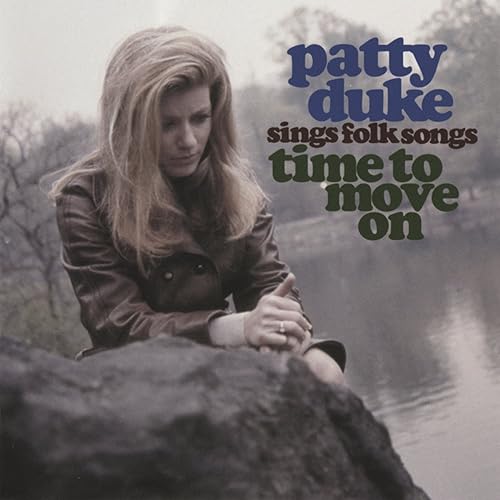
Like a lot of teen pop singers, Patty came to the end of the road when the Summer of Love shattered everyone's innocence. For what would be her final album for United Artists, she went into the studio with Ernie Sheldon producing. Ernie, after serving as a member of The Limeliters, had composed folkish hits like"Baby The Rain Must Fall" and "Seattle". For this project, he brought Patty a couple of his own songs along with covers by the usual suspects like Dylan, Seeger and Donovan. It all fits together well, showing Patty's comfort with the folk idiom. Her spoken version of the familiar "Bells of Rhymney", dramatic but not overwrought, does credit to her acting ability (Eddie Albert take note).
One advance single from the album was released and Patty gamely went on the Ed Sullivan Show to flog it, but her moment had passed. UA cancelled the album and it sat in the vault for nearly 50 years until our friends at Real Gone Music dug it out. Good on them! This project holds up at least as well as Bobby Darin's similar foray into folkdom.
Like a lot of teen pop singers, Patty came to the end of the road when the Summer of Love shattered everyone's innocence. For what would be her final album for United Artists, she went into the studio with Ernie Sheldon producing. Ernie, after serving as a member of The Limeliters, had composed folkish hits like"Baby The Rain Must Fall" and "Seattle". For this project, he brought Patty a couple of his own songs along with covers by the usual suspects like Dylan, Seeger and Donovan. It all fits together well, showing Patty's comfort with the folk idiom. Her spoken version of the familiar "Bells of Rhymney", dramatic but not overwrought, does credit to her acting ability (Eddie Albert take note).
One advance single from the album was released and Patty gamely went on the Ed Sullivan Show to flog it, but her moment had passed. UA cancelled the album and it sat in the vault for nearly 50 years until our friends at Real Gone Music dug it out. Good on them! This project holds up at least as well as Bobby Darin's similar foray into folkdom.
Ojai Sam
Staff member
Art Blakey & The List of Adrian Messenger - Just Coolin' (rec. 1959, rel. 2020  )
)

This album richly deserves a place of honor among our "Lost Classics". It features Blakey with perhaps his finest Messenger front line, The M Squad (Morgan and Mobley) plus Bobby Timmons and Jymie Merritt. Recall this is the same aggregation that blew the doors off Birdland for two volumes of At The Jazz Corner of the World.
So why did this hard bop masterpiece sit in the vault for 60 years? Because it was preempted by those very Jazz Corner albums recorded a month later covering much the same material. I love live jazz performances, especially by Blakey, but it seems criminal for these sides to languish for decades. Oh well, at least we can enjoy them now.
on the Sam-O-Meter.
)
This album richly deserves a place of honor among our "Lost Classics". It features Blakey with perhaps his finest Messenger front line, The M Squad (Morgan and Mobley) plus Bobby Timmons and Jymie Merritt. Recall this is the same aggregation that blew the doors off Birdland for two volumes of At The Jazz Corner of the World.
So why did this hard bop masterpiece sit in the vault for 60 years? Because it was preempted by those very Jazz Corner albums recorded a month later covering much the same material. I love live jazz performances, especially by Blakey, but it seems criminal for these sides to languish for decades. Oh well, at least we can enjoy them now.
on the Sam-O-Meter.
Ojai Sam
Staff member
(Ginger Baker's) African Force - Palanquin's Pole (1987)

After the demise of Cream, Ginger Baker embarked on a musical odyssey that took him past blues rock to African roots music and eventually back to jazz where his career began. This record is the most exotic of his African period, recorded in Germany with an all percussion quintet.
Thom Jurek's AMG's review is spot on:
Those thunderous drums we hear in the beginning of this set could only come from one drummer -- Ginger Baker -- and despite the name of the band, it is Baker who is its backbone. Recorded live in 1987 in Bremen, Germany, Baker, Thomas Akuru Dyani, Kwaku A. Mensa, Ansoumana Bangoura, and Ampofo Acquah used their percussive stature to completely bowl over a throng at the Schaumburg Festival. All five men play percussion or drums, two sing, and one occasionally plays guitar. For over 47 minutes they travel into the hypnotic heart of the drum. The drum exists here not only as a means to make music, but also as a means to impart history, mystery, magic, and communication. Whether the polyrhythms begin as simple 4/4 patterns and wind out immeasurably, snaking their way through subsets of counter balanced time, or set out from the beginning to suspend all notions of time and its place in the space is of no consequence; this quintet plays only to hear, and hears only to speak in that intimate language that utters itself as culture. This is a drum record like none other in existence. It is a mystical record that is rooted in the bone buried in the earth, and Baker's assemblage understands all too well, that the drum is the heartbeat of the universe. Awesome.
After the demise of Cream, Ginger Baker embarked on a musical odyssey that took him past blues rock to African roots music and eventually back to jazz where his career began. This record is the most exotic of his African period, recorded in Germany with an all percussion quintet.
Thom Jurek's AMG's review is spot on:
Those thunderous drums we hear in the beginning of this set could only come from one drummer -- Ginger Baker -- and despite the name of the band, it is Baker who is its backbone. Recorded live in 1987 in Bremen, Germany, Baker, Thomas Akuru Dyani, Kwaku A. Mensa, Ansoumana Bangoura, and Ampofo Acquah used their percussive stature to completely bowl over a throng at the Schaumburg Festival. All five men play percussion or drums, two sing, and one occasionally plays guitar. For over 47 minutes they travel into the hypnotic heart of the drum. The drum exists here not only as a means to make music, but also as a means to impart history, mystery, magic, and communication. Whether the polyrhythms begin as simple 4/4 patterns and wind out immeasurably, snaking their way through subsets of counter balanced time, or set out from the beginning to suspend all notions of time and its place in the space is of no consequence; this quintet plays only to hear, and hears only to speak in that intimate language that utters itself as culture. This is a drum record like none other in existence. It is a mystical record that is rooted in the bone buried in the earth, and Baker's assemblage understands all too well, that the drum is the heartbeat of the universe. Awesome.
Ojai Sam
Staff member
Johnny Mathis - Johnny Mathis (1956)
HT to @BHT for this one.
I must confess to being lukewarm about Johnny Mathis. His hits wandered too close to Muzak (remember THAT?) for my taste. But at the outset of his career, he was a jazz singer of no little talent. As a teenager, he scored a gig at Mona's 440 Club, the first lesbian bar in San Francisco.
Bet that Gladys Bentley show was a trip. But I digress.
He was heard there by Helen Noga, owner of the Black Hawk. She in turn tipped him to George Avakian, who signed him to Columbia Records. Avakian thought highly enough of the 20 year old that he put together a whirlwind series of sessions in New York during late March and early April 1956 to record him with FIVE different jazz orchestras: Teo Macero, Bob Prince, Manny Albam, Gil Evans and John Lewis. Johnny went all out, throwing himself energetically into material ranging from smoky jazz ("Fly Me To The Moon") to fiery Afro-Cuban ("Babalu"). Gil Evans may have emerged as the winner here by a nose, thanks to strong arrangements and the trumpet of Buck Clayton. Here's the lineup:
TEO MACERO
March 14, 1956
Out of This World
Street of Dreams
BOB PRINCE
March 15, 1956
Angel Eyes
Star Eyes
MANNY ALBAM
March 19, 1956
Autumn in Rome
Cabin in the Sky
I'm Glad There Is You
GIL EVANS
March 21, 1956
Easy to Love
It Might As Well Be Spring
Love, Your Magic Spell Is Everywhere
TEO MACERO
March 23, 1956
Babalu
Caravan
JOHN LEWIS
April 6, 1956
In Other Words (Fly Me to the Moon)
Prelude to a Kiss
The concept is extraordinary, especially for an untried young singer from the West Coast. But jazz was not to be Mathis' milieu. Five months later, the label paired him with the bland Ray Conniff for a singles session that yielded his two huge signature hits ("It's Not For Me To Say" and "Wonderful, Wonderful"). You can't begrudge success, but It's tempting to wonder what might have happened if Johnny had stuck with jazz.
on the Sam-O-Meter.
HT to @BHT for this one.
I must confess to being lukewarm about Johnny Mathis. His hits wandered too close to Muzak (remember THAT?) for my taste. But at the outset of his career, he was a jazz singer of no little talent. As a teenager, he scored a gig at Mona's 440 Club, the first lesbian bar in San Francisco.
Bet that Gladys Bentley show was a trip. But I digress.
He was heard there by Helen Noga, owner of the Black Hawk. She in turn tipped him to George Avakian, who signed him to Columbia Records. Avakian thought highly enough of the 20 year old that he put together a whirlwind series of sessions in New York during late March and early April 1956 to record him with FIVE different jazz orchestras: Teo Macero, Bob Prince, Manny Albam, Gil Evans and John Lewis. Johnny went all out, throwing himself energetically into material ranging from smoky jazz ("Fly Me To The Moon") to fiery Afro-Cuban ("Babalu"). Gil Evans may have emerged as the winner here by a nose, thanks to strong arrangements and the trumpet of Buck Clayton. Here's the lineup:
TEO MACERO
March 14, 1956
Out of This World
Street of Dreams
BOB PRINCE
March 15, 1956
Angel Eyes
Star Eyes
MANNY ALBAM
March 19, 1956
Autumn in Rome
Cabin in the Sky
I'm Glad There Is You
GIL EVANS
March 21, 1956
Easy to Love
It Might As Well Be Spring
Love, Your Magic Spell Is Everywhere
TEO MACERO
March 23, 1956
Babalu
Caravan
JOHN LEWIS
April 6, 1956
In Other Words (Fly Me to the Moon)
Prelude to a Kiss
The concept is extraordinary, especially for an untried young singer from the West Coast. But jazz was not to be Mathis' milieu. Five months later, the label paired him with the bland Ray Conniff for a singles session that yielded his two huge signature hits ("It's Not For Me To Say" and "Wonderful, Wonderful"). You can't begrudge success, but It's tempting to wonder what might have happened if Johnny had stuck with jazz.
on the Sam-O-Meter.
Ojai Sam
Staff member
The Story Of "Come On-A My House"
What does Rosemary Clooney have in common with Alvin and The Chipmunks? As it turns out, a lot. Both owe their careers to the same man: Ross Bagdasarian.
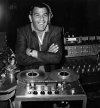
According to Ara The Rat (aratherat.com):
He was born Rostom Sipan Bagdasarian to Armenian parents in Fresno who escaped the Hamidian Massacres and growing troubles for Armenians in the Ottoman Empire to emigrate to the U.S. Bagdasarian first went in the family business - growing grapes - but he gave up running a 60-acre grape farm to pursue his passion. “The business was terrible and my mom and dad said, the music business can’t be any tougher than grapes and raisins, let’s at least follow our dreams,” Ross Bagdasarian, Jr. later recalled in an interview.
William Saroyan, the prize winning author and playwright, was Ross' cousin. At age 20, Ross went to New York City and snagged a role on Broadway in his cousin's successful play, "The Human Comedy". Driving back to California together in 1939, Bill and Ross composed a faux Armenian folk song and called it "Come On-A My House". The song sat in a trunk after Ross was drafted into the Army Air Corps and sent to Europe. After the War, Ara tells us that:
[Ross} and Saroyan rented an office in Beverly Hills and tried to extend their success by taking Armenian material that had fallen in the public domain and converting them to songs for the American mainstream.
Perhaps on the strength of Bill's reputation, in 1951 Ross signed with Coral Records, a Decca subsidiary. Together they recorded "Come On-A My House" with Bill's spoken introduction giving it a unique Armenian flavor, matched to a boogie woogie piano (click to play):
View album 26
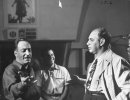
Arranger George Cates, Ross Bagdasarian and William Saroyan in the studio
The song also appeared in an off-Broadway production of Saroyan's play "The Sun". But the single sank without a trace.
However, "House" was soon covered by Kay Armen, an Armenian singer (born Armenuhi Manoogian) who had achieved some success on radio during the 1940's.
View album 27
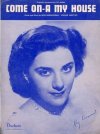
Kay kept the spoken introduction from the version by Bill and Ross, but shifted the spotlight to a small band and added vocal support from The Ray Charles Singers. Unfortunately, this release flopped too.
However, Bagdasarian was nothing if not tenacious. He sent a demo of "Come On A-My House" to Mitch Miller, then the powerful head of A&R at Columbia Records. Rosemary Clooney had been recording on the label since 1946, first as part of the Tony Pastor big band with her sisters, then as a solo act. Rosey had yet to see a hit, so Mitch decided she should try something really different by waxing "Come On A-My House". But, as he was wont to do, he went for the mainstream by stripping the ethnic spoken introduction and adding the bouncy harpsichord of Stan Freeman. Apparently he asked Clooney for an Armenian accent but she demurred, offering instead a faux Italian delivery she later credited to Tony Pastor. The results were astounding:
View album 28
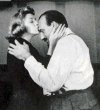
Rosey and Mitch
The single topped the charts and launched Rosey as a recording star, although she later disavowed the song. Ross used the money to persevere in the recording business, investing in an elaborate tape recorder that enabled him to speed up his voice. Deciding to break from his attempts at Armenian music, he adopted the stage name "David Seville". Under this new identity, he had a huge novelty hit with "The Witch Doctor". Soon after, he achieved immortality by creating the three singing rodents we have come to know and love as Alvin and The Chipmunks. Sadly, they never had the opportunity to record with Ms. Clooney.
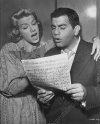
What does Rosemary Clooney have in common with Alvin and The Chipmunks? As it turns out, a lot. Both owe their careers to the same man: Ross Bagdasarian.
According to Ara The Rat (aratherat.com):
He was born Rostom Sipan Bagdasarian to Armenian parents in Fresno who escaped the Hamidian Massacres and growing troubles for Armenians in the Ottoman Empire to emigrate to the U.S. Bagdasarian first went in the family business - growing grapes - but he gave up running a 60-acre grape farm to pursue his passion. “The business was terrible and my mom and dad said, the music business can’t be any tougher than grapes and raisins, let’s at least follow our dreams,” Ross Bagdasarian, Jr. later recalled in an interview.
William Saroyan, the prize winning author and playwright, was Ross' cousin. At age 20, Ross went to New York City and snagged a role on Broadway in his cousin's successful play, "The Human Comedy". Driving back to California together in 1939, Bill and Ross composed a faux Armenian folk song and called it "Come On-A My House". The song sat in a trunk after Ross was drafted into the Army Air Corps and sent to Europe. After the War, Ara tells us that:
[Ross} and Saroyan rented an office in Beverly Hills and tried to extend their success by taking Armenian material that had fallen in the public domain and converting them to songs for the American mainstream.
Perhaps on the strength of Bill's reputation, in 1951 Ross signed with Coral Records, a Decca subsidiary. Together they recorded "Come On-A My House" with Bill's spoken introduction giving it a unique Armenian flavor, matched to a boogie woogie piano (click to play):
View album 26
Arranger George Cates, Ross Bagdasarian and William Saroyan in the studio
The song also appeared in an off-Broadway production of Saroyan's play "The Sun". But the single sank without a trace.
However, "House" was soon covered by Kay Armen, an Armenian singer (born Armenuhi Manoogian) who had achieved some success on radio during the 1940's.
View album 27
Kay kept the spoken introduction from the version by Bill and Ross, but shifted the spotlight to a small band and added vocal support from The Ray Charles Singers. Unfortunately, this release flopped too.
However, Bagdasarian was nothing if not tenacious. He sent a demo of "Come On A-My House" to Mitch Miller, then the powerful head of A&R at Columbia Records. Rosemary Clooney had been recording on the label since 1946, first as part of the Tony Pastor big band with her sisters, then as a solo act. Rosey had yet to see a hit, so Mitch decided she should try something really different by waxing "Come On A-My House". But, as he was wont to do, he went for the mainstream by stripping the ethnic spoken introduction and adding the bouncy harpsichord of Stan Freeman. Apparently he asked Clooney for an Armenian accent but she demurred, offering instead a faux Italian delivery she later credited to Tony Pastor. The results were astounding:
View album 28
Rosey and Mitch
The single topped the charts and launched Rosey as a recording star, although she later disavowed the song. Ross used the money to persevere in the recording business, investing in an elaborate tape recorder that enabled him to speed up his voice. Deciding to break from his attempts at Armenian music, he adopted the stage name "David Seville". Under this new identity, he had a huge novelty hit with "The Witch Doctor". Soon after, he achieved immortality by creating the three singing rodents we have come to know and love as Alvin and The Chipmunks. Sadly, they never had the opportunity to record with Ms. Clooney.

Nickyboy
Staff member
Holy cow! After all your posts of musical arcana, you posted one I actually knew!!!The Story Of "Come On-A My House"
What does Rosemary Clooney have in common with Alvin and The Chipmunks? As it turns out, a lot. Both owe their careers to the same man: Ross Bagdasarian.
View attachment 5336
According to Ara The Rat (aratherat.com):
He was born Rostom Sipan Bagdasarian to Armenian parents in Fresno who escaped the Hamidian Massacres and growing troubles for Armenians in the Ottoman Empire to emigrate to the U.S. Bagdasarian first went in the family business - growing grapes - but he gave up running a 60-acre grape farm to pursue his passion. “The business was terrible and my mom and dad said, the music business can’t be any tougher than grapes and raisins, let’s at least follow our dreams,” Ross Bagdasarian, Jr. later recalled in an interview.
William Saroyan, the prize winning author and playwright best known for "The Human Comedy", was Ross' cousin. At age 20, Ross went to New York City and snagged a role on Broadway in his cousin's successful play, "The Human Comedy". Driving back to California together in 1939, Bill and Ross composed a faux Armenian folk song and called it "Come On-A My House". The song sat in a trunk after Ross was drafted into the Army Air Corps and sent to Europe. After the War, Ara tells us that:
[Ross} and Saroyan rented an office in Beverly Hills and tried to extend their success by taking Armenian material that had fallen in the public domain and converting them to songs for the American mainstream.
Perhaps on the strength of Bill's reputation, in 1951 Ross signed with Coral Records, a Decca subsidiary. Together they recorded "Come On-A My House" with Bill's spoken introduction giving it a unique Armenian flavor, matched to a boogie woogie piano (click to play):
View album 26
View attachment 5337
Arranger George Cates, Ross Bagdasarian and William Saroyan in the studio
The song also appeared in an off-Broadway production of Saroyan's play "The Sun". But the single sank without a trace.
However, "House" was soon covered by Kay Armen, an Armenian singer (born Armenuhi Manoogian) who had achieved some success on radio during the 1940's.
View album 27
View attachment 5341
Kay kept the spoken introduction from the version by Bill and Ross, but shifted the spotlight to a small band and added vocal support from The Ray Charles Singers. Unfortunately, this release flopped too.
However, Bagdasarian was nothing if not tenacious. He sent a demo of "Come On A-My House" to Mitch Miller, then the powerful head of A&R at Columbia Records. Rosemary Clooney had been recording on the label since 1946, first as part of the Tony Pastor big band with her sisters, then as a solo act. Rosey had yet to see a hit, so Mitch decided she should try something really different by waxing "Come On A-My House". But, as he was wont to do, he went for the mainstream by stripping the ethnic spoken introduction and adding the bouncy harpsichord of Stan Freeman. Apparently he asked Clooney for an Armenian accent but she demurred, offering instead a faux Italian delivery she later credited to Tony Pastor. The results were astounding:
View album 28
View attachment 5342
Rosey and Mitch
The single topped the charts and launched Rosey as a recording star, although she later disavowed the song. Ross used the money to persevere in the recording business, investing in an elaborate tape recorder that enabled him to speed up his voice. Deciding to break from his attempts at Armenian music, he adopted the stage name "David Seville". Under this new identity, he had a huge novelty hit with "The Witch Doctor". Soon after, he achieved immortality by creating the three singing rodents we have come to know and love as Alvin and The Chipmunks. Sadly, they never had the opportunity to record with Ms. Clooney.
View attachment 5343
Am I officially a music geek now?
Ojai Sam
Staff member
For sure. Hang around me long enough and I'm sure to drag you down to my level, Nick.Holy cow! After all your posts of musical arcana, you posted one I actually knew!!!
Am I officially a music geek now?

Ojai Sam
Staff member
Illinois Jacquet - The Blues, That's Me! (1969)
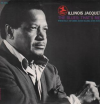
Illinois was one of the guys who emerged from those heady post-World War II days when jazz and R&B strode the world together. As time passed, he placed his tenor sax solidly in the jazz camp, but never forgot his bluesy roots (or is it rootsy blues? )
)
This exuberant album from 1969 paired him with guitarist Tiny Grimes, another veteran of the R&B scene who at age 53 was six years older than Jacquet. The wily duo is backed by youngsters Wynton Kelly, Buster Williams and Oliver Jackson who hold on for dear life as they rip through a half dozen blues workouts. The undisputed highlight here is "'Round Midnight", a familiar tune for sure but with a twist: Illinois delivers a solo on bassoon!
on the Sam-O-Meter. David Mamet was right. Old age and treachery will always beat youth.
Illinois was one of the guys who emerged from those heady post-World War II days when jazz and R&B strode the world together. As time passed, he placed his tenor sax solidly in the jazz camp, but never forgot his bluesy roots (or is it rootsy blues?
)This exuberant album from 1969 paired him with guitarist Tiny Grimes, another veteran of the R&B scene who at age 53 was six years older than Jacquet. The wily duo is backed by youngsters Wynton Kelly, Buster Williams and Oliver Jackson who hold on for dear life as they rip through a half dozen blues workouts. The undisputed highlight here is "'Round Midnight", a familiar tune for sure but with a twist: Illinois delivers a solo on bassoon!
on the Sam-O-Meter. David Mamet was right. Old age and treachery will always beat youth.
Ojai Sam
Staff member
Max Roach - The Max Roach Trio Featuring the Legendary Hasaan (1964)
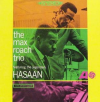
In honor of the very welcome reappearance of @JazzyRandy , I'm posting something perhaps he is not familiar with. Max Roach needs no introduction here but pianist Hasaan Ibn Ali only hit my radar a few weeks ago. Born in Philadelphia, at age 15 he toured with the power packed Joe Morris band. Later he gigged independently, acquiring a local reputation as a preeminent innovator. Despite his chops, he was never asked to record until he ran into Kenny Dorham, who called Max to see if a date could be arranged.
The resulting album is simply stunning. Hasaan wrings ideas out of his piano that are jaw dropping in their ability to blend creativity with melodic integrity. Like Monk, he hears notes that no one else before him did. Hasaan also cited Elmo Hope as a major influence but he is definitely his own man. The tragedy is that he made just one other session, which disappeared into the vault for decades until its recent rediscovery. We will explore that one together here soon.
on the Sam-O-Meter.
In honor of the very welcome reappearance of @JazzyRandy , I'm posting something perhaps he is not familiar with. Max Roach needs no introduction here but pianist Hasaan Ibn Ali only hit my radar a few weeks ago. Born in Philadelphia, at age 15 he toured with the power packed Joe Morris band. Later he gigged independently, acquiring a local reputation as a preeminent innovator. Despite his chops, he was never asked to record until he ran into Kenny Dorham, who called Max to see if a date could be arranged.
The resulting album is simply stunning. Hasaan wrings ideas out of his piano that are jaw dropping in their ability to blend creativity with melodic integrity. Like Monk, he hears notes that no one else before him did. Hasaan also cited Elmo Hope as a major influence but he is definitely his own man. The tragedy is that he made just one other session, which disappeared into the vault for decades until its recent rediscovery. We will explore that one together here soon.
on the Sam-O-Meter.