Lost Classics

Ojai Sam

Staff member
buried-treasure--lrg.png


I did this series back on the old site and am bringing it back now due to overwhelming popular demand. Actually one person casually mentioned it about a year ago, but that's good enough for me.

Our mission here is to dig up music that for any number of reasons either fell off the radar or stayed undeservedly buried in the vault.

The Spotify playlist is here:

 
Last edited:
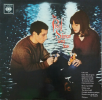
Paul Simon - The Paul Simon Songbook (rec. 1965, released 2004)

1721500040673.png

AMG sez:

The first album to use this title is one of the most mysterious in Paul Simon's output and almost belongs more with Simon & Garfunkel's discography, given its 1965 recording date. Following the failure of Simon & Garfunkel's first, all-acoustic folk revival-style album, Wednesday Morning, 3 AM, Simon headed off to England to see about pursuing music over there. While he was in London, he found himself in demand as a visiting American "folksinger" (though Simon's credentials in this area were rather limited), began building up a following in the coffeehouses, and was eventually pegged for a performing spot on the BBC. Suddenly, there were requests for Paul Simon recordings, of which there were none -- as a result of his being signed to Columbia Records in America, however, he was brought into the London studios of British CBS and recorded this album with only his acoustic guitar for backup. The resulting album is spare, almost minimalist, as Simon runs through raw and unaffected versions of songs that he was known for in London, including "The Sounds of Silence," "The Sun Is Burning," "I Am a Rock," "A Simple Desultory Philippic" (in its earliest form, and far nastier than the version later done by Simon & Garfunkel), and "Kathy's Song."

Spotify album link is above, plus it now appears on our Lost Classics playlist alongside Schubert ("Simon & Schubert"? Nah, sounds like a publisher).
 
Last edited:
OK, I'll play. I'm not sure this really counts as a "classic" to everyone, but I heard this in a compilation tonight, and I had to stop to really listen. It really is a lovely pop song. It's wistful (that piano), soulful (those backing vocals), and sexy (R.I.P. Michael Hutchence).

INXS - "Not Enough Time" (1992)

 
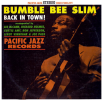
Bumble Bee Slim - Back In Town! (1962)

1721500126856.png

We featured Bumble Bee Slim's pre-WWII work over in our Document Records thread. Slim returned in the 60's on a jazz label (Pacific Jazz) with a jazzy ensemble that included Les McCann, Richard "Groove" Holmes and Joe Pass. The resulting album is very satisfying but sank beneath the waves without a trace. The blues-seeking folkies of the time were looking for "genuine" gritty delta blues, not urbane hipster funk with organ and drums.
 
Last edited:
OK, I'll play. I'm not sure this really counts as a "classic" to everyone, but I heard this in a compilation tonight, and I had to stop to really listen. It really is a lovely pop song. It's wistful (that piano), soulful (those backing vocals), and sexy (R.I.P. Michael Hutchence).

INXS - "Not Enough Time" (1992)

flisten. I haven't listened to INXS a lot but based on this one, I will do a lot more exploring. Thanks, Whiff! :thumbsup:
 
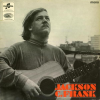
Jackson C. Frank - Jackson C. Frank (1965)

1721500181397.png

This one, also recorded in London for Columbia, serves as a companion piece to the Paul Simon album above.

Wiki sez:

Jackson Carey Frank (March 2, 1943 – March 3, 1999) was an American folk musician. He released his first and only eponymous album in 1965, produced by Paul Simon. After the release of the record, Frank was plagued by a series of personal issues, and was diagnosed with schizophrenia and protracted depression that prevented him from maintaining his career.

Frank spent his later life homeless and destitute, and died in 1999 of pneumonia. Though he only released one record, he has been cited as an influence by many singer-songwriters, including Paul Simon, Sandy Denny, Bert Jansch and Nick Drake. Rolling Stone journalist David Fricke called Frank "one of the best forgotten songwriters of the 1960s."


In fact, Frank was involved romantically with Sandy Denny, who introduced him to the British folk scene. The whole sad story is here:

https://www.theguardian.com/music/2014/jan/09/jackson-c-frank-tragic-tale-forgotten-60s-legend

Like Nick Drake, lots of dubious material by Jackson C. Frank has surfaced posthumously, but this record is the real deal.
 
Last edited:
It really is a lovely pop song. It's wistful (that piano), soulful (those backing vocals), and sexy (R.I.P. Michael Hutchence).

INXS - "Not Enough Time" (1992)

Very nice! I like how it starts with just drums and vox, and the other instruments creep in, gently accelerating the vibe. The sparse female background vocals are wonderful, leaving me wanting more. Classic or not, lovely track.
 
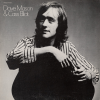
Dave Mason & Cass Elliot - Dave Mason & Cass Elliot (1971)

1721500233228.png
View album 4
AMG sez:

Ostensibly a Dave Mason solo album, this became one of his finest when he was coupled with Cass Elliot, a stroke of genius. Elliot's involvement is, while not suspect, somewhat limited. Although she provides excellent background vocals, she tends to get a little lost in the harmony stack. Nevertheless, this is a great moment for her too. The album, though, is propelled by Mason's awesome songwriting talents, and tracks such as "On and On," "Walk to the Point," and several others bear this out. His guitar playing is some of his finest recorded work, especially the epic "Glittering Facade," where he layers acoustic and electric guitars with a scintillating effect. Elliot's "Here We Go Again" showcases her ability as a great lead vocalist, and Paul Harris provides some excellent keyboard and string arrangements, providing a glimpse of the fine work that was to follow in Stephen Stills' Manassas. Overall, this was a highly underrated album, but in the end, it is also one of the finest from the '70s.
 
Last edited:
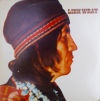
Link Wray - Link Wray (1971)

1721500278852.png

@lpfreak1170 ’s post over in the Pitchfork thread made me think about this one. After years of unsuccessful attempts to repeat the success of “Rumble”, Link Wray finally made a record in his Maryland home studio that reflected his roots as a Native American growing up in North Carolina. Skip to the last track if you are in search of tremolo. The rest is a bubbling stew of blues, country and rock featuring Link’s rough but powerful vocals. Naturally it sank without a trace.
 
Last edited:
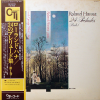
Roland Hanna - 24 Preludes: Book 1 (1976)

1721497135362.png

Vinyl Rip Of The Day.

Recently I have been working with a group to assemble all of the recordings released on Creed Taylor's CTI label. The rarest of these was undoubtedly Kai Winding and J.J. Johnson's Stonebone, a Japan-only release which I posted here. But the crown jewels of this project for me were two albums of preludes recorded and released in Japan by Roland Hanna.

Wiki sez:

Hanna studied classical piano from the age of 11, but was strongly interested in jazz, having been introduced to it by his friend, pianist Tommy Flanagan. This interest increased after his time in military service, 1950–52. He studied briefly at the Eastman School of Music in 1953 and then enrolled at the Juilliard School when he moved to New York two years later. He worked with several big names in the 1950s, including Benny Goodman and Charles Mingus, and graduated in 1960. Between 1963 and 1966 Hanna led his own trio, then from 1966 to 1974 he was a regular member of the Thad Jones/Mel Lewis Orchestra. Hanna also toured the Soviet Union with this orchestra in 1972. During the 1970s he was a member of the New York Jazz Quartet.

Roland Hanna was in semi-retirement for most of the 1980s, though he played piano and wrote the song "Seasons" for Sarah Vaughan's 1982 album Crazy and Mixed Up, and returned to music later in the decade. In the late 1980s and early 1990s, Hanna was a member of the Lincoln Center Jazz Orchestra and the Smithsonian Jazz Masterworks Orchestra. Around this time, he also began composing chamber and orchestral music; a ballet he wrote has also been performed.

Hanna is often referred to as "Sir Roland Hanna" as he was given an honorary knighthood by President William Tubman of Liberia in 1970. Hanna was a professor of jazz at the Aaron Copland School of Music at Queens College (CUNY) in Flushing, New York, and taught at several other music schools. He died of a viral infection of the heart on November 13, 2002.


Roland's classical background is evident in the two collections of preludes he recorded in Tokyo with sympathetic yet unobtrusive support from legendary Czech bassist George Mraz. These pieces, ranging in length from barely a minute to over 8 minutes, overflow with fresh ideas. Always melodic but occasionally moody, every piece is a gem of breathtaking beauty.

I can't imagine why this brilliant album has never seen the light of digital day. It is one of the very finest piano works I have ever heard in any genre.

A-274979-1115205728.jpg.jpg
 
Roland Hanna - 24 Preludes: Book 1 (1976)
I can't imagine why this brilliant album has never seen the light of digital day. It is one of the very finest piano works I have ever heard in any genre.
Do you have any influence to make that happen?

Asking as a friend of music, of course.
 
I have just updated the Dave Mason and Roland Hanna albums for your listening pleasure.

The Spotify linx are also now fixed.
 
Last edited:
Roland Hanna - 24 Preludes: Book 2 (1978)

R-6351164-1417112496-7916.jpeg.jpg


Here is the second volume of these brilliant Japanese recordings. This batch has a bit more classical influence and a more pensive tone. Check it out here:

View album 9
 
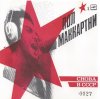
Paul McCartney - Choba B CCCP (1989)
front.jpg

The Beatles Bible sez:

Also known as The Russian Album, Choba B CCCP was the seventh solo studio album by Paul McCartney. It was initially released just in the Soviet Union, but two years later was issued internationally. The album was a collection of cover versions, including several from the early years of rock 'n' roll. The songs dated from the 1940s to the 1960s, plus Midnight Special, a traditional folk song dating from the early 20th century.

They were recorded in the wake of the lukewarm reception to Press To Play, McCartney's 1986 album which attempted to bring a more contemporary sound to his recordings. With sales low and chart success proving elusive, McCartney decided to go back to his roots. In 1987 McCartney held a series of informal Friday night rock 'n' roll jam sessions were held in a studio in the East End of London. The various musicians taking part included Johnny Marr, Trevor Horn, Terry Williams and Elvis Costello, although most were session musicians. Impressed with the results, McCartney decided to record some of the songs at his Hog Hill Mill studio in East Sussex. Twenty-two titles were recorded over two days in July 1987, 14 of which found their way onto Choba B CCCP.

The bulk of the recordings were made on 20 July 1987 with Mick Green, Mick Gallagher and Chris Whitten. Several more were taped on the following day with Gallagher, Nick Garvey and Henry Spinetti, while a third day, 22 July, was devoted to mixing the songs. There was no grand plan to release an album of rock oldies, and the recordings were left for almost a year before it was decided what to do with them. Kansas City, Lawdy Miss Clawdy, Don't Get Around Much Anymore and Midnight Special eventually appeared on the Once Upon A Long Ago 12" and CD singles, and received positive responses from critics and fans.

Since Western rock music was banned by the Soviet state, music lovers there had for many years been forced to make do with illegal bootlegs, low quality copies or smuggled imports, McCartney wished to give his fans there something that was unavailable elsewhere, and with his manager Richard Ogden discussed the idea of issuing a record. Ogden had 50 copies of an album pressed, featuring some of the July 1987 recordings, with artwork designed to look like a Russian bootleg. He gave the LPs to McCartney as a Christmas present that year, and they were distributed to friends and family. Buoyed by the warm reactions, McCartney asked Ogden to contact the Soviet Union's only record label, Melodiya, to see if the album could be properly released there. The title is Russian for Back In The USSR, a 1968 song by The Beatles. Although the title should be written in Cyrillic script, it is commonly converted to Latin letters as Choba B CCCP. It should be pronounced "snova vee ess-ess-ess-er". The cover was designed by Michael Ross. The photograph of McCartney was taken by his wife Linda and had previously appeared inside the gatefold of their 1971 album Ram.


View album 11
The original Russsian LP release had 11 songs, The subsequent CD had 14. This numbered bootleg boasted 15. :eek:
 
Back
Top