Prog Archives Top 100

79. Return To Forever - Romantic Warrior (1976)


Maybe some overlap with @Zeeba Neighba 's Jazz Excursion here. RTF's strongest lineup (Chick Corea, Stanley Clarke, Lenny White and Al Di Meola) handed in a classic fusion album. AMG suggests that Chick was trying to emulate Rick (Wakeman). I would have to say YES to that question. This record is a great entry point for jazz fans curious about prog and vice versa.
 
Last edited:
78. Area - Arbeit Macht Frei (1973)


Any group adopting the slogan that appeared at the entrance of Auschwitz is certainly declaring its iconoclasm, and this record follows up on that promise. An eclectic masterpiece with echoes of everything from Canterbury to Jeff Beck. AMG describes it as "Leon Thomas fronting Eno-era Roxy Music playing Mahavishnu Orchestra tunes" and I'd throw in Robert Wyatt, too.

This album (minus 1 track) appears on Spotify as part of the box set linked above.
 
Last edited:
77. Caravan - If I Could Do It All Over Again, I'd Do It All Over You (1970)


A Canterbury Classic.

loserboy at Prog Archives sez:

For those who love the Cantebury style of Prog will simply love this album to death. This marks CARAVAN's second album and a masterpiece in progressive rock history. This album contains that drooling organ we have all come to love along with the excellent musicianship and songwriting of CARAVAN. Of course this album contains the classic 14 min epic track "For Richard" which explores some pretty trippy yet progressive ground.

Sadly, this one is not available on Spotify but the full album is on You Tube, linked above.
 
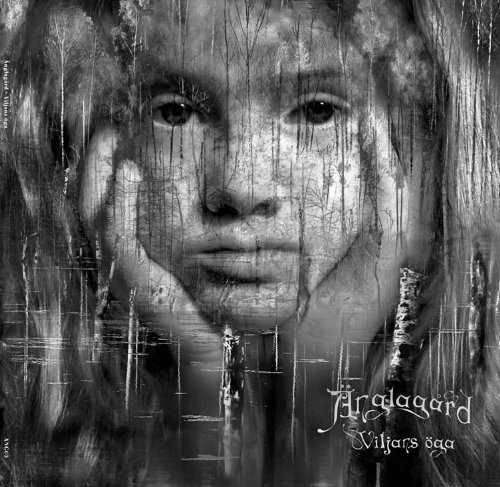
76. Anglagard - Viljans Oga (2012)

61rTfhIfABL.jpg


Prog Archives sez:

All of the tracks in this album are 10 and more minutes long, and with frequent scene changes dynamically and dramatically, that can never be boring at all. Sometimes they throw breaking pitches like split-finger fastballs, sometimes stable heavy oscillations like big, splendid fireworks, and sometimes plaintive but beautiful melodies like flowery flavour of matured liquor. Sounds like that they'd approached this recording ready to take either a hard line or a moderate one as previously, and their aggressive playing has thrived basically on their tearful chord treatment, heard under riffs in the latter part of "Snårdom".

:4.5: on the Sam-O-Meter.

This one does not appear on Spotify, is OOP and unavailable for digital download. However, you can check it out right here:

View album 3
 
75. Magma - K.A. (2004)


Pitchfork sez:

Magma-- don't worry, they're not aliens, just French-- play "zeuhl" (pronounced "tsoil"), which means "heavenly music" in the Kobaïan language, and lucky for you, detail the whole shabang. Led by drummer/vocalist Christian Vander, Magma began playing this stuff in the late 60s, and throughout the 70s produced a series of records that are either some of the most bizarre, fiery prog ever, or just instant party killers. First of all, they sing everything in Kobaïan, which means ix-nay on the araoke-kay; second of all, zeuhl sounds like, well, about what you'd expect an alien rock opera to sound like: massed, chanted choral motifs, martial, repetitive percussion, sudden bursts of explosive improv and just as unexpected lapses into eerie, minimalist trance-rock. Vander actually came from a jazz background, and is a major Coltrane fanatic, so it's not hard to see why he'd be so into intense, spiritu-cosmic concerns. But even still, Magma are pretty out of left field.

:5.0: on the Sam-O-Meter.
 
75. Magma - K.A. (2004)


Pitchfork sez:

Magma-- don't worry, they're not aliens, just French-- play "zeuhl" (pronounced "tsoil"), which means "heavenly music" in the Kobaïan language, and lucky for you, detail the whole shabang. Led by drummer/vocalist Christian Vander, Magma began playing this stuff in the late 60s, and throughout the 70s produced a series of records that are either some of the most bizarre, fiery prog ever, or just instant party killers. First of all, they sing everything in Kobaïan, which means ix-nay on the araoke-kay; second of all, zeuhl sounds like, well, about what you'd expect an alien rock opera to sound like: massed, chanted choral motifs, martial, repetitive percussion, sudden bursts of explosive improv and just as unexpected lapses into eerie, minimalist trance-rock. Vander actually came from a jazz background, and is a major Coltrane fanatic, so it's not hard to see why he'd be so into intense, spiritu-cosmic concerns. But even still, Magma are pretty out of left field.

:5.0: on the Sam-O-Meter.
I remember buying albums in the 70s and the sleeve would have albums/posters listed with price and an order form in the bottom corner you could cut out and send in with your check. Magma was always featured heavily in the poster section.
 
74. Focus - Hamburger Concerto (1974)


AMG gave this one a lukewarm review but Easy Livin" at Prog Archives loves it:

By far Focus' best and more complete and accomplished album.

Although "Hamburger Concerto" itself only occupies the second side of the LP, the whole album flows beautifully from start to finish. There's nothing like "Hocus Pocus" here, or the rambling jazz laden indulgences of other albums ("Focus 3" comes to mind). Instead what we have is a classically constructed piece of pure smooth prog rock. Guitar and keyboards share the lead most of the time, with Van Leer's flute and vocals (sounds not lyrics) kept relatively brief.

There really isn't any point in going into individual track details, it's very much an album to hear from start to finish. The closing section of "Hamburger concerto" ("One for the road") however is stunning, Akerman's guitar work being reminiscent of their beautiful single "Sylvia".

A beautifully constructed and performed album, which surpasses by a country mile anything else by the band. The CD version has one extra track, an early version of "Birth".
 
73. Billy Cobham - Spectrum (1973)

MI0002020546.jpg


AMG sez:

Drummer Billy Cobham was fresh from his success with the Mahavishnu Orchestra when he recorded his debut album, which is still his best. Most of the selections showcase Cobham in a quartet with keyboardist Jan Hammer, guitarist Tommy Bolin, and electric bassist Lee Sklar. Two other numbers include Joe Farrell on flute and soprano and trumpeter Jimmy Owens with guitarist John Tropea, Hammer, bassist Ron Carter, and Ray Barretto on congas. The generally high-quality compositions (which include "Red Baron") make this fusion set a standout, a strong mixture of rock-ish rhythms and jazz improvising.

This is another genre-bender that makes me ponder the imponderable question of how broadly prog can really be defined. The personnel here sure have a strong jazz orientation. Stylistically, Spectrum nestles comfortably among works by Mahavishnu and other fusion artists of the day. Oh, well...it's still a great listen whatever you call it. :thumbsup:
 
72. Mahavishnu Orchestra - The Inner Mounting Flame (1971)

MI0001629825.jpg


I had forgotten just how good this one was. John McLaughlin's vision may have carried his fledgling supergroup into a whole new genre, but his view of fusion owes as much to the abstract musings of prog as it does to rock or jazz.
 
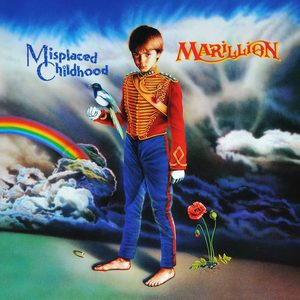
71. Marillion - Misplaced Childhood (1985)

Marillion_misplacedchildhood.jpg


LouderSound.com sez:

Mid-80s Marillion: a religion to fans, a punchline to others. They were deemed so unfashionable in the era of The Smiths, the Mary Chain and The Cure that those who’d seen the light were only galvanized by the opprobrium. To hear Misplaced Childhood – the band’s masterpiece and biggest seller – now, out of context, liberated from playground peer pressure, is to recognise a truly great concept album. It’s one that believes 41 minutes of rock music can – like a film or book – aim for the stars and present a story full of emotion, poetry and, above all, drama. It’s way stronger than more revered milestones like, say, Quadrophenia (which it references with a cheeky ‘rain on me’), where for your handful of peak moments you have to wade through loads of undisciplined musical waffle. And the misconception that prog is all about indulgent jamming and noodling? There’s zero fat here. Everything lasts exactly as long as feels right.

I actually agree that MC is stronger than Quadrophenia. :scared:
 
70. IQ - The Road Of Bones (2014)

The_Road_Of_Bones_Album_Cover.jpg


This album comes in 1, 2, and 3 disc editions to fit everyone's pocket book. The second (and third) disc holds bonus tracks. I see IQ as an updated version of Genesis, although true believers of either group may take offense at the comparison.

Prog Archives sez:

The first cd, The Road Of Bones itself, is a concept piece that is not just dark, but actually very bleak and positively gothic in places, telling the story of a rather nasty serial killer in the first person. You would think, then, that the music itself would match such a story; you know, an album which would make Pink Floyd's The Wall a veritable ray of sunshine to come down to after listening.

But, no, not a bit of it. This sumptuously produced (and Mike Holmes has really exceeded himself in this department), and gorgeously performed work just about takes us through the entire range of emotions, with passages which are achingly beautiful, and a rock experience which takes us from the hard and crashing opening, thundering, riffs of opener From The Outside In, to the quite gorgeous acoustic interplay on guitar, piano, and vocals at the denouement of closer, Until The End (which itself follows a really beautiful wall of sound in the finest symphonic tradition).

[snip]

There are five tracks on the first cd, and all of them, without exception, are essential IQ, that is, for those who know my opinion in such matters, right up there with the best progressive rock. Without Walls, just a shade short of twenty minutes long, never once fails to grip your attention and pull your heart strings. It contains all the vital elements that make this band so important, from those well versed symphonic soundscapes, to very dark introspective instrumental passages, massive riffs, some lovely acoustic work, some very clever sound effects, and quieter moments which, rather frighteningly, allow us in the subject's innermost feelings. The manner in which the vocals and music change mood and interpret a story are fantastic.
 
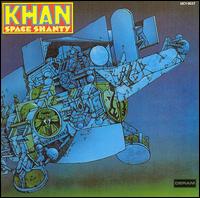
69. Khan - Space Shanty (1972)

Khan_Space_Shanty.jpg


This record, which I owe entirely to Mr. Gnome and the old site, is one of the major reasons I became a prog fan.

Rising Storm sez:

“Space Shanty” is a one-off album by a foursome of pedigreed Canterbury musos, and it’s considered a love-it or hate-it classic by proggies. Some love its loose, jazzy jams, and others hate its hippie lyrics and flowery arrangements. But what’s notable is that “Space Shanty” is a distillation of the many styles of the Canterbury musos — the cosmic-hippy humor, the fascinating and busy arrangements — but it remains completely fresh and exciting.

As is typical of the Canterbury bands, each member was also a member of a number of other bands. Keyboardist Dave Stewart played with Arzachel, Egg, Gong, Hatfield and the North, and National Health, to name a few. Guitarist Steve Hillage went on to play and record a number of notable albums with Kevin Ayers, Gong, and as a solo artist. Basist Nick Greenwood had done time with the Crazy World of Arthur Brown.

After a few false starts and some rotating membership, Khan came together in 1971, and finished this album in March, 1972 with Neil Slaven producing. Dave Stewart even took time off from his band Egg to sit in on the “Space Shanty” sessions. Khan did its share of live shows, supporting such acts as Van Der Graaf Generator and Genesis. Khan continued playing live after “Space Shanty” was finished, but its membership continued to change. Only Hillage remained the original member. After some live dates the money dried up and Khan dissolved.
 
68. Hatfield & The North - s/t (1974)

MI0000907919.jpg


AMG sez:

One of the Canterbury scene's most revered bands, Hatfield and the North made up for the brevity of their career with some fascinating music. Always adventurous, the quartet had the keen sense to realize that only the most hardened jazz fans respond to numerous key changes and exceedingly complex time signatures, and thus enlivened their live set with the odd gnome smashing, suggestive lyrics, and jokey song titles. It worked a charm, with the band quickly amassing a large, loyal following at home in Britain and across the continent. On their eponymous debut, Hatfield stunningly succeeded in translating both their sense of fun and their musical brilliance onto disc.
 
67. Porcupine Tree - Fear Of A Blank Planet (2007)

MI0000650609.jpg


This album has been removed from Spotify. One member of the community there was especially hard hit:

"Fear of a blank planet album are now gone on Spotify.. life feels empty now."

For us here at MG, fortunately life still has meaning:

View album 14
AMG sez:

Porcupine Tree makes a triumphant return to experimental, non-linear style with 2007's Fear of a Blank Planet. Maybe Steve Wilson was afraid that the comparatively poppy Deadwing and In Absentia were edging too close to the mainstream, because he seems far less concerned with overtly accessible songwriting on Blank Planet. Even still, the cerebral, atmospheric sound on this album remains enormously compelling from almost the first moment. While there is no "radio single" on the disc -- certainly nothing with a conventional pop arc like Lightbulb Sun or "Trains" -- most songs transcend their complex structure and feel as provocative as any traditional rock tune. The aptly named "Sentimental," in particular, features Wilson's trademark lush arrangement with layers of vocals, piano, ambient synths, electric guitar, acoustic guitar, live drums and sampled drums -- but cutting through its tightly contained mosaic is an expertly constructed chord progression that evokes a desperate sense of tension and longing, developing incredible emotional momentum as the track progresses.

 
65. Porcupine Tree - In Absentia (2002)

MI0001928790.jpg


Let's postpone #66 so we can take another look at Porcupine Tree. As suggested by the review of Blank Planet quoted above, In Absentia does hew closer to the mainstream but is far from a sellout. I like both records a lot, and agree with AMG (a different reviewer) which sez:

Continuing in the growing commercial vein of their previous releases, Porcupine Tree's In Absentia may be the most accessible release to ever spew forth from the group. Rolling electronic percussion blends with simple and solid live drumming to provide an understated backbeat as perennial Tree leader Steven Wilson pastes his complicated pop over the proceedings. Wilson's ability to bury his layered vocals in mountains of spacy electric guitar without drowning out his fragile lyrics is still a valued feature of the music, and the rare moments of clarity that his vocals display are breathtaking in their power.
 
66. Emerson, Lake & Palmer - Emerson, Lake & Palmer (1970)

image.jpg


I used to think prog began and ended with groups like ELP and The Moody Blues. Neither one appealed much to me at the time. Perhaps my ears had been traumatized by Slade and George Thorogood. :lala:

Since joining MG, I've listened to a lot more prog in a wide variety of styles. The genre is now one of my favorites, but I'm still not a big fan of art rock. There's a great deal to respect about Emerson, Lake & Palmer's eponymous debut, notably the musicianship. "Lucky Man" is also one of the most memorable ballads of any genre. But this record still seems like a lot of very skillful noodling with a big hit tacked on at the end.

:3.0: on the Sam-O-Meter.
 
64. Opeth - Ghost Reveries (2005)

220px-Ghost_Reveries_%28Opeth%29_album_cover.jpg


AMG sez:

Stockholm's most unpredictable metallic sons Opeth have offered another step on their dark journey into the Maelstrom that combines progressive sonics, and acoustic and electric instrumentation, all the while extrapolating on their now-trademark brand of death metal. Stepping aside from the malevolent acoustic elegance of 2003's Damnation without abandoning the textural advances, Ghost Reveries is a tour de force of creativity, power, and innovation. Alternately melodic and brutal, the album takes the band's progressive acumen to a new level while never abandoning the crunch.

The vocals are too ravaged for me to say I actually enjoy this record. But I do respect the creative instrumental textures.
 
63. Gentle Giant - Acquiring The Taste (1971)

MI0002037074.jpg


AMG sez:

The band's second album is a major advance on its first, featuring superior singing, playing, and songwriting, as well as a more unified sound, without sacrificing the element of surprise in the first record. Many of the melodies and even the riffs here (check out Gary Green's first guitar flourish on "Pantagruel's Nativity") have a pretty high haunt count, and all of the musicianship displays an elegance seldom heard even in progressive circles -- but the record also, amazingly enough, rocks really hard as well. Elements of hard rock and Gregorian chants mix freely and, amazingly enough, well throughout this album.

I'm not sure why Gentle Giant never got beyond cult status. Maybe their jokey album covers alienated "serious" prog fans. This is a stunning record on every level, miles better than ELP IMHO.

:5.0: on the Sam-O-Meter.
 
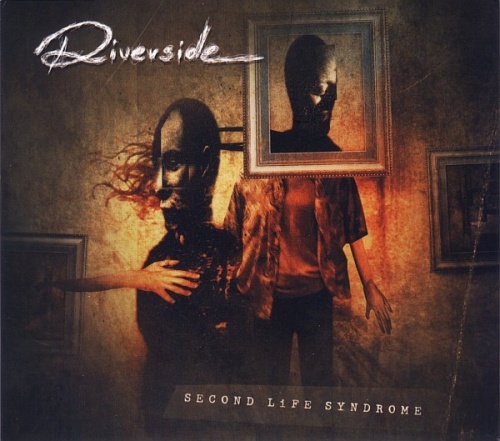
62. Riverside - Second Life Syndrome (2005)

0000339518.jpg


This is the second album by Poland's gift to prog metal. It earned rave reviews from both the prog and metal communities when it was released, and I can sure see why. Every song is well paced and full of variety and creative ideas. Unlike Opeth, Riverside succeeds in rocking hard without having to try hard.

:4.5: on the Sam-O-Meter.
 
Back
Top