Not since the release of Tiamat's groundbreaking masterpiece Wildhoney in 1994 had the extreme metal scene witnessed such an overwhelming show of fan enthusiasm and uniform critical praise as that bestowed upon Blackwater Park, the astounding fifth effort from Swedish metal titans Opeth. A work of breathtaking creative breadth, Blackwater Park (named after an obscure German progressive rock outfit from the 1970s) keeps with Opeth's tradition by transcending the limits of death/black metal and repeatedly shattering the foundations of conventional songwriting, to boot.
And now we come to one of my all time favorite prog albums. Thanks to EG6 for touting this one on the old board more than ten years ago. BdMS successful assimilates the romantic influences of Italian classical music into their contemporary prog sound. Loserboy over at Prog Archives sez:
BANCO's first album would clearly be in my opinion one of the finest releases from the 70's. BANCO play a highly expressive and soulful classical progressive rock with great sophistication and romanticism. I would have to say that the opening track "R.I.P (Requiescant In Pace)" would be one of the most brilliant tracks in my collection. What always stands out for me on this album is the clearly accentuated piano/keyboards which seems to bring so much to the album. Although the album does have its more laid back sections, in classic BANCO style they still do break out into some pretty wild progressive rock moments. One of the other small things which I have always loved about this album is their rare but clever use of sound effects. For those who may be unfamiliar with the Italian progressive rock scene may want to consider starting here.
It's not on Spotify, but you lucky MG registered members can listen to it here:
The group, initially named Inaugurazione Museo Rosenbach, was created around 1971 from the fusion of two late 60's bands from Sanremo, La Quinta Strada and Il Sistema. The tracks for Zarathustra were ready at the end of 1972, when the band were suddenly contacted for a recording deal by Ricordi, who were interested in promoting new progressive groups such as Banco del Mutuo Soccorso and Reale Accademia di Musica and the album was released in April 1973.
The long Zarathustra suite on side one is probably their best effort, with slight classical influences and keyboards in evidence as in the best Italian prog tradition, but side two with three shorter tracks has some great moments. Vocalist "Lupo" Galifi has a very distinctive voice and keyboard player Pit Corradi adds a touch of originality to the band sound. Museo Rosenbach had a short life, splitting soon after the album and some good concerts in the summer of 1973.
It's not on Spotify and long OOP, but to save you a whole bunch of lire here it is for listening:
As I learned more about prog, this album began to strike me as the Canterbury equivalent of Sergeant Pepper's: a dramatic expansion and development of an existing genre far beyond its existing boundaries. AMG offers this background:
Rock Bottom, recorded with a star-studded cast of Canterbury musicians, has been deservedly acclaimed as one of the finest art rock albums. Several forces surrounding Wyatt's life helped shape its outcome. First, it was recorded after the former Soft Machine drummer and singer fell out of a five-story window and broke his spine. Legend had it that the album was a chronicle of his stay in the hospital. Wyatt dispels this notion in the liner notes of the 1997 Thirsty Ear reissue of the album, as well as the book Wrong Movements: A Robert Wyatt History. Much of the material was composed prior to his accident in anticipation of rehearsals of a new lineup of Matching Mole. The writing was completed in the hospital, where Wyatt realized that he would now need to sing more, since he could no longer be solely the drummer. Many of Rock Bottom's songs are very personal and introspective love songs, since he would soon marry Alfreda Benge. Benge suggested to Wyatt that his music was too cluttered and needed more open spaces. Therefore, Robert Wyatt not only ploughed new ground in songwriting territory, but he presented the songs differently, taking time to allow songs like "Sea Song" and "Alifib" to develop slowly.
After two years and a pandemic, it's about time to revive this thread. So I've updated the list in the first post as well as the Spotify playlist.
This installment is a flisten for me and I've sure been missing something great. Known for his work with Porcupine Tree and Opeth, for his own work Steven Wilson paints on such an expansive musical canvas that this is a hard album to capture in words. AMG sez:
It's an immense, imaginative landscape that melds classic album rock, sophisticated '80s pop, metal, prog, and electronica in expertly crafted songs. Prog isn't the driver as it was on 2013's The Raven That Refused to Sing, but there are ample places for Wilson's muscular all-star band to stretch. Israeli vocalist Ninet Tayeb plays an important guest role. Wilson's melodies and arrangements illustrate the complex parts of his protagonist's persona as much as his lyrics do. Individual songs matter, but perhaps more than any record in his catalog, this album needs to be taken as a whole because it is a study in contrasts and mercurial contradictions.
This pick is a sleeping giant. Gentle Giant, that is. Their second appearance in the Prog Archives Top 100 (with more to come) is what AMG accurately calls the group's most realized effort. Less approachable than ELP, less pretentious than Yes, Gentle Giant concentrated on creative instrumental virtuosity with a Renaissance-Medieval flavor. They didn't take themselves too seriously and unfortunately, many prog fans didn't either. Free Hand is an underrated classic.



 ago. BdMS successful assimilates the romantic influences of Italian classical music into their contemporary prog sound. Loserboy over at Prog Archives sez: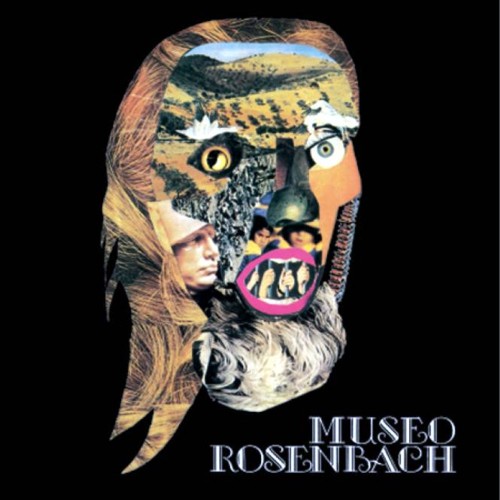

 on the Sam-O-Meter.


 on the Sam-O-Meter.