Random Music Photos

May be a black-and-white image of 1 person and child

Tina Sinatra: “By the late fifties, we were spending most vacations at Dad's place in the desert, outside Palm Springs. The house was on Wonder Palm Drive (later Frank Sinatra Drive), along the seventeenth fairway of the Tamarisk Country Club. It would be his home, and ours, for more than four decades.

The desert was Dad's lifelong passion, the place where he felt healthiest and most peaceful. Before the golf courses and their Rainbird sprinkler systems brought humidity into the area, and pollution swept in from the west, it was arid and smogless. Your perspiration would evaporate before you noticed. Palm Springs was heaven, and relatively unknown, but that would soon change.

Before Dad's property expanded into the Compound, it was just a small three-bedroom house. There was his own simple room, done up in orange, his favorite color; an adjacent guest room, which Mia Farrow would later decorate in pink; and a second guest room off the living room, where Jack Kennedy would stay in 1960, before it became a den-and-bar family room.

To accommodate his growing children and their friends, my father put up a four-bedroom bungalow (with eight baths!) west of the main house. We called it the Christmas Tree House, because it was cozy and traditional, like a New England A-frame: white with green shutters, and set on a thick green lawn. It had its own pool, and a living room with a fireplace and TV and a game table. It was like a private clubhouse.

The town of Palm Springs–a little village then, really—had a great movie theater and a renowned candy store, but those were reserved for evening expeditions. With the weather so predictable, we'd spend most days around the pool, with Dad joining in the races and chicken fights (“Chicken fights” are when you sit on each other’s shoulders in a pool and try to throw each other off). For a special treat, he'd strap us into an authentic Army jeep, like the ones in M*A*S*H, and drive us across the desert. We'd swerve around the tumbleweed and fly over the sand dunes like a roller coaster, which would crack us up every time. Once we got stuck in the sand and couldn't get out, and had to walk home."


From: Frank Sinatra Respectfulposting (Facebook page)
Captain Beefheart (Don Van Vliet) also loved the desert.
 
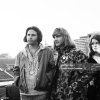
jim morrison and screaming lord sutch.jpg

Jim Morrison (1943 - 1971, left) of The Doors with Screaming Lord Sutch (1940 - 1999) at the Toronto Rock & Roll Revival one-day festival at the Varsity Stadium, Toronto, Canada, 13th September 1969. (Photo by Kevin Cummins/Getty Images)

Nota Bene: Neither of them appears to be screaming in this photograph.

Story at 11:

 
May be a black-and-white image of 1 person and child

Tina Sinatra: “By the late fifties, we were spending most vacations at Dad's place in the desert, outside Palm Springs. The house was on Wonder Palm Drive (later Frank Sinatra Drive), along the seventeenth fairway of the Tamarisk Country Club. It would be his home, and ours, for more than four decades.

The desert was Dad's lifelong passion, the place where he felt healthiest and most peaceful. Before the golf courses and their Rainbird sprinkler systems brought humidity into the area, and pollution swept in from the west, it was arid and smogless. Your perspiration would evaporate before you noticed. Palm Springs was heaven, and relatively unknown, but that would soon change.

Before Dad's property expanded into the Compound, it was just a small three-bedroom house. There was his own simple room, done up in orange, his favorite color; an adjacent guest room, which Mia Farrow would later decorate in pink; and a second guest room off the living room, where Jack Kennedy would stay in 1960, before it became a den-and-bar family room.

To accommodate his growing children and their friends, my father put up a four-bedroom bungalow (with eight baths!) west of the main house. We called it the Christmas Tree House, because it was cozy and traditional, like a New England A-frame: white with green shutters, and set on a thick green lawn. It had its own pool, and a living room with a fireplace and TV and a game table. It was like a private clubhouse.

The town of Palm Springs–a little village then, really—had a great movie theater and a renowned candy store, but those were reserved for evening expeditions. With the weather so predictable, we'd spend most days around the pool, with Dad joining in the races and chicken fights (“Chicken fights” are when you sit on each other’s shoulders in a pool and try to throw each other off). For a special treat, he'd strap us into an authentic Army jeep, like the ones in M*A*S*H, and drive us across the desert. We'd swerve around the tumbleweed and fly over the sand dunes like a roller coaster, which would crack us up every time. Once we got stuck in the sand and couldn't get out, and had to walk home."


From: Frank Sinatra Respectfulposting (Facebook page)
That's a wonderful piece.

I went to see Christ Tucker last night and he had a nice (funny and respectful) bit about Sinatra, that he expanded to include most of the Rat Pack. If you've never see Tucker perform his comedy act, he includes a lot of musical references and he sings and dances. He did a great Sinatra.
 
Last edited:
^ The Traveling Hybrids.

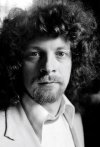
(as an aside, have you ever seen photos of Jeff Lynne without his faded sunglasses? I have. There's a reason why he wears faded sunglasses in almost every photo).


What reason do you cite? <--see what I did there?
 
^ The Traveling Hybrids.

(as an aside, have you ever seen photos of Jeff Lynne without his faded sunglasses? I have. There's a reason why he wears faded sunglasses in almost every photo).
Now my curiosity is killing me! What's the reason?
 
the man in black.jpg

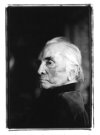
“I was over at Johnny’s house and I had just been to Folsom, California. I had been given a gate pass to go to the prison to see where he made his Folsom Prison album, and at that point I was just looking for anything to talk to him about - we recorded, we talked, just anything to keep him entertained, because June had recently passed away. So I went next door to have a cup of coffee and just share with him my impressions of Folsom Prison.

I started a song and I took it next door to John, and we actually wrote this song called ‘Hangman’ that we did on a record called “Ghost Train”, and it was the last song that he ever wrote. We just finished this song together. And he was sitting there in his chair looking so pretty in the light, the late-afternoon light was coming in from behind and I said, ‘JR, let me take your picture.’ I knew he didn't want to, but he let me. There were three frames. In the first two, he just kind of looked tired and weary, but on the third frame I said, ‘JR!’ and he sat up straight and pulled on that black collar, and he became Johnny Cash. Four days later, he was gone.”

- Marty Stuart


Marty Stuart is 65 years old today! Happy Birthday Marty!

Marty is an American country and bluegrass music singer, songwriter, and musician. Active since 1968, Marty initially toured with Lester Flatt, and then in Johnny Cash's road band before beginning work as a solo artist in the early 1980s.

In the 1990s, Marty had a string of country hits and he now carries to torch for traditional country and bluegrass music. In addition, he has been a photographer on the highways and back roads of America since he was a teenager, photographing such legends and luminaries as Bill Monroe and Johnny Cash. Marty took the last photograph of “The Man in Black” (below), just a few days before Johnny died in 2003.

Click the link below to experience Marty Stuart’s haunting rendition of “Hangman”.
https://youtu.be/AGGMZvmNe48
 
Back
Top