
Install the app
How to install the app on iOS
Follow along with the video below to see how to install our site as a web app on your home screen.
Note: This feature may not be available in some browsers.
You are using an out of date browser. It may not display this or other websites correctly.
You should upgrade or use an alternative browser.
You should upgrade or use an alternative browser.
What Are You Listening to? November 2021
- Thread starter axolotl
- Start date
- Status
- Not open for further replies.

Ojai Sam
Staff member
Arthur Rubinstein & The Guarneri Quartet - Dvorak: Piano Quintet No. 2 (1972)

Arthur Rubinstein was 85 when he went into the studio with The Guarneri Quartet. Playing with these passionate musicians, mostly in their 30's, really energized Rubinstein. By the same token, Rubinstein's numerous recordings with them legitimized the iconoclastic group to the point that one critic quoted in Wiki commented, "they are said to have done for quartet music in America what Leonard Bernstein did for symphonic music – made it accessible and appealing to everyone open to a new musical experience. Audiences get a quadruple dose of what many managers consider one of the most important elements for a career in music: charisma."
The Dvorak Piano Quintet No. 2 is perfectly suited for this old vs. young matchup. Its unusual instrumentation and stirring mixture of drama and joy gives plenty of room for these stellar players to express themselves.
 on the Sam-O-Meter.
Arthur Rubinstein was 85 when he went into the studio with The Guarneri Quartet. Playing with these passionate musicians, mostly in their 30's, really energized Rubinstein. By the same token, Rubinstein's numerous recordings with them legitimized the iconoclastic group to the point that one critic quoted in Wiki commented, "they are said to have done for quartet music in America what Leonard Bernstein did for symphonic music – made it accessible and appealing to everyone open to a new musical experience. Audiences get a quadruple dose of what many managers consider one of the most important elements for a career in music: charisma."
The Dvorak Piano Quintet No. 2 is perfectly suited for this old vs. young matchup. Its unusual instrumentation and stirring mixture of drama and joy gives plenty of room for these stellar players to express themselves.
on the Sam-O-Meter.
Unsomnambulist
Staff member
Dinosaur Jr. - Emptiness At The Sinclair (2021)


Ojai Sam
Staff member
Ensemble Intercontemporain (Pierre Boulez, cond.) - Stravinsky: L'Histoire du Soldat (1982)

Wiki tells us:
L'Histoire du soldat (The Soldier's Tale) is a theatrical work "to be read, played, and danced" (lue, jouée et dansée) by three actors and one or several dancers, accompanied by a septet of instruments. Conceived by Igor Stravinsky and Swiss writer C. F. Ramuz, the piece was based on a Russian folk tale drawn from the collection of Alexander Afanasyev called The Runaway Soldier and the Devil.
The libretto relates the parable of a soldier who trades his fiddle to the devil in return for unlimited economic gain. The music is scored for a septet of violin, double bass, clarinet, bassoon, cornet (often played on trumpet), trombone, and percussion, and the story is told by three actors: the soldier, the devil, and a narrator, who also takes on the roles of minor characters. A dancer plays the non-speaking role of the princess, and there may also be additional ensemble dancers.
Wiki tells us:
L'Histoire du soldat (The Soldier's Tale) is a theatrical work "to be read, played, and danced" (lue, jouée et dansée) by three actors and one or several dancers, accompanied by a septet of instruments. Conceived by Igor Stravinsky and Swiss writer C. F. Ramuz, the piece was based on a Russian folk tale drawn from the collection of Alexander Afanasyev called The Runaway Soldier and the Devil.
The libretto relates the parable of a soldier who trades his fiddle to the devil in return for unlimited economic gain. The music is scored for a septet of violin, double bass, clarinet, bassoon, cornet (often played on trumpet), trombone, and percussion, and the story is told by three actors: the soldier, the devil, and a narrator, who also takes on the roles of minor characters. A dancer plays the non-speaking role of the princess, and there may also be additional ensemble dancers.

axolotl
Nunquam non paratus
Ensemble Intercontemporain (Pierre Boulez, cond.) - Stravinsky: L'Histoire du Soldat (1982)
Wiki tells us:
L'Histoire du soldat (The Soldier's Tale) is a theatrical work "to be read, played, and danced" (lue, jouée et dansée) by three actors and one or several dancers, accompanied by a septet of instruments. Conceived by Igor Stravinsky and Swiss writer C. F. Ramuz, the piece was based on a Russian folk tale drawn from the collection of Alexander Afanasyev called The Runaway Soldier and the Devil.
The libretto relates the parable of a soldier who trades his fiddle to the devil in return for unlimited economic gain. The music is scored for a septet of violin, double bass, clarinet, bassoon, cornet (often played on trumpet), trombone, and percussion, and the story is told by three actors: the soldier, the devil, and a narrator, who also takes on the roles of minor characters. A dancer plays the non-speaking role of the princess, and there may also be additional ensemble dancers.
All these deals with the Devil? I think I'm gonna go down to the crossroads.
Or, is it goeth?
Goethe, maybe.
Unsomnambulist
Staff member
Not so faust!All these deals with the Devil? I think I'm gonna go down to the crossroads.
Or, is it goeth?
Goethe, maybe.

Lost Tribe - Many Lifetimes (1998)

A collective of young Jazz musicians based in NYC in the 90s got together under this name periodically. Includes David Binney, David Gilmore, and Adam Rogers.
A collective of young Jazz musicians based in NYC in the 90s got together under this name periodically. Includes David Binney, David Gilmore, and Adam Rogers.
Chris Massey - Vibrainium (2010)

Eric Dolphy - Out To Lunch (1964)

Ojai Sam
Staff member
Emil Gilels & The Amadeus Quartet - Brahms: Piano Quartet No. 2 & Ballades (1971)

This album presents a nice counterpoint (as a non-musician, I just love to throw around that musical argot ) to the Dvorak I posted yesterday. Here we get top artists in their prime performing the other classic piano quartet. The Brahms is more contemplative and less dramatic than the Dvorak, so it matches well with The Amadeus Quartet. Though less explosive and more traditional than the Guarneri boys, the Amadeus have the impeccable skills and passion to bring this piece to life.
This album presents a nice counterpoint (as a non-musician, I just love to throw around that musical argot
) to the Dvorak I posted yesterday. Here we get top artists in their prime performing the other classic piano quartet. The Brahms is more contemplative and less dramatic than the Dvorak, so it matches well with The Amadeus Quartet. Though less explosive and more traditional than the Guarneri boys, the Amadeus have the impeccable skills and passion to bring this piece to life.
Slave - Slave (1977)


Zeeba Neighba
Staff member
Just:
Ella Fitzgerald and Louis Armstrong - Ella and Louis (1956)

Now:
Sonny Rollins - Tenor Madness (1956)

Ella Fitzgerald and Louis Armstrong - Ella and Louis (1956)
Now:
Sonny Rollins - Tenor Madness (1956)
Ojai Sam
Staff member
Fats Waller - The Complete Associated Transcriptions (rec. 1935 & 1939, rel. 2001)

Q: What's better than a Fats Waller commercial recording?
A: A Fats Waller radio transcription. We get the sound quality of his regular waxings for RCA Victor with the added spontaneity of a live session. This is as close as we will ever come to hearing Fats knock 'em dead at the Onyx Club.
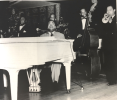
Q: What's better than a Fats Waller commercial recording?
A: A Fats Waller radio transcription. We get the sound quality of his regular waxings for RCA Victor with the added spontaneity of a live session. This is as close as we will ever come to hearing Fats knock 'em dead at the Onyx Club.
Ojai Sam
Staff member
Level 42 - Level 42 (1981)

First long player by the long-running British jazz funk ensemble features lots of keyboards and fluid bass lines. @JazzyRandy might like this one.
First long player by the long-running British jazz funk ensemble features lots of keyboards and fluid bass lines. @JazzyRandy might like this one.
This morning I listened to a couple of their later singles and got a definite sophisti-pop feel - a good thing for me. Even with those I could hear the nice bass play. I going to hunt down some of their earlier work. Thanks!Level 42 - Level 42 (1981)
First long player by the long-running British jazz funk ensemble features lots of keyboards and fluid bass lines. @JazzyRandy might like this one.
David Bowie - The Rise and Fall of Ziggy Stardust and the Spiders from Mars (1972)

Not my first listen (I don't think) but I don't remember what I thought about it from previous listens. This morning, I really enjoyed it. Really, really, really enjoyed it. I'd love to get ahold of other albums that fit this sound. Not necessarily the space-opera part (but not necessarily not space opera), but the type of music and wordy lyrics sung in an easily understood way.
EDIT: It reminds me of Billy Joel. And early early BeeGees, I think, but it's been a long time since I listened to early BeeGees that I can't remember.
Not my first listen (I don't think) but I don't remember what I thought about it from previous listens. This morning, I really enjoyed it. Really, really, really enjoyed it. I'd love to get ahold of other albums that fit this sound. Not necessarily the space-opera part (but not necessarily not space opera), but the type of music and wordy lyrics sung in an easily understood way.
EDIT: It reminds me of Billy Joel. And early early BeeGees, I think, but it's been a long time since I listened to early BeeGees that I can't remember.
Last edited:
Tom Harrell - Number 5 (2012)

John Coltrane & Cannonball Adderley - Cannonball & Coltrane (1959)

So, I'm listening to this now and enjoying it very much. It was not what I wanted to listen to. As I basked in the glow of finishing Z and having roughly 55%-65% of my CDs on hard drive again, I had a sudden urge to listen to Cannonball. When I went to the computer to choose an album I realized it didn't make the first cut of the re-ripping project.
I have no idea what possessed me to skip Cannonball. So I grabbed a stack of Cannonball CDs and am now ripping them. I also grabbed the Babyface CDs and ripped them as well. Looks like my rest-from-ripping period may be shorter than I intended. I swear, I'm going to try to just enjoy what has been ripped and not get obsessed with this again. I should have more than enough digitized to keep me satisfied for a few weeks of less-than-intermittent ripping.
So, I'm listening to this now and enjoying it very much. It was not what I wanted to listen to. As I basked in the glow of finishing Z and having roughly 55%-65% of my CDs on hard drive again, I had a sudden urge to listen to Cannonball. When I went to the computer to choose an album I realized it didn't make the first cut of the re-ripping project.
I have no idea what possessed me to skip Cannonball. So I grabbed a stack of Cannonball CDs and am now ripping them. I also grabbed the Babyface CDs and ripped them as well. Looks like my rest-from-ripping period may be shorter than I intended. I swear, I'm going to try to just enjoy what has been ripped and not get obsessed with this again. I should have more than enough digitized to keep me satisfied for a few weeks of less-than-intermittent ripping.
Charles Mingus - Mingus Ah Um (1959)

My Jazz playlists (all playlists) are sorted chronologically, then alphabetically. Charles came up next after Cannonball. I noticed the change in musical tone almost immediately. But almost as quickly I realized I loved this and let it play. This sort of randomness is what I missed by not having my music digitized. With physical media, I had to get up, realize if I had something specifically in mind and if not scan the shelves which usually meant scanning only a very small portion which usually meant something relatively on eye level, grab the first or second thing that caught my eye, and put it on. Often, I chose the same stuff too often. Or, I abandoned the alphabetized shelves and went to my "recently acquired and/or recently-listened-to-and-haven't-reshelved-yet area for my next selection.
Having *somewhat* everything digitized makes the entire next-album question more rewarding to answer.
My Jazz playlists (all playlists) are sorted chronologically, then alphabetically. Charles came up next after Cannonball. I noticed the change in musical tone almost immediately. But almost as quickly I realized I loved this and let it play. This sort of randomness is what I missed by not having my music digitized. With physical media, I had to get up, realize if I had something specifically in mind and if not scan the shelves which usually meant scanning only a very small portion which usually meant something relatively on eye level, grab the first or second thing that caught my eye, and put it on. Often, I chose the same stuff too often. Or, I abandoned the alphabetized shelves and went to my "recently acquired and/or recently-listened-to-and-haven't-reshelved-yet area for my next selection.
Having *somewhat* everything digitized makes the entire next-album question more rewarding to answer.
- Status
- Not open for further replies.
Similar threads

- Replies
- 61
- Views
- 3K


- Replies
- 128
- Views
- 9K

- Replies
- 82
- Views
- 5K
- Replies
- 105
- Views
- 6K