
Install the app
How to install the app on iOS
Follow along with the video below to see how to install our site as a web app on your home screen.
Note: This feature may not be available in some browsers.
You are using an out of date browser. It may not display this or other websites correctly.
You should upgrade or use an alternative browser.
You should upgrade or use an alternative browser.
Audiophile Thread
- Thread starter Unsomnambulist
- Start date

Unsomnambulist
Staff member
Unsomnambulist
Staff member
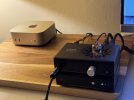
Apple with the latest update for the AirPods Max enabled lossless audio via USB. I've got it working with my Mac, so I can use Audirvana to output lossless FLAC to my AirPods Max now. Just another way to listen.
Just saw this. The Mac mini is new.Nice. Has something been added?
Unsomnambulist
Staff member
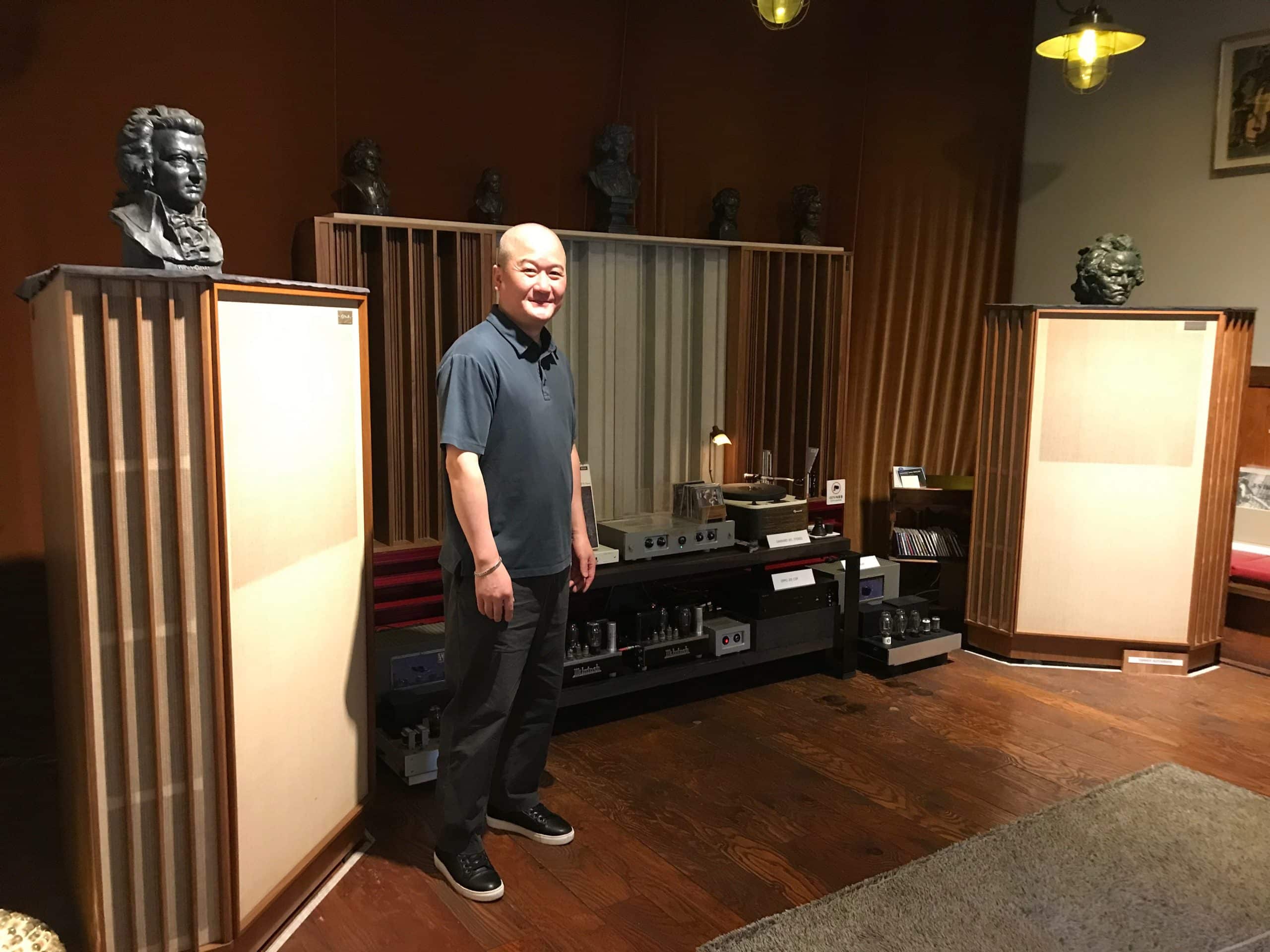
Korea’s Audio "Cafés"—Where the Customer ISN’T Always Right
Jonson Lee visits three music-listening spaces in Korea where silence is enforced, and the sound system—not the customer—rules. These venues offer a rare escape from choice overload, immersing visitors in pure, communal music appreciation.
 pmamagazine.org
Unsomnambulist
Staff member
Unsomnambulist
Staff member

Unsomnambulist
Staff member
Took so long, and now I don't care.

 www.whathifi.com
After years of waiting, Spotify is finally offering Lossless hi-res quality tracks for Premium subscribers
24-bit/44.1kHz FLAC streaming comes to Spotify Premium
Unsomnambulist
Staff member

Ojai Sam
Staff member


Rhino High Fidelity Reel-To-Reel Bundle
Buy Rhino High Fidelity Reel-To-Reel Bundle. Browse the vast selection of products available.
 store.rhino.com

axolotl
Nunquam non paratus

How to Make Music Popular Again
The rise of headphone listening has changed us profoundly—and maybe not for the better.

Ojai Sam
Staff member
In researching a replacement cartridge, I ran across this interesting bit of history for my longtime turntable on the Technics website:
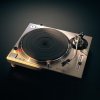
The SL-1200MK2 was the first Hi-Fi turntable designed in consideration of use by disco and club DJs. Technics’ staff visited clubs in Chicago and saw with their own eyes DJs using the first-generation SL-1200 as a “musical instrument.” For the development of the MK2, DJs’ opinions were collected and necessary modifications were made to satisfy their needs. One big advancement made in this model was the use of the Quartz Lock system. This achieved more accurate rotation control. Furthermore, a fader controller was adopted to simplify pitch adjustment. The vibration absorbing cabinet with integrally molded upper aluminium die-cast and lower special rubber was also created at this time. The SL-1200MK2 successfully responded to DJs’ needs. It was the bona fide model that changed the turntable from a record player to a “musical instrument.”
The SL-1200MK2 was the first Hi-Fi turntable designed in consideration of use by disco and club DJs. Technics’ staff visited clubs in Chicago and saw with their own eyes DJs using the first-generation SL-1200 as a “musical instrument.” For the development of the MK2, DJs’ opinions were collected and necessary modifications were made to satisfy their needs. One big advancement made in this model was the use of the Quartz Lock system. This achieved more accurate rotation control. Furthermore, a fader controller was adopted to simplify pitch adjustment. The vibration absorbing cabinet with integrally molded upper aluminium die-cast and lower special rubber was also created at this time. The SL-1200MK2 successfully responded to DJs’ needs. It was the bona fide model that changed the turntable from a record player to a “musical instrument.”
Unsomnambulist
Staff member
axolotl
Nunquam non paratus
...and a big horny fellow.
Ojai Sam
Staff member
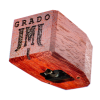
The vintage Technics turntable I posted above had been sleeping in storage for a decade or more when I revived it a year ago for connection to a computer. It had an old Grado cartridge which sounded good at first but lately showed signs of fatigue. After doing some research, I decided to renew my acquaintance with Grado Labs by purchasing their Platinum 3.

 gradolabs.com
This one falls somewhere in the middle of their offerings pricewise, which range as high as $12,000 for the Epoch 3. It looks cool in Australian jarrah wood and tracks at a moderate 1.6 to 1.9 grams. It has been many years since I mounted and balanced a loose cartridge, but guess that's a skill you never forget. Before I knew it, I was up and running.
To give my new needle a workout, I decided to spin three LP's I acquired recently:
Various Artists - J Jazz: Deep Modern Jazz From Japan, Vol. 4 (rec. 1968-1981, BBE 2023)
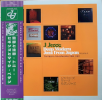
Leading off was a new collection of eclectic modern jazz from Japan. This record was mastered and cut by the acclaimed Frank Merritt at The Carvery in London.
 thecarverystudio.com
Their website explains their approach:
The Carvery Studio offers a full Vinyl and Digital mastering service, including lacquer cutting, and mastering for CD and streaming services. All lacquers are cut on our beloved Neumann VMS70; record cutting lathe, fully upgraded with DJR Disc Computer.
All our mastering services are performed in our East London, purpose built studio; designed and built by Slowglass Creative.
As avid collectors ourselves, we know the importance of records, and how they make you feel. Over the last fifteen years, our mastering engineer, Frank Merritt, has mastered and cut thousands of records, cementing himself as one of the most sought after vinyl mastering engineers in the UK.
We are proud that almost all the projects we work on at The Carvery are destined for vinyl, and to avoid any disappointment, we insist on mastering and cutting all our masters.
The end results of this attention to detail are stunning. Japanese vinyl is itself legendary and these albums present a real sonic showcase with breathtaking range and some unusual effects by the avant garde jazzers of the day. The Grado cartridge, like Shohei Ohtani, knocked it out of the park. So far, so good.
The Beatles - Beatles VI (Capitol 1965)

Next was an even greater challenge, a pristine Los Angeles first pressing of Capitol's American mashup of Beatles For Sale and Help! The sound was pretty compressed, reflecting the label's desire not to stray too far from what the kids were hearing on the radio. But the stereo separation and clarity were excellent. I was somewhat afraid that a sensitive cartridge would emphasize the warts in a sixty-year-old slab of vinyl but my fears were unfounded. There was total silence between the tracks and zero distortion throughout.
Ella Fitzgerald - Live At The Vienna Konzerthaus, 1969 (ORF, 2024)

For the last test, I considered classical but opted for a concert recording by a simple jazz trio. If there were any annoying characteristics, the spare sound of acoustic instruments on stage would bring them out. Happily, the Grado excelled here as well. The Great Hall of Vienna's Konzerthaus lives up to its name, seating 1,840 patrons in imperial splendor since it opened in 1913.

This recording from the Hall archives focuses closely on Ella's voice and her combo, presenting them in exquisite detail with true concert hall ambience. The audience is a bit of an afterthought, present but rather low in the mix. If the dowagers were rattling their jewelry that night, we can't hear it but the repeated waves of applause do attest to Ella's enduring ability to captivate her listeners all over the world. By this point in her career, she was mixing contemporary songs like "Sunshine Of Your Love" and "Hey, Jude" with her familiar repertoire of Broadway classics, thereby showing off the versatility of the cartridge with a variety of styles.
Overall, I give the Grado Platinum 3 on the Sam-O-Meter, with a special shout out to my ART USB Phono Plus Audiophile Computer Interface. This gadget did a superb job of adapting old analog technology to the digital world flawlessly.
Platinum3
The Platinum3 and Sonata3 models use a modified four piece OTL cantilever technology achieving a 10% tip mass reduction over the Prestige series and ultra-high purity long crystal (UHPLC) oxygen free copper wire in the coils. The Platinum3 model uses Grado's specially designed elliptical...
gradolabs.com
This one falls somewhere in the middle of their offerings pricewise, which range as high as $12,000 for the Epoch 3.
It looks cool in Australian jarrah wood and tracks at a moderate 1.6 to 1.9 grams. It has been many years since I mounted and balanced a loose cartridge, but guess that's a skill you never forget. Before I knew it, I was up and running.To give my new needle a workout, I decided to spin three LP's I acquired recently:
Various Artists - J Jazz: Deep Modern Jazz From Japan, Vol. 4 (rec. 1968-1981, BBE 2023)
Leading off was a new collection of eclectic modern jazz from Japan. This record was mastered and cut by the acclaimed Frank Merritt at The Carvery in London.
Home | Carvery
Multi Grammy-Nominated Vinyl mastering studio in London. Specialists in lacquer cutting and audio restoration in our East London studio.
thecarverystudio.com
Their website explains their approach:
The Carvery Studio offers a full Vinyl and Digital mastering service, including lacquer cutting, and mastering for CD and streaming services. All lacquers are cut on our beloved Neumann VMS70; record cutting lathe, fully upgraded with DJR Disc Computer.
All our mastering services are performed in our East London, purpose built studio; designed and built by Slowglass Creative.
As avid collectors ourselves, we know the importance of records, and how they make you feel. Over the last fifteen years, our mastering engineer, Frank Merritt, has mastered and cut thousands of records, cementing himself as one of the most sought after vinyl mastering engineers in the UK.
We are proud that almost all the projects we work on at The Carvery are destined for vinyl, and to avoid any disappointment, we insist on mastering and cutting all our masters.
The end results of this attention to detail are stunning. Japanese vinyl is itself legendary and these albums present a real sonic showcase with breathtaking range and some unusual effects by the avant garde jazzers of the day. The Grado cartridge, like Shohei Ohtani, knocked it out of the park. So far, so good.
The Beatles - Beatles VI (Capitol 1965)
Next was an even greater challenge, a pristine Los Angeles first pressing of Capitol's American mashup of Beatles For Sale and Help! The sound was pretty compressed, reflecting the label's desire not to stray too far from what the kids were hearing on the radio. But the stereo separation and clarity were excellent. I was somewhat afraid that a sensitive cartridge would emphasize the warts in a sixty-year-old slab of vinyl but my fears were unfounded. There was total silence between the tracks and zero distortion throughout.
Ella Fitzgerald - Live At The Vienna Konzerthaus, 1969 (ORF, 2024)
For the last test, I considered classical but opted for a concert recording by a simple jazz trio. If there were any annoying characteristics, the spare sound of acoustic instruments on stage would bring them out. Happily, the Grado excelled here as well. The Great Hall of Vienna's Konzerthaus lives up to its name, seating 1,840 patrons in imperial splendor since it opened in 1913.
This recording from the Hall archives focuses closely on Ella's voice and her combo, presenting them in exquisite detail with true concert hall ambience. The audience is a bit of an afterthought, present but rather low in the mix. If the dowagers were rattling their jewelry that night, we can't hear it but the repeated waves of applause do attest to Ella's enduring ability to captivate her listeners all over the world. By this point in her career, she was mixing contemporary songs like "Sunshine Of Your Love" and "Hey, Jude" with her familiar repertoire of Broadway classics, thereby showing off the versatility of the cartridge with a variety of styles.
Overall, I give the Grado Platinum 3
on the Sam-O-Meter, with a special shout out to my ART USB Phono Plus Audiophile Computer Interface. This gadget did a superb job of adapting old analog technology to the digital world flawlessly.
Unsomnambulist
Staff member

Unsomnambulist
Staff member
Similar threads


- Replies
- 3
- Views
- 86