
axolotl
Nunquam non paratus
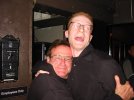
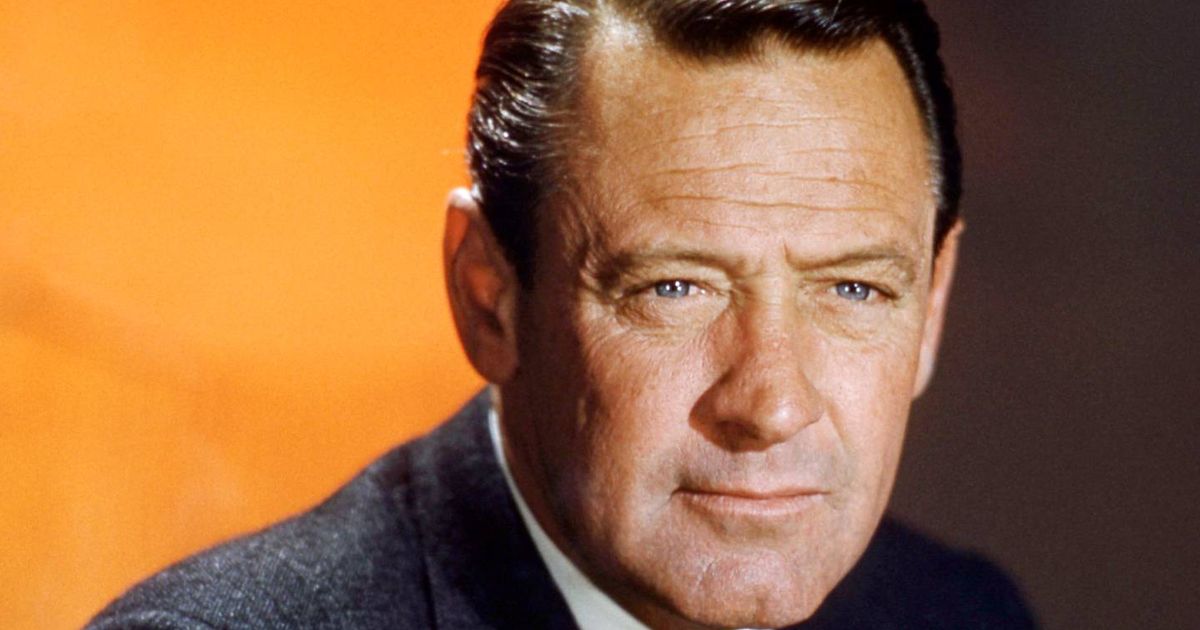
On what would have been Robin Williams’ 74th birthday, I wanted to share this excerpt from my book “Follow Your Dream (Unless Your Dream Is Stupid).
The Hug
Since I was spending most of the summer in Los Angeles, Adam and I needed an apartment with two actual bedrooms. And since I had the gig at Comedy Express, I didn’t need to sleep on a futon in a living room anymore. As wonderful and clutch as Betsy’s place was, we’d outgrown it.
Looking for a low-level apartment in New York is an adventure, as there’s such an enormous range of poverty and luxury, new buildings and history, and crooked real estate agents and very crooked real estate agents. Looking for an apartment in Los Angeles is way easier as almost everything was built within a few decades and you’re really just choosing which gray carpet and vertical white blinds you can afford.
We found a place just southeast of Sunset and La Brea, which was both convenient to the clubs and also had the most Los Angeles view in Los Angeles. At once we could see the Jim Henson Studios across the street from a strip club. Neither were going to have my picture in the window.
I quickly realized that Los Angeles is a very difficult place to develop as a comic because it’s a big risk to try new material. I got booked to do a coffee house show that only had eight people in the crowd. It was a rough show, made even rougher when I found out that one of the eight was a casting director for Disney.
The best place in America to start as a comic is anywhere but New York or Los Angeles. The competition in New York will hone you, but you need to be good enough to get the opportunity to face that competition. Opportunities are everywhere in Los Angeles, but so are celebrities vying for them so you better already be great. Get good first, then move to New York to get great, then move to Los Angeles to get famous. Unfortunately, I was born in New York so I started out wrong from the beginning.
Dublin’s was the perfect example of needing to be great to get an opportunity. Ask any comedian who lived in Los Angeles during the early 2000s and they will wax poetic about Dublin’s. Dublin’s was a bar on the Sunset Strip that was packed every week with hundreds of beautiful rich people and beautiful people pretending to be rich. Celebrities regularly hung out backstage and almost everyone on the lineup had some sort of impressive TV credit. Dane Cook, at the height of his popularity, would close Dublin’s every week.
Dublin’s producer was Jay Davis, who I knew through BrewCo. I hung out at Dublin’s each week and never asked for a spot. I just wanted to be part of the energy around it. One show, a few comics were late, and none of the comedians there wanted to go first. They were performing at Dublin’s to impress the beautiful and rich audience, and none of them wanted to start from scratch. Jay had seen my set at BrewCo a dozen times, so when I saw him frantically looking for a comic backstage, I finally spoke up.
“Jay, I could do five.”
And he said yes.
The five minutes went by in a blur. At the end of the set, Jay told the crowd that he’d have me back and they cheered. Jay was never able to make good on that claim – Dublin’s was sold shortly thereafter, and it’s currently being built into high-rises. But those five minutes at Dublin’s was the closest I’ve ever felt to being a rock star.
I walked to my car with a few comedians after the show. I’d lucked out and gotten a great spot half a block down from Dublin’s, a rarity as it was hard to find parking on the Sunset Strip. Not wanting to be the punchline of a hundred busted car jokes, I walked past my car and pretended I’d parked a few blocks further. I circled back alone and got in my shaky Camry, hoping it would start without issue. I was very quickly reminded I was not a rock star.
I drove back to my apartment and told Adam about the night. I also told him I wanted to get a better car. The car was embarrassing, but it was also unreliable and getting worse. If I was going to be driving to gigs, I needed to be sure I was going to get there.
Adam had a new Chevy Cavalier, and I was never sure how he could afford it until that night. Adam told me he took a $20,000 loan in order to pay for the car.
“I didn’t move out here to eke by,” Adam said. “I was doing that in New York. I moved out here to make it.”
Adam paid off the loan with what he made from producing those marathon shows at BrewCo, as the club paid him based on their bar sales. And since drunk UCLA students were a renewable resource, Adam made a few hundred bucks each show and was able to pay off the car.
I had been deciding between versions of slightly less crappy cars, while Adam took out a loan for my previous year’s income to buy a new one.
Adam had a point – I didn’t move to Los Angeles to eke by either. And I needed something more reliable with decent mileage and that didn’t make an “eek” sound when I drove.
I do not recommend what I did next, but I bought a new car. One of my favorite maxims has always been “necessity is the mother of invention.” And since it was a necessity to make the car payment every month, I invented.
I hadn’t produced any shows since I’d gotten to LA, but that was how I made my rent in New York, so I tried it in Los Angeles, too. Through the independent shows I had been on at the Improv, I’d gotten to know the booker. So I approached him with the concept of producing a show of young comics called Youth Revolution. They gave me the late show Friday slot, as that had been struggling to find a regular audience, and I got to work promoting.
I hit Myspace and Facebook, hard. I shared flyers for the show and posted videos of the comics. And by the day of the first show, we were completely sold out. I earned three car payments that first night.
I continued producing Youth Revolution, which led to my favorite moment in my career.
I had just taken the stage to host the show when one of the servers passed me a note. I’d never been passed a note on stage before, so I assumed it was extremely important. Perhaps the first comic was suddenly ill or someone needed to go up early, or a very large party spending an obscene amount of money on drinks was insisting that we wish them a happy birthday.
I read the note and I could not hide my excitement from the crowd, but then had to do another ten minutes. I told the crowd that I would reveal the contents of the note at the end of my set, which had the added benefit of getting them to pay attention.
When ten minutes had passed, I held the note up and read it.
“The first part of the note says ‘ten minutes’ I said, “And it’s been that long. The second part of the note says…”
I paused, looked to the door to make sure he was there, pointed, and with all the excitement I was actually feeling yelled, “Robin Williams!”
It was the first time I’d ever seen anyone get a standing ovation at the beginning of their set.
[Continued]