
Install the app
How to install the app on iOS
Follow along with the video below to see how to install our site as a web app on your home screen.
Note: This feature may not be available in some browsers.
You are using an out of date browser. It may not display this or other websites correctly.
You should upgrade or use an alternative browser.
You should upgrade or use an alternative browser.
What Are You Listening To? August 2021
- Thread starter axolotl
- Start date

dead prez - Let's Get Free (2000)

Maybe, just like there are classical painting forgers, there are classic R&R forgers?Jimi Hendrix - Valleys Of Neptune (2010)
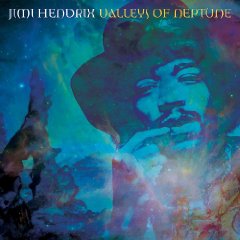
For some reason, Jimi's posthumous collections have only gotten better as the years pass. How can that be?

Ojai Sam
Staff member
The Mavericks - Covers (comp. 2007)

I've been on a listening project for The Mavericks and finally tracked down this Norwegian comp, definitely the rarest item in their catalog. It was well worth the effort. It gathers b-sides, outtakes and several one off songs that Raul and The Mavs contributed to soundtracks, artist tributes and the like. Malo has a versatile voice that lends itself well to the many styles represented here.
I've been on a listening project for The Mavericks and finally tracked down this Norwegian comp, definitely the rarest item in their catalog. It was well worth the effort. It gathers b-sides, outtakes and several one off songs that Raul and The Mavs contributed to soundtracks, artist tributes and the like. Malo has a versatile voice that lends itself well to the many styles represented here.


axolotl
Nunquam non paratus
Sinforosa ~ Cellar Door Serenades (2002)
Amazon review:
Amazon review:
Sinforosa's "Cellar Door Serenades" is an exploration of themes inspired by the dark and haunted plains of the midwest. Stories of love, death, sin, betrayal, coming of age, and incredibly intense weather. Songs that sit halfway between shimmering pop and moody gothic.
"Cellar Door Serenades" combines the rich and playful vocals of Traci Lee Nemeth with the textural instrumentation of Krysztof Nemeth and the propulsive percussion of Markus Kamp. This album are a truly unique collection of songs that explore the dark stories of the midwest; bypassing the historical sound of country music, and recreating them with a modern pop sensibility.
Art Blakey and the Jazz Messengers - En concert avec Europe 1: Olympia, 13 May, 1961

Dave Douglas - Soul On Soul (2000)

After doing tribute albums to Booker Little and Wayne Shorter, Douglas dropped this excellent tribute to pianist Mary Lou Williams.
Dave Douglas was one of the hardest working men in Jazz during this period. RYM lists him as headlining or appearing on over 100 albums from 1993-2021. And he covers everything from trios covering Eastern European folk songs to straight ahead jazz to avant-garde groups to fully plugged in groups that include DJs. Go, man, go!
After doing tribute albums to Booker Little and Wayne Shorter, Douglas dropped this excellent tribute to pianist Mary Lou Williams.
Dave Douglas was one of the hardest working men in Jazz during this period. RYM lists him as headlining or appearing on over 100 albums from 1993-2021. And he covers everything from trios covering Eastern European folk songs to straight ahead jazz to avant-garde groups to fully plugged in groups that include DJs. Go, man, go!
Skyjack - The Hunter (2019)
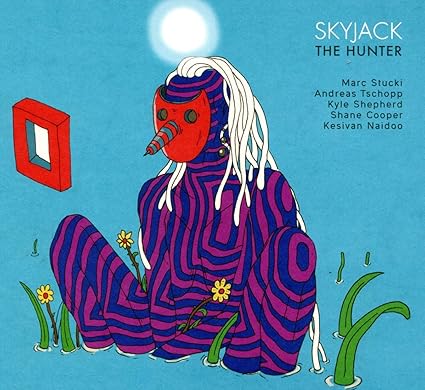
4.5 stars at AllAboutJazz
4.5 stars at AllAboutJazz

Zeeba Neighba
Staff member
ABC - The Lexicon of Love (1982)

After listening to Aaliyah on Friday then some ABBA over the weekend, broke this A artist out - always enjoyed this one. It's been awhile
After listening to Aaliyah on Friday then some ABBA over the weekend, broke this A artist out - always enjoyed this one. It's been awhile


Zeeba Neighba
Staff member
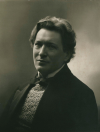
The Abyssinians - Satta Massagana (1976)

Zeeba Neighba
Staff member
The Rolling Stones - Some Girls (1978)

Wanted to listen to some Stones in memory of Charlie Watts. Interestingly though one of their best selling albums, I don't break Some Girls out too often c/w many others. Some hard rocking drumming here on "Lies" and "When the Whip Comes Down"
Wanted to listen to some Stones in memory of Charlie Watts. Interestingly though one of their best selling albums, I don't break Some Girls out too often c/w many others. Some hard rocking drumming here on "Lies" and "When the Whip Comes Down"
axolotl
Nunquam non paratus
Some hard rocking drumming here on "Lies" and "When the Whip Comes Down"
Bart [disguised as a Klansman, describes his qualifications as a villain]: Stampeding cattle.
Hedley Lamarr: That's not much of a crime.
Bart: Through the Vatican?
Hedley Lamarr: [smiling] Kinky!
Hedley Lamarr: That's not much of a crime.
Bart: Through the Vatican?
Hedley Lamarr: [smiling] Kinky!
Last edited:
Ojai Sam
Staff member
Charlie Watts - From One Charlie (1991)

I found this years ago on a long-defunct blog dedicated to British jazz. The contributor, one "Azul Serape", explained:
"The Rolling Stones drummer, Charlie Watts, has always been an admirer of Charlie Parker and in 1964 he published a small book called 'Ode To A High Flying Bird' which captured the highs and lows of Bird's life in narrative format and which he also illustrated. He was a budding graphic designer apparently and had hopes of a career in that field. It was privately published and Watts signed each copy. He was persuaded to have a second edition published in 1991 and Peter King was invited to provide the music to capture the flavour of Bird's Quintet with Red Rodney and that is what you will hear. One track has added strings."
Gerard Persencer - trumpet
Peter King - alto
Brian Lemon - piano
Dave Green - bass
Charlie Watts - drums
I found this years ago on a long-defunct blog dedicated to British jazz. The contributor, one "Azul Serape", explained:
"The Rolling Stones drummer, Charlie Watts, has always been an admirer of Charlie Parker and in 1964 he published a small book called 'Ode To A High Flying Bird' which captured the highs and lows of Bird's life in narrative format and which he also illustrated. He was a budding graphic designer apparently and had hopes of a career in that field. It was privately published and Watts signed each copy. He was persuaded to have a second edition published in 1991 and Peter King was invited to provide the music to capture the flavour of Bird's Quintet with Red Rodney and that is what you will hear. One track has added strings."
Gerard Persencer - trumpet
Peter King - alto
Brian Lemon - piano
Dave Green - bass
Charlie Watts - drums
Ojai Sam
Staff member
NBC Symphony Orchestra (cond. Arturo Toscanini) - Falstaff (1950)
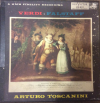
Verdi's final opera comes to life under the baton of Maestro Toscanini. The cast includes Giuseppe Valdengo and Antonio Madasi. Classical CD Review tells us why this recording is such a big deal:
The relationship between Giuseppe Verdi and Arturo Toscanini is well known and documented. It was in Rio de Janeiro on June 30, 1886 that a 19-year old Toscanini was pressed into service to make his last-second conducting debut. The opera was Verdi’s Aida. The following year, Toscanini was a member of the cello section of the La Scala Orchestra for the premiere of Verdi’s penultimate opera Otello. During rehearsals, Verdi came down to the orchestra pit and chided Toscanini for not playing loudly enough during the introduction to the love duet that concludes the first act.
That encounter, quite understandably, made a profound impression on the young Toscanini. But the music of Otello made an even greater impression. After the triumphant February 5, 1887 premiere, Toscanini ran home, woke up his mother in the middle of the night and exclaimed, “Mama, Verdi is a genius! Down on your knees to Verdi, down on your knees to Verdi!” One presumes Mama Toscanini complied. In subsequent years, Toscanini had the opportunity to meet with Verdi and discuss the interpretation of his music. When Verdi died in 1901, at the age of 88, it was Toscanini, now Music Director of La Scala, who led a tribute to Italy’s most beloved and revered composer.
None of this is meant to suggest that a Toscanini recording of Verdi represents the music precisely the way the composer intended. But there is no question that these recordings do provide an invaluable conduit from composer to interpreter to our ears. As a result, each Toscanini recording of Verdi commands repeated listening and study.
That is certainly the case with this 1950 performance of Verdi’s last opera Falstaff, recorded at Studio 8-H on two consecutive broadcasts of April 1 and 8. According to the liner notes of the superb Toscanini biographer Harvey Sachs, piano rehearsals for the cast averaged six hours a day for a period of six weeks. That preparation is certainly evident in a performance that crackles with fire, precision, and nuance from the boisterous opening measures to the concluding fugue. Among available commercial recordings, Toscanini’s 1950 broadcast remains the finest conducted Falstaff.
Verdi's final opera comes to life under the baton of Maestro Toscanini. The cast includes Giuseppe Valdengo and Antonio Madasi. Classical CD Review tells us why this recording is such a big deal:
The relationship between Giuseppe Verdi and Arturo Toscanini is well known and documented. It was in Rio de Janeiro on June 30, 1886 that a 19-year old Toscanini was pressed into service to make his last-second conducting debut. The opera was Verdi’s Aida. The following year, Toscanini was a member of the cello section of the La Scala Orchestra for the premiere of Verdi’s penultimate opera Otello. During rehearsals, Verdi came down to the orchestra pit and chided Toscanini for not playing loudly enough during the introduction to the love duet that concludes the first act.
That encounter, quite understandably, made a profound impression on the young Toscanini. But the music of Otello made an even greater impression. After the triumphant February 5, 1887 premiere, Toscanini ran home, woke up his mother in the middle of the night and exclaimed, “Mama, Verdi is a genius! Down on your knees to Verdi, down on your knees to Verdi!” One presumes Mama Toscanini complied. In subsequent years, Toscanini had the opportunity to meet with Verdi and discuss the interpretation of his music. When Verdi died in 1901, at the age of 88, it was Toscanini, now Music Director of La Scala, who led a tribute to Italy’s most beloved and revered composer.
None of this is meant to suggest that a Toscanini recording of Verdi represents the music precisely the way the composer intended. But there is no question that these recordings do provide an invaluable conduit from composer to interpreter to our ears. As a result, each Toscanini recording of Verdi commands repeated listening and study.
That is certainly the case with this 1950 performance of Verdi’s last opera Falstaff, recorded at Studio 8-H on two consecutive broadcasts of April 1 and 8. According to the liner notes of the superb Toscanini biographer Harvey Sachs, piano rehearsals for the cast averaged six hours a day for a period of six weeks. That preparation is certainly evident in a performance that crackles with fire, precision, and nuance from the boisterous opening measures to the concluding fugue. Among available commercial recordings, Toscanini’s 1950 broadcast remains the finest conducted Falstaff.

Similar threads


- Replies
- 93
- Views
- 6K

- Replies
- 82
- Views
- 5K

- Replies
- 73
- Views
- 1K
- Replies
- 78
- Views
- 2K