What are you listening to? January 2021

Status
Not open for further replies.
Bahamas - Barcodes (2012)

Barchords


My wife's pick for the year 2012 for our family album listen
 
Woody Herman - The Complete Decca, Mars and MGM Sessions (rec. 1943-1954, Mosaic comp. 2019)

1610482881597.png

Finished up this eye opening collection today. Woody's most innovative jazz recordings appeared on Columbia and Capitol after World War II. The sessions gathered here straddled those years, starting at the peak of the big band era and ending long after its demise. Like Ellington, Goodman and Basie, Herman survived by detaching himself from the swing idiom. Some of these recordings work better than others, but all are refreshing big band jazz anchored by Woody's clarinet, bluesy vocals and impeccable arrangements.
 
Ex Confusion ~ I Remember When (2019)


Ambient, Tape Music, Drone

It's not stoner metal and has no vocals at all. It's nothing groundbreaking, either.
 
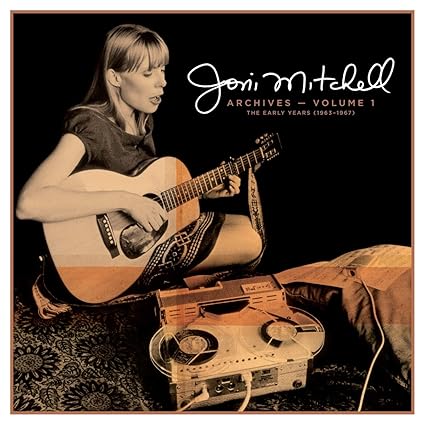
Joni Mitchell - Archives Vol. 1: The Early Years (2020)

71jfMbr5XUL._SX425_.jpg

The first disc of this ground-breaking collection consists of three parts: a radio show from 1963 (when she was 19), two full sets (including patter) from the Half Beat coffee house in Toronto a year later and 3 songs recorded at her parents' house in 1965. I don't think any of these performances have ever seen the light of day before and they are simply stunning. What amazes me the most is that Joni's vocal style and offbeat stage persona were both pretty well defined even at this embryonic stage of her career. During the stage show, Joni glided effortlessly into a golden soprano falsetto that would have brought tears to the eyes of the angels if any happened to be in the audience that night.

:5.0: on the Sam-O-Meter. And it's on Spotify! :thumbsup::thumbsup:
 
Nat King Cole - Hittin' The Ramp (rec. 1936-43, Resonance comp. 2019)

Nat-King-Cole-Hittin-the-Ramp-Cover-510x510.jpg


Way back in 1991, Mosaic released a weighty box (18 CD or 27 LP, your choice :eek:) with the complete Capitol recordings of the King Cole Trio. However, Nat's earlier work has never enjoyed a comparable rebirth. Until now. Jazz label Resonance put together a relatively diminutive 7 CD (or 10 LP) collection of his recordings from 1936 through 1943 when he joined Capitol. The label website sez:

Released in partnership with the Nat King Cole estate, Resonance Records’ HITTIN’ THE RAMP: THE EARLY YEARS (1936-1943) is the first large-scale collection of the pivotal early recordings (1936-1943) of Nat’s 29-year recording career. Most tracks are receiving their first official release in this meticulously restored set of original live-to-disk recordings.

This definitive 7CD and limited-edition 10LP collection draws upon a wide range of sources, including many newly-discovered tracks unearthed for the first time from archives located all over the world, such as “Trompin” (jukebox-only release for Cinematone, 1939), “What’cha Know Joe” (undocumented radio performance, 1940 — now the earliest known recording of Nat “on the air”), “The Romany Room is Jumpin’” (private recording, 1941) and “Beautiful Moons Ago” (longer alternate take, 1943). Sessions include Nat at age 17, playing piano in his brother’s band in Chicago, 1936; the first King Cole Trio recordings from 1938, made for radio broadcast only, for Standard Transcriptions; further radio transcription sessions for Standard, Davis & Schwegler, Keystone, plus his first (uncredited) session for MacGregor, with vocalist Anita Boyer; the Ammor Records Session (Spring 1940 – the first commercial-release sessions for the trio), the Decca Recordings (1940-41), the small-label sessions for Excelsior and Premier labels (1943), many previously-uncirculating Armed Forces Radio performances, and, with producer Norman Granz at the helm, early jazz sessions with Lester Young (Granz historic, first session as a producer) and Dexter Gordon, originally released on Philo and Mercury, respectively.


The first two discs give us his earliest commercial session for Decca, followed by a series of radio transcriptions running through mid-1939. Sound quality is remarkable, especially in view of the scarcity of the source material. Nat's melodic piano style and warm, jazzy vocals are remarkably similar to the legendary Capitol recordings. Guitarist Oscar Moore, a fixture in the King Cole Trio until 1947, appears here along with bassist Wesley Prince who departed in 1941 before Cole hit paydirt.

Some historical recordings are of, well, historical interest only. But this collection is a pure joy from start to finish.

:5.0: on the Sam-O-Meter. And it's on Spotify! :thumbsup::thumbsup:
 
Virginia Astley ~ From Gardens Where We Feel Secure (1983)


Ambient, Dream Pop, Neoclassical New Age, Baroque Pop, New Age, Ethereal Wave

Daughter of Edwin Astley. Sister of Jon Astley. Sister-in-law of Pete Townshend.
 
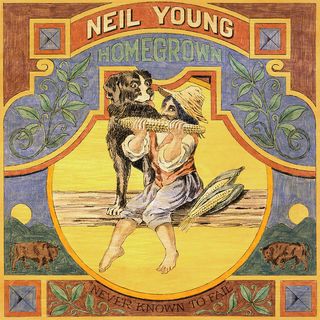
Neil Young - Homegrown (rec. 1974-75, released 2020)

Homegrown_Neil%20Young.jpg


In the bewildering flood of archival releases from Shakey, this one stands out. It is Volume 02 (not just "2") in the Special Release Series. dedicated to previously unreleased material. Of course only volumes 02, 05 and 10 have been issued so far. :confused:

According to Pitchfork:

There are a couple stories about why Young waited 46 years to release Homegrown, a collection of stripped-back love songs he began writing at what was arguably the artistic zenith of his career. In one, recounted in Jimmy McDonough’s colossal Young biography, Shakey, Young made a spur-of-the-moment decision to release the high-octane Tonight’s the Night instead after he played the two records back to back for some musician friends during a half-remembered night at the Chateau Marmont. In another, the one that Young has been telling of late, he decided that the album—recorded in 1974 during a protracted break-up with the late actress Carrie Snodgrass, the mother of his child Zeke—was simply too painful. “It was a little too personal—it scared me,” he told Cameron Crowe in a 1975 interview for Rolling Stone. According to Shakey, he described Homegrown to his father as “great songs I can live without.”

Be that as it may, Homegrown is an important addition to the canon. We get the intimate acoustic vibe of Harvest with a set of equally intimate, personal songs, The sessions mostly took place in December 1974 and January 1975, with Ben Keith's eerie steel and Neil's harmonica the dominant sounds. Levon Helm, Robbie Robertson and Emmylou Harris all drop by for cameo appearances. It may all seem a bit unfinished but then Tonight's The Night isn't exactly polished. During this period, Neil just couldn't go wrong and Homegrown holds up very well today.

:4.5: on the Sam-O-Meter.
 
Status
Not open for further replies.
Back
Top