To commemorate Independence Day 2023, I'm spinning Norman Corwin's monumental radio program presented on May 8, 1945 to mark the end of World War II in Europe. Heard by over 60 million people on the CBS Radio Network, it remains the most listened to radio drama in history. Due to the success of the show, Columbia re-recorded it especially for release on this massive 6-disc 78 r.p.m. album. Corwin's celebration of V-E Day strikes a surprisingly reflective note rather than a triumphant one.
Buyer's Note: a later LP issue on Mark 56 Records utilized the actual transcription of the radio program, which sounds inferior to my ears.
on the Sam-O-Meter. "Who did we beat? How much did it cost to beat him? What have we learned? What do we do now? Is it all going to happen again?"
The New Symphony Orchestra of Tokio (Hidemaro Konoye, cond.) - Mahler: Symphony No. 4 (rec. 1930, Denon remaster 1988)
Naxos Records supplies this thumbnail bio:
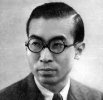
Hidemaro Konoye was born in 1898 into a high-ranking aristocratic family, the brother of the prime minister of Japan about the year 1940. He studied composition under Ksak Yamada in Tokyo and later in Europe under Vincent dIndy and Max von Schillings, with conducting under Erich Kleiber. He was not only an important conductor in Japan but also conducted orchestras in abroad, including the Berlin Philharmonic, the orchestra of La Scala, Milan and the NBC Symphony Orchestra. He conducted the first [electrical] recording of Mahler's Symphony No.4 and was part of a social circle that included Furtwangler and Richard Strauss. He died in 1973.
The wizards at Denon did a terrific job remastering this vintage 1930 recording to maximize the richness and subtlety of the performance.
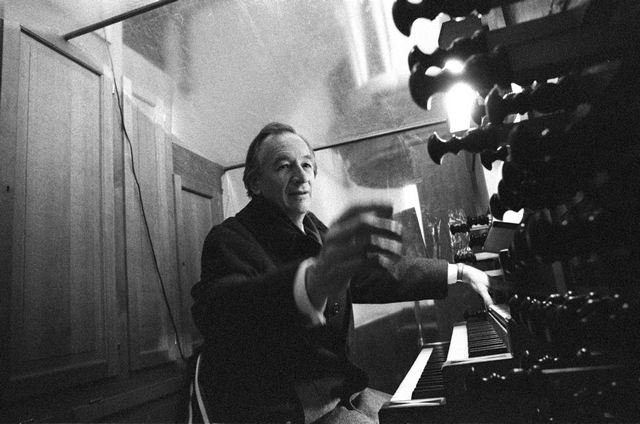
Robert Bates - Titelouze: Complete Organ Works (2013)
Still using my Saturday to get organized here. Let's move back four centuries or so.
Wiki sez:
Jean (Jehan) Titelouze (c. 1562/63 – 24 October 1633) was a French Catholic priest, composer, poet and organist of the late Renaissance and early Baroque periods. He was a canon and organist at Rouen Cathedral. His style was firmly rooted in the Renaissance vocal tradition and as such, was far removed from the distinctly French style of organ music that developed during the mid-17th century. However, his hymns and Magnificat settings are the earliest known published French organ collections, and he is regarded as the first composer of the French organ school.
Why are these called violin sonatas when the piano parts are so complex?
The Washington Post reminds us:
"The 10 compositions that we now routinely call Beethoven's violin sonatas were labeled by the composer 'Sonatas for Pianoforte with Violin Accompaniment', a description still found on the title pages of their printed editions."



 on the Sam-O-Meter. "Who did we beat? How much did it cost to beat him? What have we learned? What do we do now? Is it all going to happen again?"







 Let's move back four centuries or so.


