
Install the app
How to install the app on iOS
Follow along with the video below to see how to install our site as a web app on your home screen.
Note: This feature may not be available in some browsers.
You are using an out of date browser. It may not display this or other websites correctly.
You should upgrade or use an alternative browser.
You should upgrade or use an alternative browser.
What Are You Listening to? November 2021
- Thread starter axolotl
- Start date
- Status
- Not open for further replies.

Unsomnambulist
Staff member
Courtney Barnett - Things Take Time, Take Time (2021)


Zeeba Neighba
Staff member




axolotl
Nunquam non paratus
David Wilcox ~ Underneath (1999)

Sunshone Still ~ Dead Letters (2005)

Two of my favorites, right here.
Dave's is a bit of a hodge-podge. It is garage-y, languid, jazzy, and solemn, but it is has three of my favorite songs by him. David writes songs that consist of multiple levels of meaning. "Slipping Through My Fist" is a musical journey of reflecting on life without a second thought as to where one ends up.
Dead Letters is Sunshone Still's (a/k/a Chris Smith) first album. It is understated songwriting with wisps of humor. "I Found Jesus" involves literally finding Jesus while walking in the woods. "Julie Christie" is about falling in love with the actress while binge-watching Dr. Zhivago. "Fireflies" is about a homesick kid that learns to love Summer camp. It's all good.
Sunshone Still ~ Dead Letters (2005)
Two of my favorites, right here.
Dave's is a bit of a hodge-podge. It is garage-y, languid, jazzy, and solemn, but it is has three of my favorite songs by him. David writes songs that consist of multiple levels of meaning. "Slipping Through My Fist" is a musical journey of reflecting on life without a second thought as to where one ends up.
Dead Letters is Sunshone Still's (a/k/a Chris Smith) first album. It is understated songwriting with wisps of humor. "I Found Jesus" involves literally finding Jesus while walking in the woods. "Julie Christie" is about falling in love with the actress while binge-watching Dr. Zhivago. "Fireflies" is about a homesick kid that learns to love Summer camp. It's all good.
Unsomnambulist
Staff member
The Abyssinians - Satta Massagana (1976)

This is awesome. And the sound quality, if the rest of the tracks hold up, is stunning for Reggae from 1976 (if you're not Bob Marley).
This is awesome. And the sound quality, if the rest of the tracks hold up, is stunning for Reggae from 1976 (if you're not Bob Marley).
axolotl
Nunquam non paratus
Sigur Ros ~ Takk... (2005)

This album receives high ratings on RYM.
When you have over 13K rankings, it's a good bet that, overall, it's good.
Still, there are those who call it weak and give it
I recall this quote from Amadeus: "What can one say but Salieri?"
I see this low ranking and think to myself: "What can one say but EvilGnome?"
This album receives high ratings on RYM.
When you have over 13K rankings, it's a good bet that, overall, it's good.
Still, there are those who call it weak and give it
I recall this quote from Amadeus: "What can one say but Salieri?"
I see this low ranking and think to myself: "What can one say but EvilGnome?"
axolotl
Nunquam non paratus
William Wilde Zeitler ~ Music of the Spheres (2003)


These twelve pieces were inspired by the ancient Pythagorean conception of the Universe. This musical journey begins at Earth, and travels through the planets to the Great Beyond; passionate and mystical, reveling in the wonders of the Cosmos. "Music of the Spheres" incorporates a wealth of musical symbolism based on almost a year of William's research into ancient through modern astronomy and astrology. The fundamental concept of the album is to portray the soul's final journey from life on Earth, ascending through the planetary spheres to the Afterlife.
The original concept of the "Music of the Spheres" is credited to Pythagoras (c.569-475 BC), a musical-mathematical-mystic, but its first surviving written account appears in Plato (c.427-347 BC). At the end of his Republic, Plato gives a tour of the afterlife and a view of the planetary spheres. But for Plato they aren't true spheres, they are giant "hemispheres", nested inside of each other with just the rims exposed, all rotating on a spindle of light. A Siren is assigned to each rim, singing a single note. In short, in Plato's view, the Cosmos is an enormous glass armonica in the sky! If Plato's Sirens had merely touched the hemispheres' rims with moistened fingers instead of singing, we'd be crediting Plato with the invention of the glass armonica instead of Benjamin Franklin (1706-1790).
Composed for glass armonica and accompanied by harp, wine glass chorus, and gentle percussion.
axolotl
Nunquam non paratus
The Tone Sharks ~ Chunks of Zen (2000)
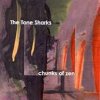
Chunks of Zen Review, by Rick Anderson
Imagine a cross between the loopy good humor of Happy Apple and the intense harmolodics of late-period Ornette Coleman and you'll have a general idea of what to expect from the Tone Sharks. Group improvisation has a long and varied history in jazz, beginning with the multi-layered solos that typified early New Orleans jazz and continuing up to the willfully forbidding noise collectives of New York's downtown avant-garde and England's improv music scene. The Tone Sharks seem to come from a different tradition altogether, one equally rooted in classical, jazz, and funk. Though groove is anathema to many free music practitioners, the Tone Sharks deliver groove almost promiscuously, and their music is better for it -- though there is less groove-oriented material on this album than there was on their previous effort. Here the textures tend to be a bit more pointillistic, though saxophonist Tom Bergeron's snaky melody lines and Dave Storrs' multifaceted drumming still provide threads of consistency throughout the sometimes random-sounding proceedings. Start with the previous album, then move on to this one.
axolotl
Nunquam non paratus
Dave Anderson Quartet ~ Clarity (2010)
 www.allaboutjazz.com
Dave Anderson Quartet: Clarity album review @ All About Jazz
Dave Anderson Quartet: Clarity album review by Edward Blanco, published on August 16, 2010. Find thousands jazz reviews at All About Jazz!

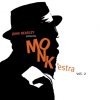
![https___images.genius.com_2f6463334fba73d0e4ecbb1a9a7eda93.999x999x1[1].png](/data/attachments/6/6809-9e05ee3c3de76a7b9bc1f96913694e67.jpg?hash=ngXuPD3nan)

Unsomnambulist
Staff member
John Dowland ~ Flow My Tears and Other Lute Songs (1997)
View attachment 6820
I almost typed Flow My Teats and Other Lewd Songs.
Good thing I didn't. This is quite lovely.

axolotl
Nunquam non paratus
I listened to this one late last night. I will need to re-listen, as so much of it is quiet.
Giya Kancheli ~ In l'istesso tempo (2005)

Giya Kancheli ~ In l'istesso tempo (2005)
Kancheli views the disappearance of the "religion of tonality" (which bespoke an inherent meaning and dignity to life) as "the sign of a terrible loss", something to be mourned but that is never to be regained. According to Rathert, Kancheli "confronts this loss, not with the complex means of the avant-garde, but with a language of very simple means and gestures, which keeps the memory alive while embodying protest." This protest is exhibited partly by his "refusal to use fast tempi". Thus slow tempi dominate all three works on this album, as evidenced by the title of the Piano Quartet "in l'istesso tempo".
Rathert summarizes: "The overall impression of Kancheli's music is one of philosophical distance and almost Far Eastern calm. Its 'things as they are' stance ... leaves listeners with no choice but to continually address their own inner thoughts." And this "dissenting stance" seems to adhere in all of Kancheli's works: a first encounter with his music may even strike one as being somewhat arrogant and uppity. One does come away with the occasional feeling that he is in his music turning the tables on the listener, forcing the listener to find the meaning of the music within his/her own subjective world, as "vestiges of the unsaid may contain the promise that potentially resides in every new tone, as if it were the first one that had ever sounded. "
- Status
- Not open for further replies.
Similar threads

- Replies
- 61
- Views
- 3K


- Replies
- 128
- Views
- 9K

- Replies
- 82
- Views
- 5K
- Replies
- 105
- Views
- 6K