Great Record Labels: Capitol Records

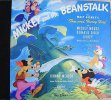
Johnny Mercer - Mickey and the Beanstalk (Capitol CCX-67, 1948)

front.jpg

The parade of children's records continues with another major addition: Capitol's version of Walt Disney's "Fun and Fancy Free". This feature length film combined animation and live action to tell two separate stories, one of which is presented here. Johnny Mercer steps in to Edgar Bergen's role as narrator but the rest of Disney's characters are voiced by their regular actors: Walt in his last appearance as Mickey, Clarence Nash as Donald and Pinto Colvig (a Capitol regular as Bozo The Clown) as Goofy. Mercer's avuncular personality and the strong Disney characters breathe a lot of life into the familiar fairy tale. However, as a "Record Reader" the developing plot does make the many page turns and record changes somewhat more distracting than they were in the episodic if not picaresque Bozo stories.

You will recall that this is Capitol's second tie in with Disney, after "Song Of The South". It is a measure of its high reputation that the highly competitive Disney studio and Warner Bros. would both entrust their precious animated characters to the same label.

1700618429099.png
 
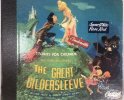
Harold Peary - Stories For Children (Capitol CD-69, 1948)

front.jpg

The next Capitol release is nowhere to be found on the Internet Archive or YouTube. So while we wait for my copy to arrive courtesy of eBay, let's look at this children's record. It's yet another volume from Harold Peary as "The Great Gildersleeve". Hal does his usual fine job with these all too familiar chestnuts. But after the recent adventures of Bozo, Bugs and Mickey, not to mention the hallucinations of Rusty and Sparky, this album seems rather dated. It just goes to show how far Capitol had elevated the standards for the juvenile market in the two years since the first Peary release appeared.

No more kids! Tomorrow's album will take the adults among us (if any there be) in a whole new direction.

1700683163719.png
 
This label project has languished recently due to the demands of work. I will be returning to the early 78 albums soon, but in the meantime I wanted to introduce the Capitol Blues Collection. It was formulated by Wayne Watkins who ran catalog projects for Capitol between 1984 and 2000, a time period that neatly coincided with the heyday of the CD reissue boom.

1725652434865.png

For this series, Wayne had access to the vast Capitol/EMI catalogue. While Capitol itself wasn't known for its blues artists, EMI had assembled a number of key Black-oriented labels including Black & White, Imperial, Aladdin and Minit. Each release in the series came in a beautiful custom album with a cover portrait by Joe Ciardiello, extensive liner notes by Pete Welding, and expert remastering by Larry Walsh at the state-of-the-art Capitol studio.

Sonny Terry - Whoopin' The Blues: The Capitol Recordings 1947-1950 (Capitol Blues Collection 1995)

ODMtMTkxNC5qcGVn.jpeg


ODMtMTk4OC5qcGVn.jpeg


As the first release in this CD reissue project, Watkins selected an artist who had actually appeared on Capitol itself. Sonny Terry (1911-1986) recorded his unique style of blues for countless labels over the years, both with and without his musical partner Brownie McGhee. Capitol signed him for its new Americana imprint dedicated to "folk" music in 1947. This loose concept embraced artists as diverse as country balladeer Merle Travis, jazz pianist Nellie Lutcher, Western Swing bandleader Tex Williams and comedian Jerry Colonna.

Ni02Mzc2LmpwZWc.jpeg


The 16 selections here, including two unissued songs, all fall within Terry's familiar harmonica blues format, updated to the post-war sound by the addition of drums and occasional piano. He is joined in the studio by Baby Dodds (veteran of Louis Armstrong's Hot Five and Hot Seven), Brownie McGhee and his brother Stick McGhee among others. The material is less political than his earlier releases, but none of these songs charted. Still, all are of them are superb, as a group representing a major watershed in Sonny Terry's long career.

1725654963613.png
 
Last edited:
Muddy Waters & Memphis Slim - Chicago Blues Masters Vol. 1 (rec. 1961, Capitol Blues Collection 1995)

MS5qcGVn.jpeg


When I was listing the labels available for this project, I didn't think of United Artists although it too was gobbled up by EMI as Wiki explains:

In 1978, UA executives Artie Mogull and Jerry Rubinstein bought the record company from Transamerica with a loan from EMI, which took over distribution of the label. [snip] Unable to generate enough income to cover the loan, Liberty/United Records was sold to EMI in 1979 for $3 million and assumed liabilities of $32 million.

Note to self: never borrow money from a conglomerate to buy an asset it would like to own. :elisabs:

In addition to releasing soundtracks from its films, UA recorded quite a bit of pop and rock. This album adds the five songs from Muddy and Slim's 1959 Carnegie Hall appearance to Broken Soul Blues, a 1961 album on which both men played along with James Cotton and Otis Spann.

My03MTMzLmpwZWc.jpeg


:5.0: on the Sam-O-Meter. Quintessential Chicago blues.
 
Son House - Delta Blues and Spirituals (rec. 1970, Capitol Blues Collection 1995)

NC05NTMzLmpwZWc.jpeg


Canned Heat was riding high in 1970 when its harp man Alan "Blind Owl" Wilson sat in with Son House (1902-1988) at London's 100 Club. Six years earlier, Wilson had found House, a giant of pre-war blues, and persuaded him to come out of retirement. This gig was part of what was supposed to be Son's retirement tour but he soldiered on for five more years. Wilson would die of a drug overdose just two months later.

1725820864056.png

Alan and Son. The amazing story of their relationship is here:


This Capitol Blues Collection release is a straight reissue of John The Revelator which had appeared only in the UK on Liberty, Canned Heat's label.

Mi01MDcwLmpwZWc.jpeg
 
John Lee Hooker - Alternative Boogie: Early Studio Recordings 1948-1952 (Capitol Blues Collection 1995)

My0yODAxLmpwZWc.jpeg


Hooker's early recordings present a real challenge to the erstwhile discographer. Somehow United Artists Records wound up controlling many of them, so Wayne snapped them up for this 3-disc collection. The accompanying booklet may not offer much session information, but these songs are so essential it really doesn't matter.

1726187417142.png
original Modern Records release (1950)


Ni0zMjA5LmpwZWc.jpeg

United Artists reissue (1973)
 
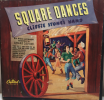
Cliffie Stone - Square Dances (Capitol B-44, 1947)

View attachment 10561

The late 40's and early 50's were a time of turmoil in the record business as different formats battled for market dominance. The venerable 10 shellac inch 78 was now facing challenges from vinyl records pressed as 7 inch 45's as well as 10 inch and 12 inch long playing 33-1/3 discs. The newer material combined with higher speed offered the major advantages of greater durability combined with major reductions in size and weight.

Capitol and the other labels hedged their bets by releasing albums in multiple formats. The old square dance album with four 78's was repressed with four 45's in this 7-1/2 inch square box:

1726946224710.png
1726946578802.png

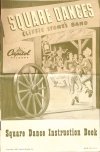
The same instruction book was folded to fit.

09212024_012.jpg

The release was assigned catalog number ADF 4002 which can be translated as follows:

A - the price code
D - four discs
F - 45 rpm
400_ - Americana Series (which had used 4000_ for 78 rpm releases)

The label uses the same red color as the old Americana 78's with sharp new sleeves:

09212024_002.jpg

The 45 album proved to be a transitional format. It was eventually defeated by the LP, relegating the little 45 to single releases only. In a nod to history long playing 33s (and later CDs) retained the name "album", hearkening back to the original configuration of multiple 78's in cardboard folders resembling the photo albums of the day.
 
T-Bone Walker - The Complete Capitol/Black & White Recordings (Capitol Blues Collection, 1995)

OS03MTM3LmpwZWc.jpeg


This was the first release in the Capitol Blues Collection series, bringing 3 discs worth of the best electric blues ever waxed from the mid- to late 1940's. Still essential listening today.

1730406453177.png
 
Maria Cole - Love Is A Special Feeling (1966)

My00NzA0LnBuZw.jpeg


Vinyl Spin of the Day.

A year after the death of Nat King Cole, his widow decided to return to the studio to record what would be her third and final album. Gordon Jenkins created a gorgeous set of orchestral arrangements that range from lush strings to lively brass. It was inevitable that Capitol would release Love Is A Special Feeling, since both Nat and Gordon had enjoyed long professional relationships with the label and with each other. The results are a stunning tour de force for an extremely talented vocalist who without a doubt could have become a major star in her own right. It's our loss that she didn't leave behind a lot more recordings.

1731806233658.png

Gordon Jenkins (1910-1984)
 
Various Artists - Rediscovered Blues (Capitol Blues Collection 1995)

My03MjQxLmpwZWc.jpeg


This en-lightnin' collection gathers three essential but often overlooked albums that originally appeared on World Pacific. Founded in 1952 by producer Dick Bock and drummer Roy Harte as Pacific Jazz, after five years the label changed its name to reflect a broader artistic vision.

1733961425175.png

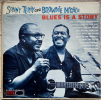
Sonny Terry and Brownie McGhee knocked out a dozen songs on December 29, 1959 for Blues Is A Story (World Pacific 1294, 1960). Their synergistic energy flows so effortlessly that you just know they could have waxed another dozen without breaking a sweat.

1733961125035.png

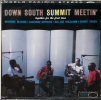
Down South Summit Meetin' (World Pacific 1296, 1960), recorded on July 6,1960 is a true supersession. World Pacific brought Sonny and Brownie back into the studio with two more veteran bluesmen, Lightnin' Hopkins and Big Joe Williams. This album offers a candid fly-on-the wall view of their spontaneous musical and verbal interplay.

1733962167135.png

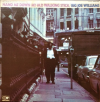
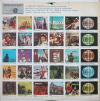
By the time Hand Me Down My Old Walking Stick (World Pacific 21897, 1969) appeared, the blues revival had blossomed to such an extent that many bluesmen beat a path to London for recordings like this one with the cream of their British acolytes. World Pacific had been absorbed in 1965 by Liberty Records, a part of the Transamerica conglomerate whose logo appears rather incongruously on the back cover.

Once again, Capitol dug deep into the EMI vault to dust off three forgotten masterpieces of post-war blues.
 
Roy Brown - The Complete Imperial Recordings (rec. 1956-58, Capitol Blues Collection 1995)

Ny05NTQyLmpwZWc.jpeg


Louisiana's Roy Brown (1925-1981) was best known for the anthemic "Good Rockin' Tonight", a huge R&B hit that launched Elvis. By 1956, Roy's older declamatory gospel blues style had been pushed out of the spotlight by the rock and roll it had spawned. Lew Chudd at Imperial Records was riding the crest of Fats Domino's success when he took a stab at reviving Roy's career. Only one top 10 hit emerged from the 20 songs Dave Bartholomew produced for him in New Orleans: "Let The Four Winds Blow" in 1957, which none other than Fats himself took all the way to #2 four years later.

Nothing here matches the electricity of Roy's best work of the 40's, but the New Orleans studio stalwarts rekindled a lot of the same enthusiasm a decade later.

1743026787591.png
 
Kyu Sakamoto - Sukiyaki and Other Japanese Hits (1963)

NC03Njg4LmpwZWc.jpeg


Vinyl Spin of the Day.

Like other major labels, Capitol launched an international series in 1957 under the name "Capitol of the World" aimed at a niche market of eclectic record buyers.

1745279876115.png

This long-running collection lived up to its name with albums from every corner of the globe.

1745279982147.png

After its release in England, to everyone's amazement at the time the title track rocketed to the top of the charts all over the world. The song is actually "Ue o Muite Arukō", which translates as "I Look Up as I Walk". The lyrics tell a melancholy tale:

I look up as I walk
So the tear won’t fall
Remembering those spring days
But I am all alone tonight

I look up as I walk
Counting the stars with tearful eyes
Remembering those summer days
But I am all alone tonight

Happiness lies up above the clouds
Happiness lies up in the sky

I look up as I walk
So that the tears won’t fall
Though the tears well up as I walk
For tonight I am all alone

Remembering those autumn days
But I am all alone tonight

Sadness lies in the shadow of the stars
Sadness lurks in the shadow of the moon

I look up as I walk
So that the tears won’t fall
Though the tears well up as I walk
But I am all alone tonight.

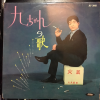
The original Japanese LP appeared on Toshiba with a similar but different cover from the same photo shoot that was far more suitable to the downbeat mood:

1745278044103.png

So what does this song have to do with a hot pot dish? Absolutely nothing. Pye Records producer Louis Benjamin just liked the sound of the word. Wiki explains further:

"The word sukiyaki does not appear in the song's lyrics, nor does it have any connection to them; it was used only because it was short, catchy, recognizably Japanese, and more familiar to English speakers. A Newsweek columnist compared this re-titling to issuing "Moon River" in Japan under the title 'Beef Stew'. " :nickyboy:

Kyu Sakamoto (1941-1985) enjoyed a long career in Japan after his days as an international one hit wonder came to an end. Born three days after Pearl Harbor, Sakamoto died in the crash of Japan Air Lines Flight 123, still the deadliest accident involving a single aircraft in history.
 
A Newsweek columnist compared this re-titling to issuing "Moon River" in Japan under the title 'Beef Stew'. "
Kyu Sakamoto (1941-1985) enjoyed a long career in Japan after his days as an international one hit wonder came to an end. Born three days after Pearl Harbor, Sakamoto died in the crash of Japan Air Lines Flight 123, still the deadliest accident involving a single aircraft in history.
I laughed. I cried. I peed myself a little.
 
Back
Top