Great Record Labels: Capitol Records

Various Artists - Jerome Kern's Music (Capitol CD-41, 1947)

MC04Njk5LmpwZWc.jpeg


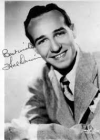
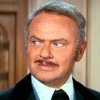
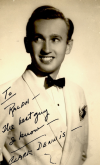
This can't miss collection gathered eight classic show tunes from the pen of Jerome Kern. The usual suspects are featured, starting with (who else?) Paul Weston and Johnny Mercer. Hal Derwin and Clark Dennis are the least familiar names. Derwin was a second tier band leader and vocalist who had sung in a vocal trio with Capitol producer Lee Gillette. Clark Dennis was an Irish singer very reminiscent of Dennis Day who began his career working with Betty Grable and wound up with Paul Whiteman's band before going solo. Capitol showed its already deep talent roster to real advantage here.
1697586945016.png
Clark Dennis

1697587033989.png
Hal Derwin
 
Last edited:
^
Edited To Add Photos

Jascha Datsko & His Gypsy Ensemble - Gypsy Nights (Capitol BD-42, 1947)

OC0yOTc3LmpwZWc.jpeg


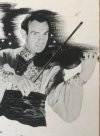
There seems to be no information about Jascha apart from the liner notes to this album, the first of two he would record for Capitol. They proclaim him to be "the world's foremost Gypsy violinist". Based on these recordings, I can't argue. He's really great, backed by a fire-breathing combo.

portrait.jpg
 
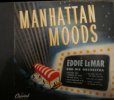
Eddie Le Mar & His Orchestra - Manhattan Moods (Capitol BD-43, 1947)

R-4803388-1512412713-1210.jpg

Today we have another artist about whom nothing seems to be known other than the fact that he played piano. This album presents eight instrumental show tunes in an "made for dancing" orchestral style somewhat reminiscent of Guy Lombardo. Eddie contributes all too frequent glissandi on the piano that lend a schmaltzy air even Lombardo would have eschewed.
 
Henry Blair & Billy Bletcher - Rusty In Orchestraville (Capitol BC-35, 1946)

MC0xODE0LmpwZWc.jpeg


Vinyl Spin Of The Day.

We've seen that Capitol put a lot of effort into developing records for children after WWII. This groundbreaking release was written by Alan W. Livingston, about whom we will hear a lot more presently. Rather than simply retelling an old fairy tale, Livingston created a new morality play to encourage kids to practice their music lessons.

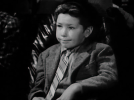
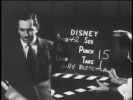
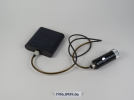
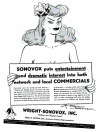
Rusty is played by Henry Blair (1930-2008), a top radio actor of the day. Henry, among other roles, played Ricky Nelson in the radio version of "the Adventures of Ozzie and Harriet". The deep voice of Billy Bletcher (1894-1979) kept him busy from the silent film era through television. You heard him as a Munchkin in "The Wizard of Oz" and saw him in The Three Stooges shorts. Here, Billy dons a German accent as the firm but friendly conductor who leads Rusty on his voyage of discovery. This record channels the surrealism of cinema in the mid-40's with a long dream sequence in which the instruments of an orchestra come to life for Rusty. We meet Vera The Violin, Peter The Piano and, my favorite, Bobo The Oboe. Performances by prominent classical musicians are mated to vocalizations from Sonovox, an early electronic voice effect device. The overall effect is amazingly entertaining, a remarkable achievement for the technology of the day.

This record remained in the Capitol catalog for years and even spawned a sequel for Peter The Piano. My copy is a pristine 10 inch LP which proudly bears the "Bozo Seal of Approval".

1697826922898.png
Henry Blair

1697827018892.png
Billy Bletcher

1697827331610.png

1697827272542.png
Sonovox
 
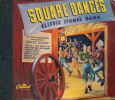
Cliffie Stone - Square Dances (Capitol B-44, 1947)

1697924390923.png

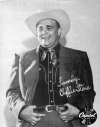
In the autumn of 1946, Capitol decided to release an album to capitalize on the post-war square dancing boom. So they hired Cliffie Stone (1917-1998) to put one together. Cliffie wound up spending the next three decades at the label as a performer, session man, producer, talent scout and A&R director. He discovered and signed for Capitol Tennessee Ernie Ford (whom he also managed), Stan Freberg and many other artists.

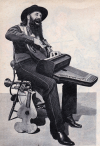
Cliffie was born Clifford Gilpin Snyder in Stockton, California. His father, Clifford Herman Snyder, performed as a faux pioneer musician under the name "Herman The Hermit" (Peter Noone, take note).

1697927018316.png
Herman The Hermit

Herman Sr. got his son a job playing bass and doing comedy for Stuart Hamblen and decided to name him "Cliffie Stonehead", later wisely shortened to Cliffie Stone. In addition to his work for Capitol, Cliffie ran a very successful music publishing firm and produced "Hometown Jamboree", a groundbreaking live country TV show. His achievements led to his induction as a member of the Country Music Hall of Fame in 1989. One of Cliffie's sons, Curtis, played in the country band Highway 101. Another son, Steve, produced many records at Capitol for artists including Tennessee Ernie Ford.

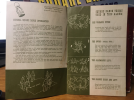
For this album, Cliffie assembled a hot string band propelled by his own upright bass, the banjo of his dad and the fiddle of Charlie Linville which knocked out eight familiar tunes in a single session. However, Cliffie later recorded some "Special Instructions For Square Dancing" to go along with the illustrated booklet that accompanied the album.

1697928187672.png

Mercifully, the music does not include the actual square dance calls. :rolleyes:

I met Cliffie once at the old Tex Williams Record Shop in North Hollywood. As you can see, he was a very jovial guy.

1697928815435.png
 
Last edited:
Yesterday:

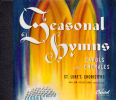
St. Luke's Choristers - Seasonal Hymns (Capitol BD-45, 1947)

1698175001441.png

With so many top selling contemporary artists (Nat King Cole, Peggy Lee, Jo Stafford, Stan Kenton...) who was the first to notch their third album release for Capitol Records? None other than those merry makers from Long Beach, St. Luke's Choristers. After one Christmas record and one of non-seasonal hymns, the Choristers decided to cover all the bases with hymns for Thanksgiving, Advent, Palm Sunday, and yes, Christmas too.
This music is interesting to me because it is largely unfamiliar, and the choir bundled them into medleys which flow nicely.
 
Today:

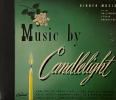
Hollywood Studio Orchestra - Music By Candlelight (Capitol BD-46, 1947)

1698175871892.png

Eight servings of dinner music from an apparently anonymous group of musicians. The producer made efforts to cook up an international flavor with selections spanning the globe from "Kashmiri Song" to "In A Persian Market" to "Caprice Viennois" to "Santa Lucia". The arrangements are actually quite tasty, more than enough to satisfy your hunger for orchestral beauty from the light classical menu.

:nickyboy:
 
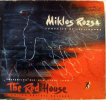
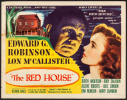
Miklos Rozsa - The Red House (Capitol CB-48, 1947)

1698272704759.png

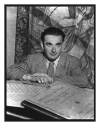
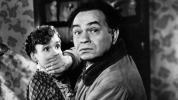
Composer Miklos Rozsa compiled a 4 part orchestral suite from his eerie soundtrack to the Edward G. Robinson thriller "The Red House". Screaming strings, screaming women and a ghostly theremin pack as much excitement as two shellac 78's could hold. About 10 years ago, Intrada reconstructed and recorded the complete soundtrack music with a full orchestra in stunning digital sound.
1698273434811.png
1698273503525.png

1698273594152.png
 
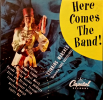
Louis Castellucci - Here Comes The Band! (Capitol BD-52, 1947)

1698357906984.png

Another catalog-builder from Capitol, Here Comes The Band! parades 8 marches for our review. Half are the usual suspects from the mighty pen of John Philip Sousa.

According to the Loyola Law School "Entertainment Law Review":

Louis Castellucci is an accomplished musician, with a widely-varied and interesting background of performing, composing and conducting. From the age of seven, when his father guided his musical education in their native Italy, to the present, Louis Castellucci has enjoyed playing the bass trombone with such renowned and diverse performing groups as John Philip Sousa's Marching Band and movie studio bands at Fox, MGM, Paramount, Universal, and Warner Brothers studios in the silent film years. He was conductor of the Venice American Band and the Santa Monica Municipal Band. Louis Castellucci capped his career with thirty years of musicianship with the Los Angeles Philharmonic Orchestra, with which he played at the opening of the first Hollywood Bowl.

The big brass band here knocked these tunes out in a single session with plenty of military enthusiasm. Jessel's lighthearted "Parade Of The Wooden Soldiers" lends a nice change of pace. Of course that's Leon Jessel, not George. :worm:
 
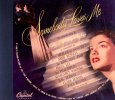
Various Artists: Somebody Loves Me: The Beloved Songs Of Buddy De Sylva (Capitol CD-49, 1947)

cover.jpg

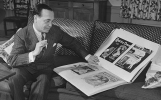
For its third songwriter tribute collection (after Johnny Mercer and Jerome Kern), Capitol looked no further than label co-founder George "Buddy" De Sylva (1895-1950). In his short life of 55 years, Buddy managed to reach the top of three very different entertainment fields: songwriter, film producer and record company executive. His songs dated back to Al Jolson's early successes on Broadway before 1920, leading to co-writing opportunities with George Gershwin. He peaked in the early 1940's working as an executive producer at Paramount and then launching Capitol Records with Johnny Mercer and Glenn Wallichs. "April Showers" may be his most famous composition, but many of the other songs on this anthology are still performed as standards today.

Oddly enough, with its deep roster Capitol tapped (with one exception) the identical group of performers as it did for the Jerome Kern project. Clark Dennis and Hal Derwin must have been grateful for the work.

1698453239694.png

Buddy De Sylva
 
Merle Travis - Folk Songs Of The Hills (Capitol AD-50, 1947)

1698620541409.png

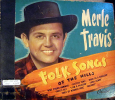
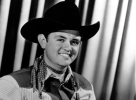
Mere Travis (1917-1983) came out of the tiny hamlet of Rosewood in the Western Kentucky coal country with a knack for catchy lyrics and a unique finger picking guitar style. In 1944, after a stint in the Marine Corps, he moved to Hollywood and signed with Capitol Records. With a string of hits under his belt, the label asked Merle to record an album of authentic tunes "reflecting both the joys and hardships of the hill folk" as the liner notes put it. So on August 8 and 13, 1946 he did just that, accompanied only by the bass of Cliffie Stone. Travis mixed traditional songs with brilliant originals like "Sixteen Tons" and "Dark As A Dungeon" that would become country standards. Merle stayed on the label until 1969 but never equaled the success of his legendary first album.

Label geeks will notice that the catalog number for Folk Songs Of The Hills begins with "A", not used since the first 8 releases. Capitol launched a new "Americana" series with this album. It would last for about three years and eventually include genres other than country as we will soon see.

1698621362374.png
 
Margaret Whiting - Margaret Whiting Sings Rodgers and Hart (Capitol BD-51, 1947)

1698626477388.png

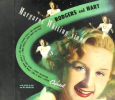
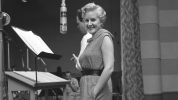
A decade before Ella's songbook, Margaret Whiting (1924-2011) recorded this tribute to the timeless Broadway songwriters. Musical talent ran in Margaret's family since her father, Richard Whiting, composed "Hooray For Hollywood" and many other popular songs. As with many other vocalists including labelmate Jo Stafford, she started as "girl singer" with the big bands before going solo in 1945. Several big hits in the softer orchestral sound that gained in popularity after the war launched her to a successful career on records, radio and television that lasted until the 1980's. Toward the end of her life, Margaret made a surprising detour by marrying Jack Wrangler, a gay porn actor. The marriage lasted 15 years until her death, albeit with a few bumps along the road. Wiki shares this little detail: "when Wrangler shouted at her in a restaurant that he was gay, Whiting responded, 'only around the edges, dear.'"

Margaret's warm, expressive voice was perfectly suited to the intimate romantic ballads of Richard Rodgers and Lorenz Hart. She was accompanied in the studio by the orchestra of Frank De Vol whom we met in this thread recently and will see here again soon. VERY soon. :worm: This album more than holds its own against the later replay by the legendary Ella.

1698627922358.png
 
Frank DeVol - Waltzing On Air (Capitol BD-53, 1947)

1698709995540.png

Frank is back, but I didn't say you'd be happy about it. With Margaret Whiting, Frank's mild-mannered sound serves to frame her intimate voice. Without her, it's just so much mush.

Nothing to see here, let's move on.
 
Frank DeVol - Waltzing On Air (Capitol BD-53, 1947)

View attachment 10648

Frank is back, but I didn't say you'd be happy about it. With Margaret Whiting, Frank's mild-mannered sound serves to frame her intimate voice. Without her, it's just so much mush.

Nothing to see here, let's move on.

That was my impression of his instrumental music.

When did he start going by DeVol, only?

"We are not men. We are DeVol."
 
Buddy Cole - Moonlight Moods (Capitol BD-54, 1947)

NDAtNDkyNS5qcGVn.jpeg


Buddy Cole switches from piano to organ for his second album. It contains eight nocturnally themed instrumentals in the console organ style familiar to generations of baseball fans. Play ball!

:3.5: on the Sam-O-Meter. Maybe not a home run but certainly a ground rule double.

LmpwZWc.jpeg
 
Eddie Le Mar & His Orchestra - Manhattan Moods (Capitol BD-43, 1947)

View attachment 10527

Today we have another artist about whom nothing seems to be known other than the fact that he played piano. This album presents eight instrumental show tunes in an "made for dancing" orchestral style somewhat reminiscent of Guy Lombardo. Eddie contributes all too frequent glissandi on the piano that lend a schmaltzy air even Lombardo would have eschewed.
"Eddie LeMar" is really a nom du disque for our old friend Edwin LeMar "Buddy" Cole! :aha:
 
Back
Top