Great Record Labels: Capitol Records

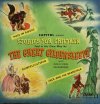
Harold Peary - Stories For Children Told In His Own Way By The Great Gildersleeve (Capitol CD-11, 1945)
front.jpg

Capitol's first entry into the market for children's records brought the little ones three fairy tales read by actor Harold Peary with "orchestral background". Peary had a long run on radio as "Throckmorton P., Gildersleeve", first on the Fibber McGee and Molly show and later in its own spinoff. His amiable character with the infectious laugh suited the tales well, although Gildy's comment that he would "light a cigar while you turn the record over" seems a bit jarring today.

Technical note: Capitol crammed three multi-part stories onto four two-sided 78 rpm discs with a 3-3-2 arrangement, thereby creating a mathematical challenge for those in the young audience not blessed with an automatic record changer.
1694472997369.png
 
Harold Peary - Stories For Children Told In His Own Way By The Great Gildersleeve (Capitol CD-11, 1945)

View attachment 10261

Capitol's first entry into the market for children's records brought the little ones three fairy tales read by actor Harold Peary with "orchestral background". Peary had a long run on radio as "Throckmorton P., Gildersleeve", first on the Fibber McGee and Molly show and later in its own spinoff. His amiable character with the infectious laugh suited the tales well, although Gildy's comment that he would "light a cigar while you turn the record over" seems a bit jarring today.

Technical note: Capitol crammed three multi-part stories onto four two-sided 78 rpm discs with a 3-3-2 arrangement, thereby creating a mathematical challenge for those in the young audience not blessed with an automatic record changer.

View attachment 10262
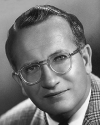
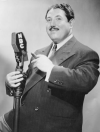
If his photo doesn't scream "Throckmorton P. Gildersleeve", I don't know what does. I also imagine him sounding like Edward Everett Horton.
 
Paul Weston - Music For Dreaming (Capitol BD-9, 1945)

NjUtMzc0OS5qcGVn.jpeg


Vinyl Rip Of The Day (from 10 inch 33 RPM album)

Paul Weston was a versatile artist who enjoyed a long career. Wiki tell us:

Paul Weston (born Paul Wetstein; March 12, 1912 – September 20, 1996) was an American pianist, arranger, composer, and conductor who worked in music and television from the 1930s to the 1970s, pioneering mood music and becoming known as "the Father of Mood Music". His compositions include popular music songs such as "I Should Care", "Day by Day", and "Shrimp Boats". He also wrote classical pieces, including "Crescent City Suite" and religious music, authoring several hymns and masses.

Paul attended Dartmouth and Columbia, earning a Phi Beta Kappa key. He started his own dance band while an undergrad and then landed a job as Tommy Dorsey's arranger. Later, he went on to Hollywood and became music director for Capitol Records. There he cultivated the career of Jo Stafford, marrying her in the process. They remained together for five decades as he continued to work in television and helped start the Grammy Awards.

This album reflects the major changes in the music business at the end of WWII. The brassy swing bands were gradually supplanted by a smoother, string-based sound. These more subtle arrangements enabled singers to step into the spotlight as solo artists rather than mere "boy singers" and "girl singers" fronting a big band. The eight songs here, all instrumental ballads, are smooth but not lush.

Release Note: The"Music For Dreaming" album had an extraordinarily long shelf life at Capitol. Discogs explains:

Originally a four-disc 78 RPM album set in 1945.

NS0yOTI4LmpwZWc.jpeg


Reissued on 10" LP and 45 RPM Extended Play set in 1950.

MzctMzg4Ny5qcGVn.jpeg


MDQtMTU2Ni5qcGVn.jpeg


Reissued in 1953 with a slightly different cover.

MTUtOTgzNC5qcGVn.jpeg


Reissued again on expanded 12" LP in 1955 with four previously released tracks listed below:

• "The Way You Look Tonight" (originally featured on "Jerome Kern's Music " (1947))
• "Laura" (originally featured on "Music For Easy Listening" (1950))
• "Full Moon And Empty Arms" (same source as above)
• "Intermezzo (same source as above)

NC0yMTYzLmpwZWc.jpeg


14 years after the original 1946 78 RPM album release came yet another same-titled 12" LP, Capitol ST-1154 which contained newly recorded stereo performances. Four different expansion tracks were selected for this 1959 project.

OC05OTYyLmpwZWc.jpeg


The re-recorded version made its way to CD as part of a twofer in 1991.

NS0xMzQzLmpwZWc.jpeg


And today it is still available for download and on Spotify.


Paul was both creative and adaptable. No doubt he would be very pleased if not surprised at the durability of his work.

1694554217227.png
 
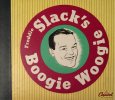
Freddie Slack - Freddie Slack's Boogie Woogie (Capitol BD-12, 1945)

front.jpg

Pianist Freddie Slack was one of the overlooked forefathers of rock and roll. He succeeded in bringing the Black boogie woogie piano style of Jimmy Yancey, Pinetop Smith, Albert Ammons and others to a mainstream audience. But he was no Pat Boone. Not only was his piano style authentically raw, but he helped incubate the careers of T-Bone Walker and Big Joe Turner.

As a sideman with the Ray McKinley big band, Freddie soloed on "Beat Me Daddy, Eight To The Bar". This became a huge hit, spawning many others in the same style including The Andrews Sisters' "Boogie Woogie Bugle Boy Of Company B". Capitol signed Slack when he formed his own band. He rewarded the label with its first #1 single, "Cow Cow Boogie" featuring a vocal by 17 year old Ella Mae Morse.

That song isn't here (we'll encounter it and Ella again later), but we do get 8 instrumentals with Freddie solo, his four piece jazz combo (dubbed "Eight Beats By Four") and the full orchestra. Boogie is at the forefront but the style also delves into brassy swing and even verges on bebop. Freddie would go on to record over 80 tracks for Capitol and his career lasted long enough for him to see Jerry Lee Lewis take boogie woogie to the top of the charts again.

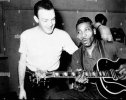
t-bone-walker-and-freddie-slack-P4XCD5.jpg

Freddie and T-Bone.
 
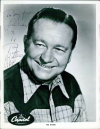
Tex Ritter - Children's Songs And Stories (Capitol BD-14, 1945)

MS0zNjIyLmpwZWc.jpeg


Woodward Maurice "Tex" Ritter (1905-1974) lasted long enough in the music business to become a parody of himself. He found success at Capitol with a series of hits that culminated in his featured title song for the film "High Noon". He was the first artist signed to the new label, and his first album (remember, we are taking about 4 10" 78 RPM shellac discs in a colorful cardboard jacket) was aimed at the juvenile market. The eight tracks here included both songs and stories with spoken introductions for the kids. Tex came by his acting talent honestly, having dropped out of law school to launch his career on Broadway in Western themed shows. "Green Grow The Lilacs", the precursor to "Oklahoma!", was his ticket to stardom. He later made several films, worked in television and even ran for the U.S. Senate.

1694748784895.png
 
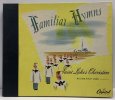
St. Luke's Choristers - Familiar Hymns (Capitol BD-15, 1945)

front.jpg

St. Luke's Choristers are back for their second album, a collection of non-seasonal hymns.

Tomorrow we will begin a series that broke new ground in the area of historical jazz reissues. :lala:
 
Various Artists - The History Of Jazz Vol. I - The 'Solid' South (Capitol CE-16, 1945)

My05NTI0LmpwZWc.jpeg


Dave Dexter had a dilemma. As A&R representative for Capitol, he wanted to release a collection telling the story of how jazz came to be. But the company had only been in existence since 1942, while Columbia and RCA Victor had deep archives dating back before the turn of the century. Even Decca, a relative newcomer arriving in 1934, had obtained a catalog of vintage recordings purchased from defunct labels.

So Dexter did something then unheard of: he assembled a stellar group of veteran musicians and recreated the Dixieland sound of decades before. Wingy Manone, Zutty Singleton, Barney Bigard, Eddie Miller and the others here were familiar names. Even label owner Johnny Mercer adds a vocal to "Tailgate Ramble". The big surprise was Leadbelly, who wasn't considered a jazz musician. His inclusion says a lot about the values of this new record company.

This five disc set survived in the Capitol catalog for many years. It is still essential listening today.

:5.0: on the Sam-O-Meter.
 
Various Artists - The History Of Jazz Vol. II - The Golden Era (Capitol CE-17, 1945)

Ni02ODQyLmpwZWc.jpeg


Back with the second installment of Capitol's epic History Of Jazz series, the 1940's precursor of the boxed set. Once again, the label worked around its shallow vault by mining new treasures. Of the five artists here, three were newly contracted to remake their own hits of the 20's and 30's: Paul Whiteman, Jack Teagarden and Red Nichols. Sonny Greer, Duke Ellington's long time drummer, assembled a group of prominent musicians to recreate the early Ellington jungle style. Finally, Kansas City's Jay McShann, while a strong bandleader in his own right, wasn't of the caliber of the others but you can never go wrong with a Julia Lee vocal.
 
Various Artists - The History Of Jazz Vol. III - Then Came Swing (Capitol CE-18, 1945)

Ny0zMTM3LmpwZWc.jpeg


This volume is the most cohesive collection so far: 8 slices of hot uptempo small group jazz plus 2 bluesy sides by T-Bone Walker. Capitol went out of its way to give full label credit to the musicians it recorded.

OS0xMjQ4LmpwZWc.jpeg


Coleman Hawkins, Benny Carter, Nat King Cole, John Kirby, Willie Smith, Illinois Jacquet, Al Casey, Harry Carney...the list of all stars goes on.

Discographical note: When this album was reissued on 10 inch LP, the T-Bone Walker sides were dropped in favor of a pair by Benny Goodman who signed to the label after 1945. :(
 
Various Artists - The History Of Jazz Vol. IV - This Modern Age (Capitol CE-19, 1945)

OC0yMTEyLmpwZWc.jpeg


1945 was a transitional year as swing receded and bebop gained ground. This set reflects that change, leading off with two boppish titles from Coleman Hawkins and there's also a pretty edgy instrumental from The King Cole Trio. The rest of the songs are more mainstream, although the Butterfield and Kenton big band sides do swing pretty hard.

This brings "The History Of Jazz:" to a close. Our next Capitol release will take us in a completely different direction.
 
Fibber McGee and Molly with Teeny - On The Night Before Christmas (Capitol CC-20, 1945)

NS0yNDQ2LmpwZWc.jpeg


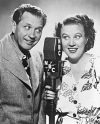
Well, I warned you to expect something completely different and here it is. We met The Great Gildersleeve a little while ago. He was originally a character on the Fibber McGee and Molly radio program which ran from 1935 to 1959. The title characters were portrayed by Jim Jordan and his acerbic wife, Marian Jordan, former vaudevillians who found success on network radio.

1695270375009.png

The format of the show was deceptively simple, revolving around the interactions between the Jordans and a town full of eccentric folks like Mayor La Trivia, The Old-Timer, Mrs. Abigail Uppington, Wallace Wimple and Horatio K. Boomer.

This album features McGee, Molly and Teeny in a three part fairy tale sketch called "On The Night Before Christmas" that explains (spoiler alert) why Christmas trees have needles. The other three sides are a dramatic reading of Clement Clarke Moore's ageless poem, complete with orchestra and chorus.

Teeny was a precocious child whose specialty on the show was outwitting McGee. Who played Teeny? Through the miracle of radio, none other than Marian Jordan herself:

1695270338394.png
 
Margaret O'Brien - Stories For Children (Capitol CC-21, 1945)

OS05MDg0LmpwZWc.jpeg


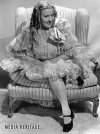
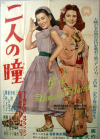
This album would more properly have been entitled "Stories By a Child", since it was recorded by Margaret O'Brien when she was just 8 years old. By 1945 she had already appeared in ten feature films, including "Meet Me In St. Louis" with Judy Garland. Unfortunately, Margaret's movie career had already peaked. Six years later, she bade "sayonara" to the big screen in a forgotten Japanese picture "Futari No Hitomi" (aka "Girls Hand In Hand") with legendary singer-actress Misora Hibari.

1695507384924.png
 
^
I was so distracted by Misora Hibari (one of whose albums I will dig out of the vault very soon) that I forgot to mention the stories that Margaret told. There were two: "The Town Musicians" and "The Three Billy-Goats Gruff". I was vaguely familiar with the latter as a Grimm fairy tale but the first was new to me. Both involve anthropomorphic animals who overcome adversity with persistence and ingenuity. Margaret does a fine job of bringing them to life, accompanied by creative orchestral backing, a great uncredited animal voice actor and lively sound effects. The overall high quality is very reminiscent of a top radio show of the time.

Sam Freed - Capitol Presents Your Favorite Strauss Waltzes (Capitol BD-22, 1946)

Ny05NDAzLmpwZWc.jpeg


Whenever I chance to pore over an old record catalog (yes, I do have strange habits :rolleyes:), I'm always struck by how much light classical music was consumed by Americans in the middle of the 20th Century. This phenomenon was not limited to the upper crust, either. My mom and grandmother were both devoted fans of Victor Herbert, Percy Faith (sorry, @Nickyboy), Mantovani and even The 101 Strings.

This album would have fit right in at my house. There is very little information available about Sam Freed other than the fact that he played the violin and viola with Harry James, Frank Sinatra and, of course, Percy Faith. This 4 disc album is his only Capitol release. Two of the songs were later released on a 45 by Capitol's Mexican subsidiary. Whoever he was, Sam turned in very creditable orchestral performances of the Strauss evergreens.

MzEtMzMyNS5qcGVn.jpeg
 
Jo Stafford - Jo Stafford (Capitol BD-23, 1946)

Mi04ODE2LmpwZWc.jpeg


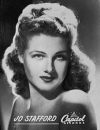
Jo Stafford was Capitol's first big star. After six years toiling for Tommy Dorsey in The Pied Pipers vocal quartet, Jo stepped out as a solo act in 1944. Her first single cracked the top 20, launching a string of hits that continued into the mid-1950's. None of the songs on this album charted, but they are all fine ballads, ably backed by the orchestra of future husband Paul Weston.

1695682002388.png
 
No, but in the past it was commercialized.

View attachment 10352
That makes me well up a little.

Puffed Rice was so valued that in one ad, it was proclaimed, “The Eighth Wonder of the World.”

The cereal also gained attention as “food shot from guns of peace.”

Online articles from the Smithsonian Institution and the New York Botanical Garden explain:

In 1902, Alexander Anderson received a patent for “a dry method of swelling starch materials of all kinds to render them porous, thereby enhancing their nutritive value and rendering them more readily and completely digested.” The following year he signed an agreement with Quaker Oats to begin large-scale production of puffed rice and wheat cereals. (Source: “Alexander Anderson and the Cereal Shot from Guns” at https://invention.si.edu/alexander-anderson-and-cereal-shot-guns.)

Prior to being marketed as a cereal, Anderson’s puffed rice was promoted as a confection at the 1904 St. Louis World’s Fair. Cannon-like cylinders discharged downpours of puffed rice in a giant cage, wowing the crowds, who purchased packages of the novel treat. (Source: “Breakfast in a Blast: The Invention of Puffed Cereal at NYBG” at https://www.nybg.org.)

Then, the cannons stopped firing. In April 2019, Mae’s Food Blog, posted “The Quaker Oats Company Has Stopped Puffing!” (Read more at https://maefood.blogspot.com/2019/04/the-quaker-oats-company-has-stopped.html.)

Poof!

Quaker Puffed Rice--and Puffed Wheat--disappeared.


Back
Top