Great Record Labels: Capitol Records

Eddie Le Mar & His Orchestra - Manhattan Moods (Capitol BD-43, 1947)

View attachment 10527

Today we have another artist about whom nothing seems to be known other than the fact that he played piano. This album presents eight instrumental show tunes in an "made for dancing" orchestral style somewhat reminiscent of Guy Lombardo. Eddie contributes all too frequent glissandi on the piano that lend a schmaltzy air even Lombardo would have eschewed.
Without knowing for sure, I have always assumed these were Buddy Cole sides. Seemed like too big a coincidence. From Wikipedia...

Edwin LeMar "Buddy" Cole (December 15, 1916 – November 5, 1964) was a jazz pianist, organist, orchestra leader, and composer. He played behind a number of pop singers, including Rosemary Clooney and Bing Crosby.

Biography
Cole was born in Irving, Illinois, on December 15, 1916[1] and the family moved to California when he was two. One of his two sisters - Bertie - played for silent movies and Buddy would watch as a little boy. At the age of ten, he deputised on the theater piano for someone who had not turned up.[2] He started his musical career in the theater playing between movies[1] and his first keyboard job was as theater organist at Los Angeles' Figueroa Theater.[3] He was recruited to be part of Gil Evans's band at the age of 19.[4] In Hollywood in the second half of the 1930s Cole played in dance bands, including those led by Alvino Rey and Frankie Trumbauer.[1] He married Yvonne King, member of the King Sisters, in 1940[5] and they had two daughters, Christine and Cathleen. They divorced in 1953.[6] He married Regina Woodruff[7] (known as Clare) on November 12, 1955 in Las Vegas but they separated on July 6, 1956 prior to a divorce on September 20 the same year.[8] As soon as the divorce became final, Cole and Clare remarried in Los Angeles on November 12, 1957.[9] From the 1940s, his main work was as a studio musician, utilising piano, electric organ, celeste, harpsichord and Novachord.[1]

In 1947, Cole joined the John Scott Trotter Orchestra working for Bing Crosby on his radio shows and he remained with Trotter until 1954. Crosby then dispensed with the services of a large orchestra and instead employed Cole and his trio to support him on his radio programs such as The Bing Crosby Show and The Bing Crosby – Rosemary Clooney Show.[10] Cole performed on Bing Crosby's hits "In a Little Spanish Town" and "Ol' Man River",[1] and on the albums Some Fine Old Chestnuts and New Tricks.[11] Cole also played on Rosemary Clooney's radio program; some recordings from the show were released on the album Swing Around Rosie.[12]

In his capacity as a studio musician, Cole worked with Henry Mancini, who used his Hammond organ sound for the sound track to the TV series "Mr. Lucky".[1] Cole also recorded several organ albums for Warner Brothers, Columbia, Alshire and Doric.[1]

Cole played most of the piano parts in the 1951 film Young Man with a Horn, subbing for Hoagy Carmichael, who appeared on screen.[13] Cole also wrote the music for the television game show Truth or Consequences.[1] He died in Hollywood on November 5, 1964.[1]
 
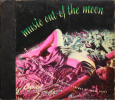
Les Baxter, Dr. Samuel J. Hoffman - Music Out Of The Moon (Capitol CC-47, 1947)

1699133550583.png

Shellac Rip of the Day.

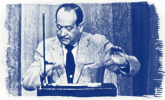
Twenty years before Brian Wilson used one for "Good Vibrations", Dr. Samuel Hoffman (1903-1967) brought the theremin to Capitol Records. His brief Wiki entry is full of quirky biographical details:

At age 14, began playing the violin professionally in New York City. Under the stage name Hal Hope, he led nightclub and society bands. By 1936, he had taken up the theremin and begun featuring it in publicity for his engagements.

In 1941, Hoffman moved to Los Angeles, where he established a medical practice and had little time for musical activity. But as the only theremin player in Local 47 of the Musicians Union, he got the call in 1945 when composer Miklos Rozsa decided he wanted to use a theremin in the score to Spellbound. Hoffman began performing under his real name; he was customarily referred to as "Doctor" because he was also a podiatrist. In the wake of the film's success, he was asked to play on many more soundtracks; for instance, The Day the Earth Stood Still (1951). He was in demand for horror movie and sci fi soundtracks through the end of the 1950s.


1699133953555.png

This album was the first example of Space Age Pop. It was created by two pioneers of the genre. Les Baxter arranged six Harry Revel compositions for unusual groupings of instruments over which a choir of ethereal female voices floated wordlessly. With titles like "Lunar Rhapsody", "Moon Moods" and "Celestial Nocturne", it's hard to miss the outer space vibe. It's all very atmospheric, with a major contribution from the original cover art featuring Virginia Clark of Earl Carroll's Theatre in Hollywood. This isn't my scan but I was fortunate enough to find a pristine copy of the original 78 rpm album release.

1699134871825.png
Les Baxter

1699135070667.png
Harry Revel
 
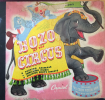
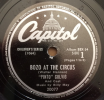
Pinto Colvig - Bozo At The Circus (Capitol BBX-34, 1946)

1699212649468.png

What do Frank Sinatra, Lorne Greene and Bozo The Clown have in common? All became cultural icons through the efforts of Alan W. Livingston (1917-2009).

1699213539692.png

Alan was the guy who signed Sinatra to Capitol after years of desultory recordings at Columbia under Mitch Miller. He also paired him with Nelson Riddle over Frankie's initial objections.

After leaving Capitol (later to return), Alan went over to NBC. As Vice President for programming, he developed "Bonanza!" and commissioned his brother, Jay Livingston, to write the theme.

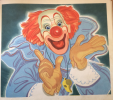
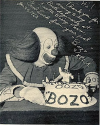
But his greatest achievement by far was to create the character of Bozo The Clown. We've seen how Capitol developed children's records from simple retelling of old fairy tales to the high tech drama of Rusty In Orchestraville. Rusty, however, was just a generic kid. Alan decided that the label needed a unique new character to become the face of the label's juvenile marketing. So he synthesized several clowns from the past and came up with Bozo. Casting became crucial so he hired Vance DeBar "Pinto" Colvig (1892-1967), a colorful former vaudevillian. Pinto migrated to film work and appeared as the original voices of Goofy and Pluto, and occasionally, Popeye's nemesis, Bluto.

1699214354635.png

Top arranger Billy May whom we will see again soon provided the unique music, a lively circus-style brass band.

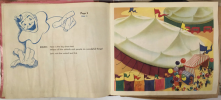
To launch Bozo, Capitol invented a whole new album format, the talking reader (given its own price code "BBX"). Bound into the album is a full color illustrated book.

1699214584137.png

The records are synchronized to the numbered pages of the book, and Bozo himself cues the young reader to turn the page by blowing a whistle.

1699215369024.png

When it's time to change the record, one of the characters says so.

1699214679273.png

In the short time span of two 78's Bozo reads the text of the book, taking the child to the circus, introducing several animal and human performers, and emceeing a complete performance with musical accompaniment. Bozo doesn't just break the fourth wall, he and his supporting cast (a single actress) ignore it completely. I went to the effort of locating the original album with its fragile shellac discs to recreate the actual experience of the lucky recipient of this beautiful package. (Happily for mom and dad, it was later re-released on vinyl.) Making a child pay attention to page turns and record changes makes Bozo At The Circus a totally immersive experience. The script moves fast and the dialogue is snappy, not to mention educational. Did YOU know a hyena's rear legs are shorter than the ones in front? Bozo's friend told me so himself.

Bozo The (Capitol) Clown became an instant success, resulting in many more records and a strong merchandise marketing tie in.

1699215825714.png

The character was later licensed to local television stations as a cartoon show host. In the Los Angeles area, that role was filled by Pinto's son, Vance Colvig, Jr.

1699216372750.png

Once again, with Bozo At The Circus Capitol Records dramatically expanded the boundaries of recorded music to create a revolutionary new kind of multi-media experience for its juvenile audience. This early effort at brand development would pay off handsomely for the label as the Baby Boomers who enjoyed Bozo grew up to become adult records buyers.
 
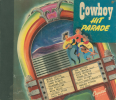
Various Artists - Cowboy Hit Parade (Capitol AD-55, 1947)

1699314850814.png

By the late 1940's, Capitol had assembled the outstanding roster of Western artists featured here. However, they are all covering the hits of other (non-Capitol) singers such as Red Foley, Spade Cooley and Bob Wills. It's an interesting concept, consistent with the label's past custom of avoiding songs that were already hits as singles when they put together albums.
 
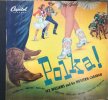
Tex Williams - Polka! (Capitol AD-56, 1947)

front.jpg

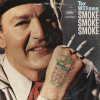
Capitol's emphasis on Western music continues with today's album. Sollie Paul Williams (1917-1985) was born in tiny Ramsey, Illinois (pop. 770). Why "Tex"? He got that nickname upon joining a vocal trio named "Okie, Arkie ands Tex" with the western swing band of Spade Cooley. Tex quickly became the band's star vocalist with songs like "Shame on You". He and the mercurial Cooley parted ways when Tex was offered a contract to record for Capitol. Williams took several unhappy musicians with him to form a new band "The Western Caravan". Tex's smooth style emulated that of his former boss with harp and pizzicato strings as opposed to the raw electric guitar and fiddles of Bob Wills. He was an instant success, notching the label's first million seller. "Smoke! Smoke! Smoke! (That Cigarette)", a humorous talking blues co-written with Merle Travis.

This album fully lives up to its title, with all 8 songs having "Polka" in the title. Just as it had with square dancing Capitol positioned itself to ride a musical wave, in this case the polka craze that swept the United States after World War II.

1699398077046.png
 
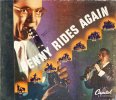
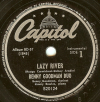
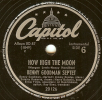
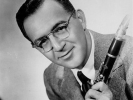
Benny Goodman - Benny Rides Again (Capitol BD-57, 1947)

front.jpg

This album represents a major milestone in the development of Capitol Records into a major label. Recently we've seen their emphasis on niche markets such as Western music and children's records. On the popular music side, until now they had concentrated on nurturing their own new discoveries like Margaret Whiting, Jo Stafford and Andy Russell. Although Stan Kenton and Nat King Cole had already recorded elsewhere, they did not enjoy any measure of success with other labels.

With this album, for the first time Capitol grabbed a leading mainstream pop artist away from a big established label. Benny Goodman, who had recorded for RCA Victor and then Columbia over two decades, started a parade of similar signings that would eventually include top names like Duke Ellington, Woody Herman, Harry James, Gene Krupa and Jack Teagarden.

For the first album on his new label, Benny assembled four special sessions throughout April 1947 to showcase his clarinet in a variety of configurations: duo, trio, quartet, quintet, sextet, septet and full orchestra. The label was careful to emphasize the identities of the sidemen in each case, not a common occurrence at the time:

1699482991144.png
1699483114754.png

Benny is in fine form throughout these sides, setting a fine swinging groove whether in a crowd or nearly alone. His tenure on Capitol lasted several years and produced some of the best music of his career.

1699483546562.png
 
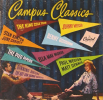
Various Artists - Campus Classics (Capitol BD-58, 1947)

1699567185823.png

In August 1947, Capitol dug into the vault to come up with a "back to school" album. The problem is that only two of the songs here have any connection to education. Johnny Mercer's jivey version of the antediluvian "School Days" managed to work in a reference to the atomic bomb along with "readin' and writin' and 'rithmetic." Meanwhile, The Pied Pipers reached way back to the 1909 Yale glee club song book for "The Whiffenpoof Song". I would tend to doubt that college campuses filled with returning veterans under the G.I. Bill found this pedestrian album to be a killer diller.

:2.0: on the Sam-O-Meter. Baa! Baa! Baa!
 
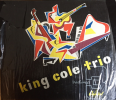
Nat King Cole - King Cole Trio Volume 3 (Capitol CC-59, 1948)

1699659655760.png

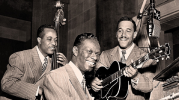
Capitol kept Nat King Cole incredibly busy in the studio during the 1940's. Between commercial recordings and transcriptions for radio broadcast, he waxed enough material to fill 18 CD's in Mosaic's definitive box. This album contains six songs from sessions in early August 1947. Far from being repetitive, each tune shows the unceasing individual creativity of Nat, Oscar Moore and Johnny Miller and their intuitive ability to work together seamlessly in a trio format that they pretty much invented.

1699660157314.png
 
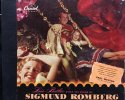
Lois Butler - Lois Butler Sings The Songs Of Sigmund Romberg (Capitol CD-61, 1948)

front.jpg

Baritone Lee Sweetland (1916-2009) got the short end of the stick with this album. He appears on five of the eight songs, two of them solo vocals, yet he doesn't receive artist credit. Lee was an important singer at the time, with regular appearances both on radio and Broadway. He was also the singing voice of Woody Woodpecker in theatrical cartoons.

1699758629553.png

We met Lois Butler earlier on her similar album of Victor Herbert songs. While her voice is well suited to operetta, pairing her with the hearty voice of Sweetland, 15 years her senior, tends to exaggerate her youthful imperfections.

Capitol would soon revisit operetta with a more felicitous duo, one of whom we already know.
 
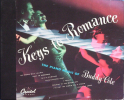
Buddy Cole - Keys To Romance (Capitol BD-63, 1948)

1699826831805.png

For Buddy's third album in three years, he went back to the piano for a nice selection of standards by the likes of Irving Berlin, Rodgers and Hart, and Harold Arlen. Accompanied by an uncredited rhythm section, Buddy puts quite a bit of energy into these tunes, making this collection a very pleasant surprise. RIYL Teddy Wilson.
 
Mel Blanc - Capitol Presents Bugs Bunny (Capitol CC-64, 1948)

1700095640969.png

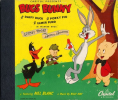
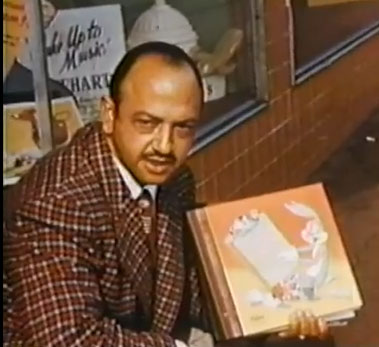
By 1948, Mel Blanc (1908-1989) was well established as an actor in both cartoons and radio. He had worked for the Warner Brothers animation unit since 1936 and was able to demand screen credit, a unique measure of his popularity.

1700095876443.png

So it was a real coup when Capitol signed him for the label. This album features each of his three biggest characters (Bugs, Daffy and Porky) in his own adventure. To compensate for the lack of visuals, the plot ran more like a radio show with Mel adding an amazing number of other voices as well as sound effects. Arthur Q. Bryan also appeared in his signature role of Elmer Fudd. Billy May's orchestrations are subtle but effective. Mel stayed with Capitol for several years and even earned the coveted "Bozo Seal of Approval."

blancrecord.jpg


Various Artists - Collectors' Items (Capitol AD-62, 1948)

1700346153323.png

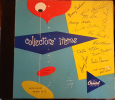
This one is a real treasure: 8 previously unissued sides from Capitol's already extensive library of small group jazz recordings. On the vocal side, we get Peggy Lee's very first solo recording with Dave Barbour plus a strong outing from Anita O'Day fronting Stan Kenton's band. Among the half dozen instrumentals, there are sessions led by Sonny Greer and Benny Carter plus the piece de resistance: a side from an all star pickup group Capitol dubbed "The Hollywood Hucksters": Charlie Shavers, Benny Goodman, Benny Carter, Dave Cavanaugh, Joe Koch, Red Norvo, Jimmy Rowles, Irving Ashby, Stan Kenton, Red Callender and Lee Young. Even the cover art is special.

:5.0: on the Sam-O-Meter. Still a fine listen today.
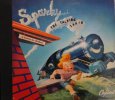
 
Henry Blair - Sparky and the Talking Train (Capitol BC-66, 1948)

front.jpg

We last saw Henry Blair as Rusty, the young man who was confronted by talking musical instruments in a dream. He returns here as Sparky, another kid whose illusions of talking trains arrive when he is wide awake. Needless to say, these unfortunate observations disturb his parents and amuse the other children. Sparky eventually prevails however, with the moral of the story being that you too may hear trains talk if you listen hard enough.

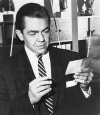
Billy Bletcher returns as Sparky's skeptical dad. Marvin Miller, a familiar figure on radio and later TV serves as the announcer and Billy May provides the music once again. This album must have sold pretty well, since Sparky would have other adventures on Capitol Records.

1700447498721.png

Marvin Miller
 
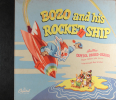
Pinto Colvig - Bozo and his Rocket Ship (Capitol BBX-65, 1947)

1700519644706.png

Bozo is back with another "Capitol Record-Reader" to take his young audience into the space age. This time. he uses a rocket to travel around the world, learning about foreign cultures along the way. Billy May provides suitable international musical accompaniment.
 
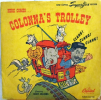
Jerry Colonna - Here Comes Colonna's Trolley (Capitol DAS-60, 1947)

1700521506900.png

This album introduced two new elements to Capitol albums: Superflex records and the single disc format (hence a new price code "DAS"). As I mentioned in the post for the first Bozo album, flexible discs must have been a great boon to parents tired of Junior fracturing those fragile shellacs. Capitol came up with a PVC compound that wasn't as flexible as Columbia's new formula but, as the label put it, they were "unbreakable in normal use".

1700521793225.png

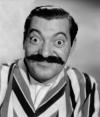
Jerry Colonna (1904-1986) was a pretty big star at the time. He started as a trombonist but, like Jack Benny's violin, his instrument was gradually superseded by his comedy. Colonna's routine consisted of "operatic" singing with humorously elongated syllables along with hipster jive patter like "Greetings, Gate!" and "Who's Yehudi?" He appeared regularly on radio and in film. Today he is best known as Bob Hope's sidekick, lasting long enough to tour Viet Nam with Hope. His last appearance before suffering a stroke was on The Monkees' TV show.

1700522270733.png

As with Bozo At The Circus, the plot here revolves around encounters with a series of amusing animals who catch a ride on Colonna's trolley running to the zoo. As usual, the two Billys (May and Bletcher) provided essential support. For the first time, Sara Berner, a highly versatile radio actress, receives credit for several voices. The results are highly entertaining, so much so that one could only wish that Capitol had been able to make a two- or three-disc package.
 
Jerry Colonna - Here Comes Colonna's Trolley (Capitol DAS-60, 1947)

View attachment 10815

This album introduced two new elements to Capitol albums: Superflex records and the single disc format (hence a new price code "DAS"). As I mentioned in the post for the first Bozo album, flexible discs must have been a great boon to parents tired of Junior fracturing those fragile shellacs. Capitol came up with a PVC compound that wasn't as flexible as Columbia's new formula but, as the label put it, they were "unbreakable in normal use".

View attachment 10816

Jerry Colonna (1904-1986) was a pretty big star at the time. He started as a trombonist but, like Jack Benny's violin, his instrument was gradually superseded by his comedy. Colonna's routine consisted of "operatic" singing with humorously elongated syllables along with hipster jive patter like "Greetings, Gate!" and "Who's Yehudi?" He appeared regularly on radio and in film. Today he is best known as Bob Hope's sidekick, lasting long enough to tour Viet Nam with Hope. His last appearance before suffering a stroke was on The Monkees' TV show.

View attachment 10818

As with Bozo At The Circus, the plot here revolves around encounters with a series of amusing animals who catch a ride on Colonna's trolley running to the zoo. As usual, the two Billys (May and Bletcher) provided essential support. For the first time, Sara Berner, a highly versatile radio actress, receives credit for several voices. The results are highly entertaining, so much so that one could only wish that Capitol had been able to make a two- or three-disc package.
Who said the weed was too weak back then.
 
Back
Top