
Install the app
How to install the app on iOS
Follow along with the video below to see how to install our site as a web app on your home screen.
Note: This feature may not be available in some browsers.
You are using an out of date browser. It may not display this or other websites correctly.
You should upgrade or use an alternative browser.
You should upgrade or use an alternative browser.
What are you listening to? December 2022
- Thread starter axolotl
- Start date
- Status
- Not open for further replies.


Unsomnambulist
Staff member
Beck - Sea Change (2002)



axolotl
Nunquam non paratus
Michael Garrick Trio ~ Moonscape (1964)
Post-Bop, Hard Bop, Avant-Garde Jazz, Modal Jazz
I listened to this one again, since it arrived in the mail.
I had heard that it was a lost classic; however, more needs to be said about this artist Michael Garrick and this album, which is essentially an EP.
From allmusic.com: https://www.allmusic.com/album/moonscape-mw0000780296
Moonscape is the first trio offering by famed British pianist, organist, and composer Michael Garrick. Garrick, who has since worked with everyone from Joe Harriott to Neil Ardley to Ian Carr to Don Rendell, is also a man of letters and has conducted and participated in more than 2,300 concerts of jazz and poetry. This set is the true Holy Grail of modern British jazz, and thanks to famed collector and blogger Jonny Trunk of Trunk Records, is available (on both CD and vinyl) widely for the first time since it was released in an edition of 99 copies on 10" 33-rpm vinyl in 1964. This is not some flawed early attempt at being the leader of a trio -- Garrick was already one. Instead, it is a remarkable, diverse collection of six tunes (all original compositions) that pointed the way for the era of British jazzmen to come.
One can hear in this set the beautifully experimental (yet playful and accessible) rhythmic pointillism that Paul Bley was messing about with around the same time in "A Face in the Crowd" (with some arco playing by bassist David Green), initially composed to accompany a poem by Jeremy Robson. The opening title track is a whispering inquiry into minor keys and the use of space. Colin Barnes' drumming is used not so much to keep a beat but to create spaces between phrases -- some of which are dissonant but not angular. But that's just the intro. What emerges is a scalar set of contingencies around three or four different shapes by Garrick. This is early vanguard Brit jazz but it swings, too. And speaking of swing, these cats got to show what they were about in the blistering bop of "Music for Shattering Supermarkets." Easily the most lyrical track here is the ballad "Sketches of Israel." It commences with a subtle shimmering theme and chord pattern that increases and decreases dynamically, with some startling punched-up crescendo work and a fine bass solo by Green. The hard bop of "Man, Have You Heard" is rooted deeply in early English folk music and the blues with a set of harmonics worthy of Brubeck's best work. And this one, too, swings like mad. Finally, "Take-Off" returns to the notion of explorations of texture, tension, and space. Just under three minutes in length, it walks the line of free jazz without ever stepping quite onto it. Rhythmically organized around three seemingly simple chord patterns, the rhythm section offers real force, which Garrick engages by breaking his figures down and alternating them while building them again.
This is an extraordinary and visionary piece of work that deserves its status, with only one complaint: the playing format of the 10" LP only afforded less than half an hour's playing time. This little slab comes in at 22 and a half minutes, which leaves the listener who encounters this for the first time breathless and wanting more. It also stands up to repeated spins as an essential piece of work. Great thanks to Garrick and Trunk.
Last edited:

Ojai Sam
Staff member
Musica Antiqua Koln (Reinhard Goebel, Dir.) - Bach: A Musical Offering (comp. 1747, rec. 1979)

flisten.
This work has an unusual backstory. The Listener's Club explains:
It began on May 7, 1747 when Bach met Frederick the Great in Potsdam. At the time, J.S Bach’s son, Carl Philipp Emanuel, was employed as one of the Prussian King’s most prized musicians. Frederick gave the elder Bach a tour of his palace, showcasing his vast collection of instruments, among which was a novel new keyboard instrument, the fortepiano, built and developed by Gottfried Silbermann.
J.S. Bach’s music, with its density and complex polyphony, had already gone out of fashion, displaced by the leaner, elegant galant style championed by C.P.E Bach. Still, “the old Bach of Leipzig” was hailed as one of the greatest improvisers. Frederick gave Bach an expansive theme and challenged the master to improvise a three-voice fugue. This melancholy subject, with its distinctive descending chromatic line, is not unlike the subject of Handel’s Fugue in A Minor, HWV 609, composed in 1716. Bach was so taken with the mysterious “Royal Theme” that, upon returning home, he used it as the basis for a six-voice fugue, ten miraculous canons, and a trio sonata for flute, an instrument which Frederick the Great played proficiently. The 16 movement collection, now know as The Musical Offering, was dedicated to the King. “Frederick was sent a splendid luxury print and Bach distributed his masterpiece among his friends, despite the high costs of printing.” (Netherlands Bach Society)
The Musical Offering is filled with musical riddles and theological symbolism. The ten canons are an allusion to the Ten Commandments. Canon No. 9 bears the inscription, Quaerendo invenietis (“Seek and ye shall find” from the biblical Sermon on the Mount. The two fugues are given the title, Ricercar, a type of improvisatory composition originating in the late Renaissance which means, literally, to “seek out” the possibilities of a piece in terms of key or mode. The first letters of each word in Bach’s title for the collection, Regis Iussu Cantio Et Reliqua Canonica Arte Resoluta (the theme given by the king, with additions, resolved in canonic style) spell out Ricercar. Perhaps Frederick the Great, seduced by the styles of the times, failed to fully appreciate Bach’s collection. In reality, the aging composer’s timeless “offering” was meant for God and posterity.
Irrespective of the riddles and symbolism, these 16 brief pieces, so full of ideas so fresh that they approach improvisation, make for delightful listening. Here they are performed with heartfelt warmth and sincerity by Reinhard Goebel and his Musical Antiqua Koln.

flisten.
This work has an unusual backstory. The Listener's Club explains:
It began on May 7, 1747 when Bach met Frederick the Great in Potsdam. At the time, J.S Bach’s son, Carl Philipp Emanuel, was employed as one of the Prussian King’s most prized musicians. Frederick gave the elder Bach a tour of his palace, showcasing his vast collection of instruments, among which was a novel new keyboard instrument, the fortepiano, built and developed by Gottfried Silbermann.
J.S. Bach’s music, with its density and complex polyphony, had already gone out of fashion, displaced by the leaner, elegant galant style championed by C.P.E Bach. Still, “the old Bach of Leipzig” was hailed as one of the greatest improvisers. Frederick gave Bach an expansive theme and challenged the master to improvise a three-voice fugue. This melancholy subject, with its distinctive descending chromatic line, is not unlike the subject of Handel’s Fugue in A Minor, HWV 609, composed in 1716. Bach was so taken with the mysterious “Royal Theme” that, upon returning home, he used it as the basis for a six-voice fugue, ten miraculous canons, and a trio sonata for flute, an instrument which Frederick the Great played proficiently. The 16 movement collection, now know as The Musical Offering, was dedicated to the King. “Frederick was sent a splendid luxury print and Bach distributed his masterpiece among his friends, despite the high costs of printing.” (Netherlands Bach Society)
The Musical Offering is filled with musical riddles and theological symbolism. The ten canons are an allusion to the Ten Commandments. Canon No. 9 bears the inscription, Quaerendo invenietis (“Seek and ye shall find” from the biblical Sermon on the Mount. The two fugues are given the title, Ricercar, a type of improvisatory composition originating in the late Renaissance which means, literally, to “seek out” the possibilities of a piece in terms of key or mode. The first letters of each word in Bach’s title for the collection, Regis Iussu Cantio Et Reliqua Canonica Arte Resoluta (the theme given by the king, with additions, resolved in canonic style) spell out Ricercar. Perhaps Frederick the Great, seduced by the styles of the times, failed to fully appreciate Bach’s collection. In reality, the aging composer’s timeless “offering” was meant for God and posterity.
Irrespective of the riddles and symbolism, these 16 brief pieces, so full of ideas so fresh that they approach improvisation, make for delightful listening. Here they are performed with heartfelt warmth and sincerity by Reinhard Goebel and his Musical Antiqua Koln.
Unsomnambulist
Staff member
Spoon - Lucifer On The Sofa (2022)

Unsomnambulist
Staff member
Jesu - pity/piety (2022)

35 minute "EP."
35 minute "EP."

Zeeba Neighba
Staff member
Frank Ocean - Blonde (2016)

Not sure I've noticed before today the alternate spelling of title vs album cover

 www.theatlantic.com
Not sure I've noticed before today the alternate spelling of title vs album cover
Whether You Spell It 'Blonde' or 'Blond,' Frank Ocean's New Album Is Defying the Music Industry
Some theories on the meaning of that silent "e"—and the artist's maneuvering against Def Jam.


Ojai Sam
Staff member
Stephane Ginsburgh - Burgess: The Bad-Tempered Electronic Keyboard (2018)

I couldn't resist this one after my last spin. 
Actually, there's not an electronic keyboard in sight here. We get 24 delightful pairs of Preludes and Fugues plus a "Finale" played on piano that reflect the playfulness and creativity of Bach's originals. The Naxos Records website tells us:
During a prolific period in his artistic life, both musically and as an author—he often referred to himself principally as a composer who had drifted into authorship – Anthony Burgess composed a set of 24 Preludes and Fugues called The Bad-Tempered Electronic Keyboard, written to celebrate the 300th anniversary of the birth of Johann Sebastian Bach. This ingenious and inventive piece, with its brief romantic and music hall elements, oscillates between the classicism of Bach and the modernity of Shostakovich, whose own set of Preludes and Fugues had been written in 1950–51.
My personal favorite is Prelude 23, subtitled "Fantasia on B.A.C.H." which is based around the notes B, A, C and H (=B Natural in German).
I think this one might be right up @axolotl 's alley.
Actually, there's not an electronic keyboard in sight here. We get 24 delightful pairs of Preludes and Fugues plus a "Finale" played on piano that reflect the playfulness and creativity of Bach's originals. The Naxos Records website tells us:
During a prolific period in his artistic life, both musically and as an author—he often referred to himself principally as a composer who had drifted into authorship – Anthony Burgess composed a set of 24 Preludes and Fugues called The Bad-Tempered Electronic Keyboard, written to celebrate the 300th anniversary of the birth of Johann Sebastian Bach. This ingenious and inventive piece, with its brief romantic and music hall elements, oscillates between the classicism of Bach and the modernity of Shostakovich, whose own set of Preludes and Fugues had been written in 1950–51.
My personal favorite is Prelude 23, subtitled "Fantasia on B.A.C.H." which is based around the notes B, A, C and H (=B Natural in German).
I think this one might be right up @axolotl 's alley.
Zeeba Neighba
Staff member
Alan Hovhannes - Symphony No. 2 “Mysterious Mountain”
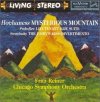
Also listened to some Bartok and Michael Tippett this morning
But I love this Hovhaness piece. Can’t say I know much more by this prolific Armenian-American composer but Wiki informs me he has wrote over 67 symphonies (yowzah!)
Also listened to some Bartok and Michael Tippett this morning
But I love this Hovhaness piece. Can’t say I know much more by this prolific Armenian-American composer but Wiki informs me he has wrote over 67 symphonies (yowzah!)
axolotl
Nunquam non paratus
Alan Hovhannes - Symphony No. 2 “Mysterious Mountain”
View attachment 8977
Also listened to some Bartok and Michael Tippett this morning
But I love this Hovhaness piece. Can’t say I know much more by this prolific Armenian-American composer but Wiki informs me he has wrote over 67 symphonies (yowzah!)
I am an Alan Hovhaness junkie. I would inject his music directly into my veins if I could.
I started out having heard And God Created Great Whales and Mysterious Mountain while in college. I would go to my favorite book-and-music store in D.C., and, while buying rock (natch), I would buy Hovhaness compositions on The Poseidon Society record label.
By the way, all the front covers of these albums are the same: https://www.discogs.com/label/216674-Poseidon-Society
Now, I have a couple dozen CDs by this master.
To repeat, I am a Hovhaness junkie. Yes, I am still a Keith Jarrett junkie, too.
Unsomnambulist
Staff member
Craig Finn - A Legacy Of Rentals (2022)

Ojai Sam
Staff member
Dmitri Shostakovich - Shostakovich: 24 Preludes and Fugues (comp. 1950-51), rec. 1951-52)

The next entry on what has become "Prelude and Fugue" weekend comes from both the pen and the piano of the Russian master, Dmitri Shostakovich. I found it on Melodiya's indispensable collection "Shostakovich Plays Shostakovich". Wiki supplies a great backgrounder:
Shostakovich recorded only 13 of these pieces for the Russian label. Overall, as one might expect the mood is moodier and less mathematical than Bach. A brilliant homage that stands as a masterpiece on its own merits.
The next entry on what has become "Prelude and Fugue" weekend comes from both the pen and the piano of the Russian master, Dmitri Shostakovich. I found it on Melodiya's indispensable collection "Shostakovich Plays Shostakovich". Wiki supplies a great backgrounder:
The 24 Preludes and Fugues, Op. 87 by Dmitri Shostakovich are a set of 24 musical pieces for solo piano, one in each of the major and minor keys of the chromatic scale. The cycle was composed in 1950 and 1951 while Shostakovich was in Moscow, and premiered by pianist Tatiana Nikolayeva in Leningrad in December 1952; it was published the same year. A complete performance takes approximately 2 hours and 32 minutes. It is one of several examples of music written in all major and/or minor keys.
J.S. Bach's The Well-Tempered Clavier, an earlier set of 48 preludes and fugues, are widely held to be the direct inspiration for Shostakovich's cycle, largely based on the work's composition history.
References to and quotations from Bach's cycle appear throughout the work.
***
On a larger scale, the whole structure, ordered and sequenced as it is with no apparent extra-musical narrative, is largely a response to Bach. In Bach's cycle, however, the pieces are arranged in parallel major/minor pairs ascending the chromatic scale (C major, C minor, C♯ major, C♯ minor etc.), which differs from Shostakovich's Op. 87. There are also several references and musical ideas taken from Shostakovich's own work or anticipating future work.
After the Second World War, Dmitri Shostakovich was Russia's most prominent composer. Although out of favour with the Soviet Communist Party, he was still sent abroad as a cultural ambassador. One such trip was to Leipzig in 1950 for a music festival marking the bicentennial of J. S. Bach's death. As part of the festival, Shostakovich was asked to sit on the judging panel for the first International Johann Sebastian Bach Competition. One of the entrants in the competition was the 26-year-old Tatiana Nikolayeva from Moscow. Though not required by competition regulations, she had come prepared to play any of the 48 preludes and fugues of The Well-Tempered Clavier on request. She won the gold medal.
Inspired by the competition and impressed by Nikolayeva's playing, Shostakovich returned to Moscow and started composing his own cycle of 24 preludes and fugues. Shostakovich worked fairly quickly, taking only three days on average to write each piece. As each was completed, he would ask Nikolayeva to come and visit him in his Moscow apartment where he would play her the latest piece. The complete work was written between 10 October 1950 and 25 February 1951. Once finished, Shostakovich dedicated the work to Nikolayeva, who undertook the public premiere in Leningrad on 23 December 1952. Shostakovich wrote out all the pieces without many corrections except the B♭ minor prelude, with which he was dissatisfied and replaced what he had begun initially.
J.S. Bach's The Well-Tempered Clavier, an earlier set of 48 preludes and fugues, are widely held to be the direct inspiration for Shostakovich's cycle, largely based on the work's composition history.
References to and quotations from Bach's cycle appear throughout the work.
***
On a larger scale, the whole structure, ordered and sequenced as it is with no apparent extra-musical narrative, is largely a response to Bach. In Bach's cycle, however, the pieces are arranged in parallel major/minor pairs ascending the chromatic scale (C major, C minor, C♯ major, C♯ minor etc.), which differs from Shostakovich's Op. 87. There are also several references and musical ideas taken from Shostakovich's own work or anticipating future work.
After the Second World War, Dmitri Shostakovich was Russia's most prominent composer. Although out of favour with the Soviet Communist Party, he was still sent abroad as a cultural ambassador. One such trip was to Leipzig in 1950 for a music festival marking the bicentennial of J. S. Bach's death. As part of the festival, Shostakovich was asked to sit on the judging panel for the first International Johann Sebastian Bach Competition. One of the entrants in the competition was the 26-year-old Tatiana Nikolayeva from Moscow. Though not required by competition regulations, she had come prepared to play any of the 48 preludes and fugues of The Well-Tempered Clavier on request. She won the gold medal.
Inspired by the competition and impressed by Nikolayeva's playing, Shostakovich returned to Moscow and started composing his own cycle of 24 preludes and fugues. Shostakovich worked fairly quickly, taking only three days on average to write each piece. As each was completed, he would ask Nikolayeva to come and visit him in his Moscow apartment where he would play her the latest piece. The complete work was written between 10 October 1950 and 25 February 1951. Once finished, Shostakovich dedicated the work to Nikolayeva, who undertook the public premiere in Leningrad on 23 December 1952. Shostakovich wrote out all the pieces without many corrections except the B♭ minor prelude, with which he was dissatisfied and replaced what he had begun initially.
- Status
- Not open for further replies.
Similar threads

- Replies
- 111
- Views
- 8K


- Replies
- 225
- Views
- 18K