
Install the app
How to install the app on iOS
Follow along with the video below to see how to install our site as a web app on your home screen.
Note: This feature may not be available in some browsers.
You are using an out of date browser. It may not display this or other websites correctly.
You should upgrade or use an alternative browser.
You should upgrade or use an alternative browser.
What Are You Listening to? July 2022
- Thread starter axolotl
- Start date
- Status
- Not open for further replies.

Ojai Sam
Staff member
Leonid Kogan, Orchestre De La Societe Des-Concerts Du Conservatoire (Constantin Silvestri, cond.) - Mozart: Violin Concerto No. 3, Mendelssohn: Violin Concerto (1960)

The legendary Russian violinist sure seems serious here. And it looks like he is attacking his fiddle with a sword.
Romanian conductor Constantin Silvestri appears much more jovial, if not inebriated.

The legendary Russian violinist sure seems serious here. And it looks like he is attacking his fiddle with a sword.
Romanian conductor Constantin Silvestri appears much more jovial, if not inebriated.
Ojai Sam
Staff member
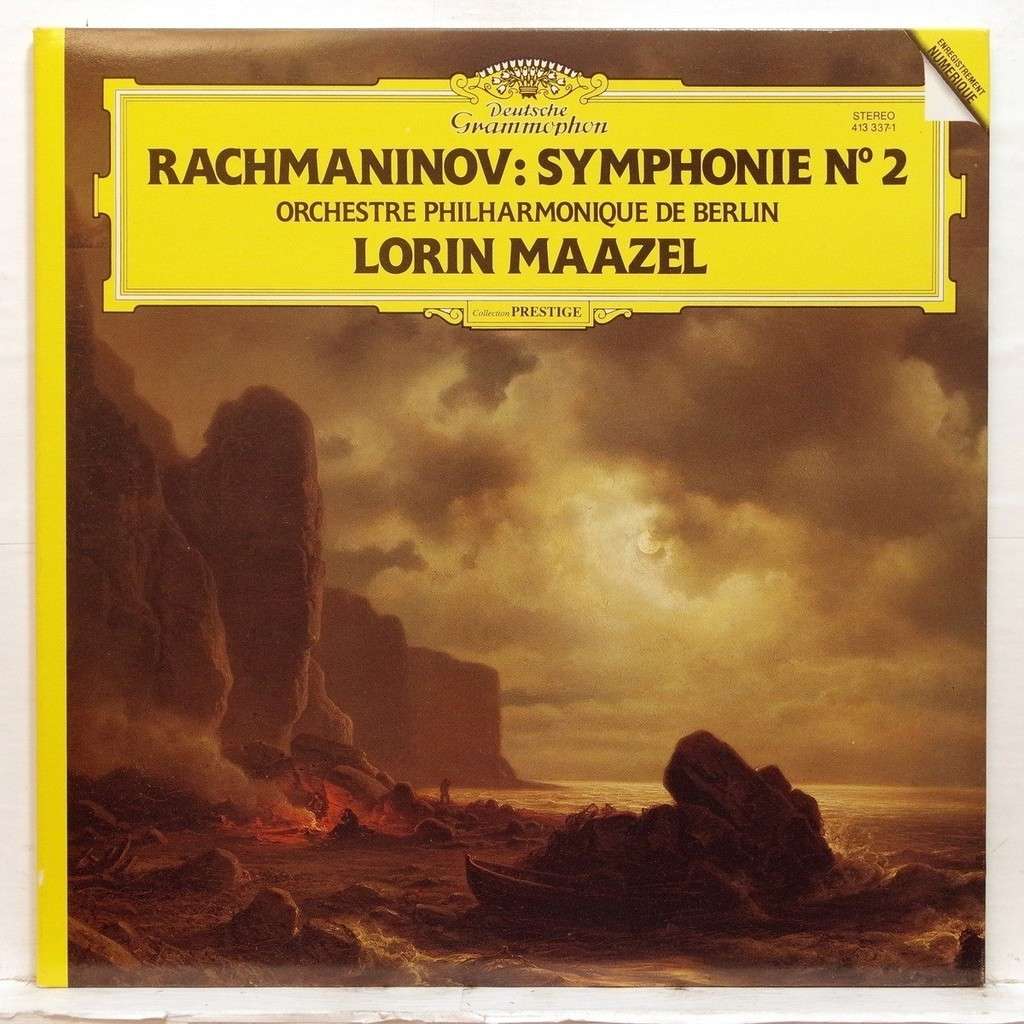
Orchestre de Paris (Daniel Barenboim, cond.) - Debussy: La Mer, Nocturnes (1978)

I'd like to have a dollar for every album cover with an impressionist oceanscape for La Mer. According to Classical Notes:
Debussy chafed at the comparison with the Impressionist painters, since his work was far less representational (although perhaps he would have felt differently had he known the very late works of Cezanne and Monet, in which their subjects are far less apparent). Indeed, by its very nature music is abstract, free from the realistic imagery to which the visual arts are inexorably tied. Rather, he aligned himself with the Symbolist poets, who reveled more in the sound of words than in their actual meaning, and sought to suggest reality through a dream-world of metaphor and symbol.
There are many fine readings of Debussy's colorful unsymphony, from Boulez to Ansermet and all the way back to Stokowski and Toscanini. Daniel Barenboim's stirring performance with the Parisians can stand its ground with these legends. After starting as a child prodigy on the piano, Barenboim later added a baton to his tool box. In 1975 at age 33 he wound up as the fourth music director of the Orchestre de Paris, following in the massive footsteps of Charles Munch, Herbert von Karajan and Georg Solti. During his 14 year tenure there, to no one's surprise he recorded a lot of French music for Deutsche Grammophon with uniformly excellent results.
Buying tip:
Look for Barenboim's entry in DG's "Conductors & Orchestras" series. With 8 loaded CD's for less than $30, it's an irresistible bargain.

While you're at it, grab the one for Jaarvi and the Gothenburg. It includes the comp I touted previously and lots more treasures at a similarly ridiculous price.
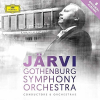
I'd like to have a dollar for every album cover with an impressionist oceanscape for La Mer.
According to Classical Notes:Debussy chafed at the comparison with the Impressionist painters, since his work was far less representational (although perhaps he would have felt differently had he known the very late works of Cezanne and Monet, in which their subjects are far less apparent). Indeed, by its very nature music is abstract, free from the realistic imagery to which the visual arts are inexorably tied. Rather, he aligned himself with the Symbolist poets, who reveled more in the sound of words than in their actual meaning, and sought to suggest reality through a dream-world of metaphor and symbol.
There are many fine readings of Debussy's colorful unsymphony, from Boulez to Ansermet and all the way back to Stokowski and Toscanini. Daniel Barenboim's stirring performance with the Parisians can stand its ground with these legends. After starting as a child prodigy on the piano, Barenboim later added a baton to his tool box. In 1975 at age 33 he wound up as the fourth music director of the Orchestre de Paris, following in the massive footsteps of Charles Munch, Herbert von Karajan and Georg Solti. During his 14 year tenure there, to no one's surprise he recorded a lot of French music for Deutsche Grammophon with uniformly excellent results.
Buying tip:
Look for Barenboim's entry in DG's "Conductors & Orchestras" series. With 8 loaded CD's for less than $30, it's an irresistible bargain.
While you're at it, grab the one for Jaarvi and the Gothenburg. It includes the comp I touted previously and lots more treasures at a similarly ridiculous price.
Ojai Sam
Staff member
Vladimir Horowitz - The White House, Washington D.C. (rec. 1978, rel. 2015)
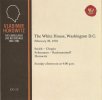
After releasing a 70 CD "original album" box and a 41 CD "Live At Carnegie Hall" box, what more could Sony do to satisfy the apparently insatiable demand for Horowitz? That's easy: dig into the vault of unreleased live recordings to come up with 50 CDs worth of...

One volume in this set offers a chance to visit The White House on a sunny winter Sunday early in the presidency of Jimmy Carter. The Iran hostage crisis was still more than a year away, and the president had spent the previous week immersed in the minutiae of governmental affairs such as appointing the chair of the Great Lakes Basin Commission. Fun stuff for a technocrat.
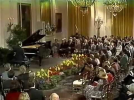
A nice account of the concert can be found here:

 www.mmfvt.org
It was a groundbreaking affair because it became the first episode of the PBS TV program "In Performance At The White House" which ran continuously until, um, 2016. You can watch the complete first show here, complete with Jim Lehrer intro:
The show as presented on CD runs 54 minutes, opening with "The Star Spangled Banner". Chopin's "Sonata No. 2" is a surprising choice to follow up, since it includes the morbid "Marche Funebre". But then things pick up with Schumann and Rachmaninoff, ending with a rousing version of Horowitz's own "Variations On A Theme From Bizet's Opera Carmen". The upscale crowd, quiet throughout, rewarded Vladimir with rousing applause to end the performance.
After releasing a 70 CD "original album" box and a 41 CD "Live At Carnegie Hall" box, what more could Sony do to satisfy the apparently insatiable demand for Horowitz? That's easy: dig into the vault of unreleased live recordings to come up with 50 CDs worth of...
One volume in this set offers a chance to visit The White House on a sunny winter Sunday early in the presidency of Jimmy Carter. The Iran hostage crisis was still more than a year away, and the president had spent the previous week immersed in the minutiae of governmental affairs such as appointing the chair of the Great Lakes Basin Commission. Fun stuff for a technocrat.
A nice account of the concert can be found here:
The Classical Pianist and the Rock & Roll President — Manchester Music Festival
"When Horowitz arrived at the White House on a Saturday afternoon in 1978, President Carter asked if he wanted to see the family’s residence, a rare privilege. No, his guest replied, “I’d like to see the piano!” So off they went to the East Room, where Horowitz’s own special Steinway, known as
www.mmfvt.org
It was a groundbreaking affair because it became the first episode of the PBS TV program "In Performance At The White House" which ran continuously until, um, 2016.
You can watch the complete first show here, complete with Jim Lehrer intro:The show as presented on CD runs 54 minutes, opening with "The Star Spangled Banner". Chopin's "Sonata No. 2" is a surprising choice to follow up, since it includes the morbid "Marche Funebre". But then things pick up with Schumann and Rachmaninoff, ending with a rousing version of Horowitz's own "Variations On A Theme From Bizet's Opera Carmen". The upscale crowd, quiet throughout, rewarded Vladimir with rousing applause to end the performance.
Ojai Sam
Staff member
Radio-Symphonie-Orchester Berlin (Gerd Albrecht, cond.) - Max Reger: Symphonic Prologue For A Tragedy (1981)

Dense, somber orchestral music. Had he not died of a heart attack in the middle of WWI at age 43, Max Reger (1873-1916) would doubtless have been a force to be reckoned with. If you like Mahler, give Max a spin.
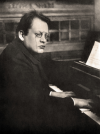
Dense, somber orchestral music. Had he not died of a heart attack in the middle of WWI at age 43, Max Reger (1873-1916) would doubtless have been a force to be reckoned with. If you like Mahler, give Max a spin.

Ojai Sam
Staff member
Van Cliburn, Chicago Symphony (Fritz Reiner, cond.) - Beethoven: Piano Concerto No. 5 "Emperor"; Rachmaninov: Piano Concerto No. 2
(rec. 1961, 1962, RCA comp. 1994)

Everything about this twofer album is BIG:
- the style of Van Cliburn
- the attack of Fritz Reiner
- the forces of the Chicago Symphony
- the acoustics of Chicago Orchestra Hall
- the two pieces themselves
and of course, the live and lively sound of RCA's

as remastered by the legendary John Pfeiffer, the guy who helped develop the process at that same venue.
Even better, this disc was a freebie, thrown in by a terrific seller on Discogs.
(rec. 1961, 1962, RCA comp. 1994)
Everything about this twofer album is BIG:
- the style of Van Cliburn
- the attack of Fritz Reiner
- the forces of the Chicago Symphony
- the acoustics of Chicago Orchestra Hall
- the two pieces themselves
and of course, the live and lively sound of RCA's
as remastered by the legendary John Pfeiffer, the guy who helped develop the process at that same venue.
Even better, this disc was a freebie, thrown in by a terrific seller on Discogs.


Nickyboy
Staff member
"Fantsama" is the only Cornelius album I own. I should check out his others, since I like the quirkiness of that one.Cornelius ~ Fantasma (1997)
Kinski ~ Airs Above Your Station (2003)


Unsomnambulist
Staff member
Lorelle Meets The Obsolete - De Facto (2019)

Unsomnambulist
Staff member
Night Beats - Outlaw R&B (2021)

Ojai Sam
Staff member
Julia Brown - Buxtehude: Organ Music Vol. 5 (comp. 1668-1707, rec. 2005)

Julia Brown, born in Rio de Janeiro, has become a renowned expert on classical organ. This album, part of a comprehensive collection of the works of Dietrich Buxtehude, stands out as a showcase for the Danish composer who was a major influence on Johann Sebastian Bach. It was recorded on the incredible "dual temperament" contemporary organ shown above located in, of all places, Omaha, Nebraska. I'm not an organ geek but these specs are pretty amazing:
The organ is comprised of 55-stops over three manuals and pedal, 29 of which are playable in two temperaments: 1/4-comma meantone and a new well-tempered tuning devised for this instrument by Kristian Wegscheider of Dresden, Germany. The idea of a dual-temperament organ for Saint Cecilia Cathedral developed in early conversations between organ builder Martin Pasi and cathedral organist and music director Kevin Vogt, and was inspired by the dual-temperament organs at Stanford University (C.B. Fisk, Op. 85) and the Wegscheider organs at the Allstedt Schloßkapelle (Op. 1) and Dresden-Wilschdorf (Op. 21). While the two temperaments of the Stanford Fisk are made possible by five extra pipes per octave, and the smaller Wegscheider organs boast six extra pipes per octave, 29 stops of Pasi Op. 14, contain eight extra notes per octave, tipping the scale of the concept from a single organ with extra pipes to the equivalent of two organs which share a third of their pipes. The abundance of extra pipes allows the circulating temperament to accommodate much of the Romantic and modern repertoires, while retaining enough key color to bring Baroque music alive and to lock into tune the mixtures and reeds in the best key.
Resisting the temptation to make bad "dual temperament" jokes wasn't easy, but I do strongly encourage you to listen to this album. The complexity of these compositions combined with the amazing variety of sounds and Ms. Brown's stellar virtuosity make this a spellbinding experience.
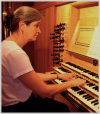
Julia Brown, born in Rio de Janeiro, has become a renowned expert on classical organ. This album, part of a comprehensive collection of the works of Dietrich Buxtehude, stands out as a showcase for the Danish composer who was a major influence on Johann Sebastian Bach. It was recorded on the incredible "dual temperament" contemporary organ shown above located in, of all places, Omaha, Nebraska. I'm not an organ geek but these specs are pretty amazing:
The organ is comprised of 55-stops over three manuals and pedal, 29 of which are playable in two temperaments: 1/4-comma meantone and a new well-tempered tuning devised for this instrument by Kristian Wegscheider of Dresden, Germany. The idea of a dual-temperament organ for Saint Cecilia Cathedral developed in early conversations between organ builder Martin Pasi and cathedral organist and music director Kevin Vogt, and was inspired by the dual-temperament organs at Stanford University (C.B. Fisk, Op. 85) and the Wegscheider organs at the Allstedt Schloßkapelle (Op. 1) and Dresden-Wilschdorf (Op. 21). While the two temperaments of the Stanford Fisk are made possible by five extra pipes per octave, and the smaller Wegscheider organs boast six extra pipes per octave, 29 stops of Pasi Op. 14, contain eight extra notes per octave, tipping the scale of the concept from a single organ with extra pipes to the equivalent of two organs which share a third of their pipes. The abundance of extra pipes allows the circulating temperament to accommodate much of the Romantic and modern repertoires, while retaining enough key color to bring Baroque music alive and to lock into tune the mixtures and reeds in the best key.
Resisting the temptation to make bad "dual temperament" jokes wasn't easy, but I do strongly encourage you to listen to this album. The complexity of these compositions combined with the amazing variety of sounds and Ms. Brown's stellar virtuosity make this a spellbinding experience.

axolotl
Nunquam non paratus
Resisting the temptation to make bad "dual temperament" jokes wasn't easy, but I do strongly encourage you to listen to this album.
We are so glad you resisted. It must have torn you in two.
Last edited:
Ojai Sam
Staff member
We are so glad you resisted. It must have torn you in two.
axolotl
Nunquam non paratus
Nickyboy
Staff member
Damned you! Now I am going to have that stupid jingle in my head all day. Aaargh!! (Especially the "becaaaaauuuuse" part).
Maybe in return I can offer you this gem:
Unsomnambulist
Staff member
Ty Segall - "Hello, Hi" (2022)

Unsomnambulist
Staff member
Jack White - Entering Heaven Alive (2022)

- Status
- Not open for further replies.
Similar threads

- Replies
- 182
- Views
- 11K

- Replies
- 148
- Views
- 10K

- Replies
- 118
- Views
- 8K


- Replies
- 72
- Views
- 5K