What are you listening to? September 2020

Status
Not open for further replies.
Various Artists - Verve Elite Edition Collectors' Disc (rec. 1954-65, comp 1999)

R-8145246-1455989653-7592.jpeg.jpg


Calling Dr. Zeeba. This is the creme de la creme, the rarest rarities from the "Verve Elite Edition" series of limited reissues. You wouldn't think that artists like Louis Armstrong, Bill Evans, Oscar Peterson, even Duke and Ella (together! :heart:) would have left unissued, even undocumented material in the vault but here are 14 such performances. My favorite provenance: a 1965 performance by Duke and Ella that was released only on cassette in Sweden. Yumpin' Yiminy!

:5.0: on the Sam-O-Meter.
 
Various Artists - Verve Elite Edition Collectors' Disc (rec. 1954-65, comp 1999)

R-8145246-1455989653-7592.jpeg.jpg


Calling Dr. Zeeba. This is the creme de la creme, the rarest rarities from the "Verve Elite Edition" series of limited reissues. You wouldn't think that artists like Louis Armstrong, Bill Evans, Oscar Peterson, even Duke and Ella (together! :heart:) would have left unissued, even undocumented material in the vault but here are 14 such performances. My favorite provenance: a 1965 performance by Duke and Ella that was released only on cassette in Sweden. Yumpin' Yiminy!

:5..0: on the Sam-O-Meter.

Whaaaaaaaaaaaaaaaat?!:thumbsup:
 
Gregory Porter - All Rise (2020)

I've been listening to so much of the same stuff lately that I don't bother to post. I've had this for well over a week (2?) now and this is my flisten.

More of the usual Porter goodness. The music is nice, very very nice, and his voice remains an engine of urgency and feeling, but the storytelling is what really elevates this.
 
Arnette Cobb - Keep On Pushin' (Bee Hive 1984)

R-5459121-1424439680-5044.jpeg.jpg


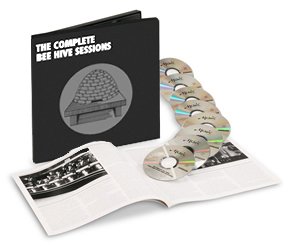
Today I bid farewell to the magnificent Mosaic Complete Bee Hive Sessions box.


31XcoFS1YCL.jpg


Jazzwax tells us:

The late 1970s was a weird time for acoustic jazz. The profitability of rock and soul in the late 1960s and early '70s had drained the talent in jazz departments at all record labels. If you worked on the jazz side and hadn't made the leap to producing rock and soul artists, you were most likely fired or you left in disgust. With the diminished standing of the jazz producer during this period, musicians were left to self-produce in many cases, and the results were dismal. Even in cases where there were producers, they were often asleep at the switch, making few demands on track lists or better takes.

Other than fusion—with its emphasis on rock, electronic instruments, psychedelic mysticism and lengthy solos—jazz had little new to say acoustically that hadn't been said before and often much better.

BeehiveSessionRecordSleeve
In 1977, Jim and Susan Neumann started Bee Hive Records in their Evanston, Ill., home outside of Chicago. They were fully aware that the jazz landscape had become littered with legends staggering around in shock, unsure what had happened to their careers and whether audiences would ever care about their music again .

Screen Shot 2015-10-12 at 9.27.37 PM
They also knew the risks they were facing. Like Coast Guard operations late to a disaster, theirs was a recovery mission, not a bid to rescue or resurrect the music, which had been already doomed by market forces and demographic shifts. Over the course of seven years, the Neumanns recorded 16 bop and post-bop albums. While just shy of perfect, much of the Bee Hive catalog captured great artists delivering magnificent works. For this, all jazz fans owe the Neumanns a debt of gratitude. [Photo above, Jim Neumann]

4396057621_49bc70d80f_o
Now, Mosaic Records is celebrating this overlooked late '70s period and label with The Complete Bee Hive Sessions, a 12-CD box that features 16 albums via 110 tracks, plus six tracks released only on a rare sampler and three tracks previously unissued. [Above, New York's Soho in the 1970s, which was home to many jazz clubs and reflected the decay of the acoustic art form]

For me, the fundamental question with sets like this one isn't the act of jazz being preserved but whether the music holds up. Plenty of jazz was recorded in the 1970s and '80s that may have seemed like a good idea at the time but simply isn't worthwhile any longer. Fortunately, most of the Bee Hive box is pure gold.


This final album matches the 66 year old veteran sax man with five more equally seasoned musicians. The results are sublime, timeless mainstream jazz.
 
Why are you bidding it farewell? It looks like the bee's knees to me.

P. S. Please forgive any mis-typed words.

My eyes are still readjusting status post reading several whole paragraphs in some orange-gold lettering on an off-white background. :meh:
It's going into The Vault but will return if I live long enough.

Can I help it if bees are yellow? :scared:You're lucky the label didn't use these guys for their label. :elisabs:
 
Status
Not open for further replies.
Back
Top