What Are You Listening To? September 2022

Status
Not open for further replies.
Central Band Of The Royal Air Force (Imogen Holst, cond.) - Gustav Holst: Hammersmith, Suites For Military Band No. 1 & 2, A Moorside Suite (1966)

MzMtNDUxOS5qcGVn.jpeg


Imogen was Gustav's only daughter and a noted composer and conductor in her own right.

1663038708373.png
 
Berlin Philharmonic (Wilhelm Furtwangler, cond.), London Philharmonic Choir - Beethoven: Symphony No. 9 (1937)

MDEtMjA3Ny5qcGVn.jpeg


By sheer coincidence, my stack of unplayed music yielded the second historically significant pre-WWII recording of Beethoven's 9th in two days. This one presents the great German conductor and the Berlin Phil in a live recording from London on May 1, 1937. The Hindenburg would crash and burn five days later and another disaster, Neville Chamberlain, would step in as prime minister later that month. Meanwhile, also in May, Germany would send its first combat personnel to the Spanish Civil War and Volkswagen opened for business. Busy month!

Furtwangler appeared in London frequently between 1924 and 1938, and again after the war. This superb performance must have made a very positive impression on the British audience at the time. It was recorded on an experimental basis by HMV and released years later. Unfortunately, cultural exchanges like this one couldn't avert the cataclysm looming just over the horizon.
 
^ Your review is rife with extra-musical allusions. Thank you for these.

How is the performance? The recording?

Feel free to ignore this request. I would, if I were you.
Music? Oh, yeah. I got caught up in the history. :rolleyes:

The sound quality is listenable but thin, comparable to most radio airchecks of the day.

If Mengelberg’s performance was triumphant, Furtwangler’s was transcendent. He always managed to avoid the bombastic excesses of German music in favor of a more ethereal, spiritual vision. Next to Wagner, Beethoven was Furtwangler’s favorite composer, with the 9th Symphony at the top of the repertoire. The English choir worked seamlessly with the Berliners, a tribute to the conductor’s inherent ability to motivate his musicians.

Furtwangler was by no means the enthusiastic Nazi that Mengelberg was, but his post war life and early death were similarly tragic.
 
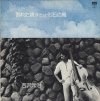
吉沢元治 (Yoshizawa Motoharu) ~ 割れた鏡または化石の鳥 (1975)

Yoshizawa Motoharu.jpg

Title is read as "Wareta kagami mata wa kaseki no tori" and is also given on the labels in English as Cracking Mirror and/or The Fossil Bird: Bass Fragments"

Jazz, Free Improvization

 
RYM doesn’t like this, but I do. They tried something different.
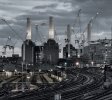
Paste Magazine seems to like this new direction, too.

If “The Mars Volta’s first new album in a decade” alone doesn’t get your attention, we can only assume that you must have slept through the 2000s. Guitarist/composer Omar Rodríguez-López and vocalist/lyricist Cedric Bixler-Zavala rose from the ashes of At the Drive-In to form one of the 21st century’s most important experimental-rock bands, and their seventh studio album—the self-titled follow-up to 2012’s Noctourniquet—finds them gunning it down a brand-new sonic avenue: “For me, the most exciting new direction is something we haven’t done: to cut things down, to do our version of pop,” Bixler-Zavala told The New York Times. Here, The Mars Volta channel their predilection for proggy odysseys into a decidedly smoother and more danceable form still bursting with ideas, resulting in a record unlike any other in their catalog. It’s the kind of stylistic recalibration that only such a long layoff could have enabled, reining in the duo’s more esoteric tendencies while reaching for the rafters like nothing since 2005’s Frances the Mute. —Scott Russell

I have yet to listen to it, but I intend to.
 
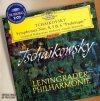
Pyotr Ilyich Tchaikovsky - Symphony No. 4 (Leningrad Philharmonic/Eugeny Mravinsky)
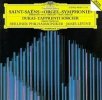
Camille Saint-Saens - Symphony No. 3 “Organ” (Berlin Philharmonic/James Levine/Simon Preston)


1663418624574.jpeg1663418690723.jpeg

Saturday morning classic - Second movement of Tchaikovsky’s fourth is so beautiful, and Saint-Saens Organ Symphony remains one of my faves.
 
Sofia Gubaidulina ~ The Canticle of the Sun; Music for Flute, Strings and Percussion (2001)


Modern Classical, Choral, Microtonal Classical

It's taken me a minute (meaning several months :axo:) to start and finish listening to this.

I was particularly taken (don't worry - I'm back now) by one of the later sections of The Canticle, all of which is dedicated to Mstislav Rostropovich. The composer adds these insights:

However, the overall form is divided into two parts by by the episode in which the cellist abandons his instrument: the motive of the overtone row (which is repeated several times in this piece) is played on the C string, Then the cellist retunes this string, gradually reaching the lowest possible pitch; at this pitch he reaches the very brink of his instrument, playing first near the bridge, then on top of the bridge (with a snare drum stick), behind the bridge, on the tailpiece - and finally, he abandons the instrument altogether. Now he plays initially on the bass drum (legato with a friction stick [an Indian rubber ball, 3-4 cm in diameter, fixed to a piece of piano wire]) and later on the flexatone with a double bass bow, evoking the response from the choral group with his glissandi. And only after this episode, 'Responsory', he returns to his instrument in order to attain its very highest register in the episode 'Glorification of death'.

Play Msti for me.
 
Last edited:
Status
Not open for further replies.
Back
Top