What are you listening to? January 2023

Status
Not open for further replies.
Then:

Aradia Ensemble (Kevin Mallon, Dir.) - Boyce: Eight Symphonies (comp. 1760, rec. 2005)

NzgtOTY2Ny5qcGVn.jpeg


Now:

The Hanover Band (Roy Goodman, Dir.) - Haydn: Symphony No. 1-2-3-4-5 (comp. 1761, rec. 1991)

MjUtMTg5My5qcGVn.jpeg


What a difference a year makes. The "Symphonies" of William Boyce are pleasant listening but they betray their origins as stitched together overtures that owe more than a little to Handel. Haydn, on the other hand, created a whole new art form while trying to make a good impression on his new patron, Prince Esterhazy.

Happy New Year to my favorite group of forward-looking friends!

1672610728328.png
 
The Gabrieli Consort & Players (Paul McCreesh, Dir.) - Handel: Theodora (comp. 1750, rec. 2000)

MDQtNTM5NC5qcGVn.jpeg


Handel was 64 years old when he composed this tragic oratorio. The martyrdom of Saints Theodora and Didymus of Alexandria in the 4th Century didn't exactly provide a cheerful inspiration, perhaps explaining why this work was not very popular in its day. However, the music and songs are among Handel's best work, especially Theodora's heartfelt expressions of simple piety. The intense musical competition between the "Chorus of Christians" and the "Chorus of Heathens" builds in intensity as the plot develops, giving the listener a stark choice between good and evil.
 
The intense musical competition between the "Chorus of Christians" and the "Chorus of Heathens" builds in intensity as the plot develops, giving the listener a stark choice between good and evil.

Choose wisely, Sam!

Not like I did. :oops:

My mistake... that was just a New Year's resolution. :axo:

Never mind.
 
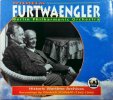
Wilhelm Furtwangler (Berlin Philharmonic, Vienna Philharmonic) - Historic Wartime Archives (rec. 1942-44, Tahra 1998)
Cover.jpg

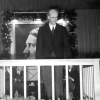
The recordings made by Wilhelm Furtwangler for German radio during WWII have appeared in various guises over the years. They were even released on Melodiya, perhaps dubbed from masters looted by the Russians after the fall of Berlin. I have posted about Furtwangler before, a stridently apolitical man who saved countless Jewish musicians and annoyed Hitler no end. Yet somehow he got tarred by the Nazi brush while far more Fuhrer-friendly figures emerged unscathed (ja, I'm talking to you, Herbert. :elisabs:).

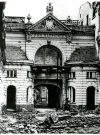
Over the past few days, I've been listening to these performances in awe as to how it was possible to coax such precise yet deeply moving performances from a group of musicians while their world was literally falling around their heads.
1672793645809.png

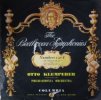
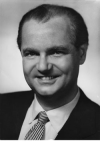
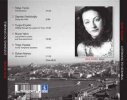
The crown jewel of this collection is the March 1942 version of Beethoven's 9th Symphony. Running a leisurely 73 minutes, it takes the listener on a tumultuous journey ending in the full-throated victory that would ultimately elude the Germans. Vocal duties were handled by a talented ensemble that included both Peter Anders, a pliable Nazi and Elisabeth Hongen, an Austrian who apparently steered clear of the regime.

1672794798498.png

1672794853493.png

One smug classical website calls this recording "despicable" but this is surely revisionism at its worst. Knowing what I do about Furtwangler and his highly dangerous relationship with the Nazis, I see this stunning performance as the ultimate triumph of music over evil.

:5.0: on the Sam-O-Meter.
1672795351168.png
 
Status
Not open for further replies.
Back
Top